Quick Answer: What is a Lead Generation Chatbot?
A lead generation chatbot is an AI-powered conversational tool embedded on a website that engages visitors 24/7. Instead of forcing users to fill out static contact forms, the chatbot answers their specific questions instantly, builds trust, and naturally asks for their contact information during the conversation. It acts as an automated sales assistant that qualifies prospects based on their intent (budget, timeline, needs) and automatically routes those qualified leads directly into a Sales CRM for human follow-up.
Introduction
Many businesses invest heavily in SEO, Google Ads, Meta Ads, and social media marketing to drive high-intent traffic to their websites. Yet, despite thousands of visitors landing on their pages every month, a vast majority of those visitors leave without ever interacting, converting, or buying.
The primary reason? The mechanism used to capture them is outdated. Traditional contact forms often collect minimal information, receive dismal completion rates (often below 2%), and fail to identify high-intent prospects who simply want a quick question answered. When a visitor is forced to fill out seven fields just to ask about pricing, friction takes over, and they bounce to a competitor.
Conversational AI has fundamentally changed how businesses engage website visitors. By deploying a lead generation chatbot, companies can offer immediate assistance, answer complex questions, and capture highly qualified leads through natural dialogue rather than static data entry.
What is a Lead Generation Chatbot?
At its core, a lead generation chatbot is a digital sales representative that lives on your website.
How it works: Powered by Conversational AI, it greets visitors, interprets natural language to understand their intent, provides accurate information based on your company's knowledge base, and strategically asks for contact details (like an email or phone number) to follow up.
- Difference from traditional chat widgets: Older bots relied on rigid, "click button A or B" decision trees. Modern AI understands open-ended text, handles typos, and remembers context.
- Difference from contact forms: Forms demand information upfront without providing value. A chatbot provides value first (an answer) before extracting value (contact details).
- Difference from live chat: Live chat requires a human sitting at a desk. An AI chatbot scales infinitely and works at 3:00 AM on a Sunday.
Why Traditional Lead Capture No Longer Works
According to studies by the Baymard Institute and other UX researchers, modern consumers possess shrinking attention spans and skyrocketing expectations for immediacy.
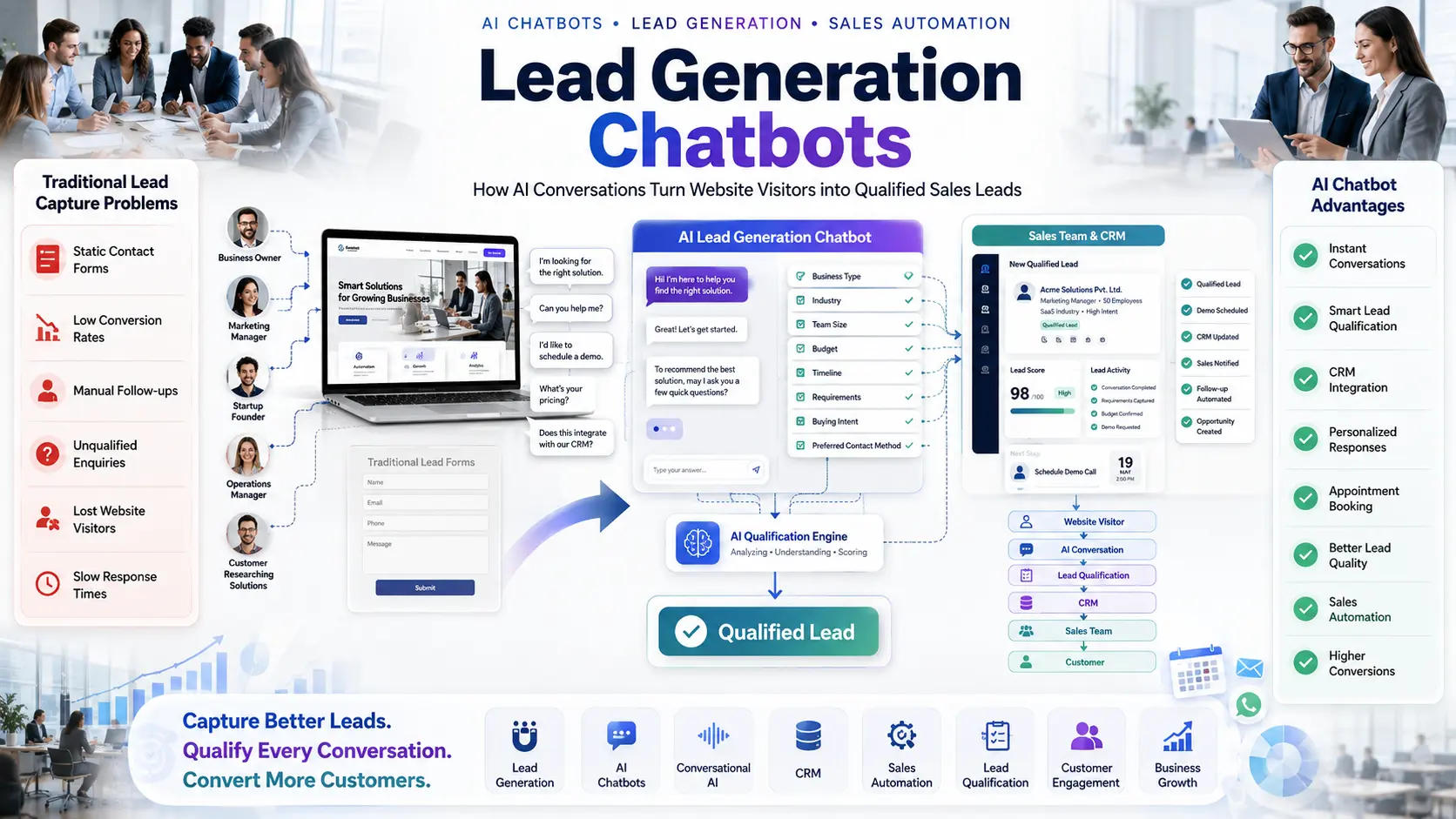
- Static Contact Forms: They are impersonal, boring, and create high friction. Asking for a phone number on a form often causes abandonment.
- Delayed Follow-up: The "Speed to Lead" rule states that your odds of qualifying a lead drop exponentially if you wait longer than 5 minutes. Form submissions often sit in an inbox for 24 hours.
- Poor Qualification: Forms rarely give sales teams enough context. An email address tells you nothing about the prospect's budget or timeline.
- Visitor Drop-off: High-intent buyers often have a single blocking question (e.g., "Do you integrate with Shopify?"). If they cannot find the answer instantly, they leave.
How AI Chatbots Capture & Qualify Leads
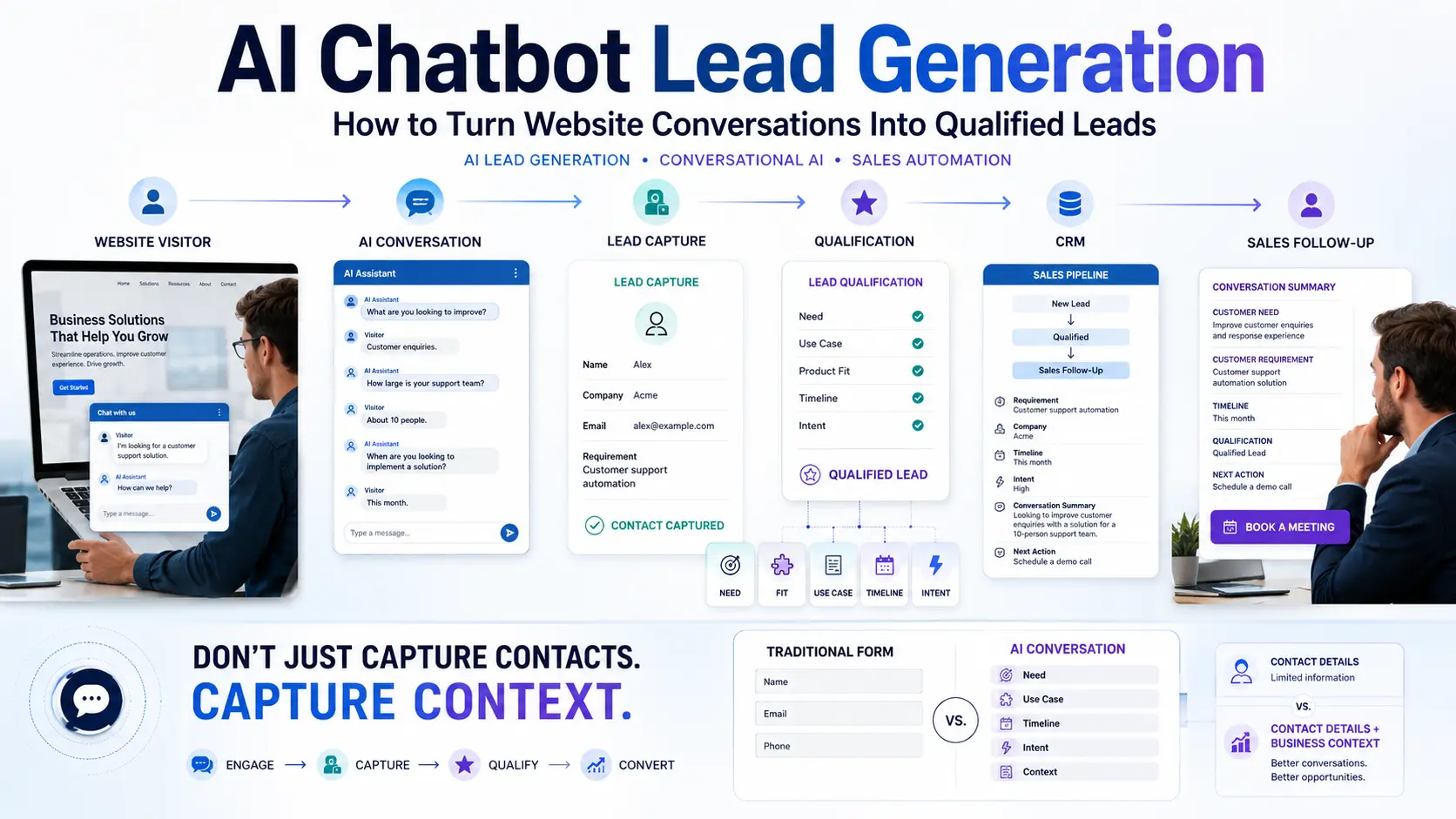
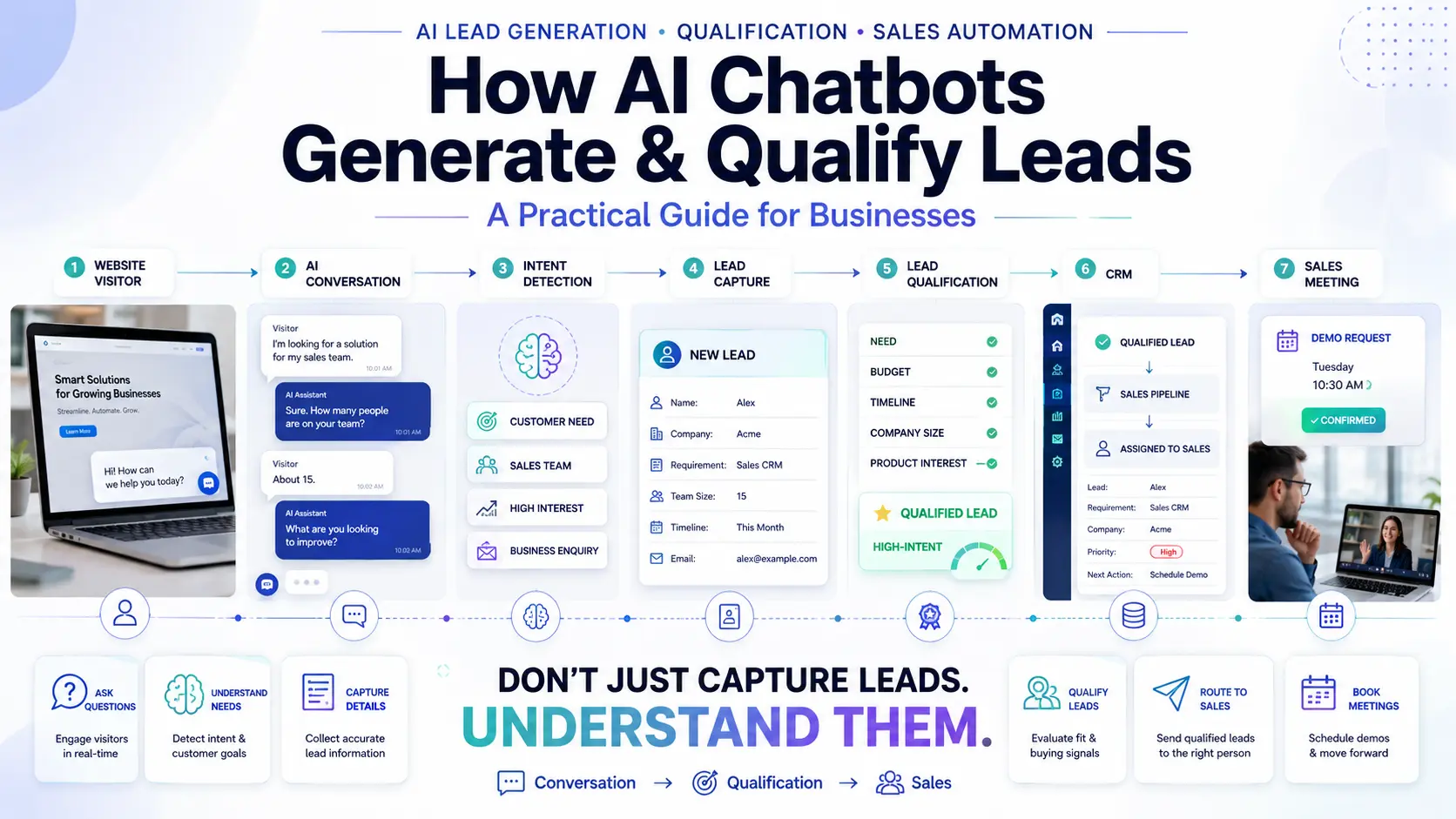
To understand the power of an AI lead capture system, let's map out the complete business workflow of a modern interaction.
The Automated Workflow
- Website Visitor Lands: The visitor arrives from a Google Ad searching for "inventory management software".
- AI Conversation Initiates: The chatbot proactively asks, "Hi! Are you looking for ways to streamline your inventory?"
- Intent Detection: The user replies, "Yes, but we have 5 warehouses. Can you handle that?" The AI understands the specific requirement and answers affirmatively based on training data.
- Lead Qualification: The AI asks, "To give you the right pricing, roughly how many SKUs do you manage?" (Qualifying the lead's size).
- Contact Capture: "Great. I can have a specialist show you exactly how we handle 10,000+ SKUs. What's your work email?"
- CRM Integration: The AI immediately pushes the email, the SKU size, and the chat transcript into a Lead Management Software.
- Sales Team Notification: A human sales rep gets a ping on Slack that a highly qualified enterprise lead is ready to talk.
- Demo Booking: Alternatively, the AI drops a Calendly link directly in the chat to book the demo without human intervention.
Benefits of Lead Generation Chatbots
Implementing an AI chatbot for business generates measurable ROI across multiple departments.
- Higher Conversion Rates: By reducing friction, businesses often see a 2x to 4x increase in leads compared to static web forms.
- Faster Lead Qualification: Sales teams stop wasting time on unqualified tire-kickers. The AI filters out bad leads automatically.
- Reduced Manual Work: Support agents and SDRs (Sales Development Reps) are freed from answering the same 20 repetitive questions.
- Better Customer Experience: McKinsey reports that B2B buyers now expect B2C-level experiences. Zero wait times build immense brand trust.
- Higher Marketing ROI: When more traffic converts into leads, your Cost Per Acquisition (CPA) on Google and Facebook Ads drops significantly.
Lead Generation Chatbot vs Contact Forms
How does conversational AI stack up against the traditional "Contact Us" page?
| Feature | Static Contact Form | AI Chatbot |
|---|---|---|
| Engagement | Passive (waits for user). | Proactive (greets the user). |
| User Experience | High friction, boring. | Interactive, natural, low friction. |
| Lead Quality | Low context (just an email). | High context (full chat history). |
| Follow-up | Delayed by hours or days. | Instant engagement and booking. |
| Conversion Rate | Typically 1% - 3%. | Often 5% - 15%+. |
Lead Generation Chatbot vs Live Chat
Many businesses use live chat, but it presents major scaling issues for lead generation.
| Feature | Human Live Chat | AI Chatbot |
|---|---|---|
| Availability | Business hours only. | 24/7/365. |
| Scalability | 1 agent handles 2-3 chats at once. | Handles 10,000+ simultaneous chats. |
| Response Speed | Minutes (if busy). | Milliseconds. |
| Cost | High (salaries, software seats). | Low (SaaS subscription). |
Essential Features to Look For
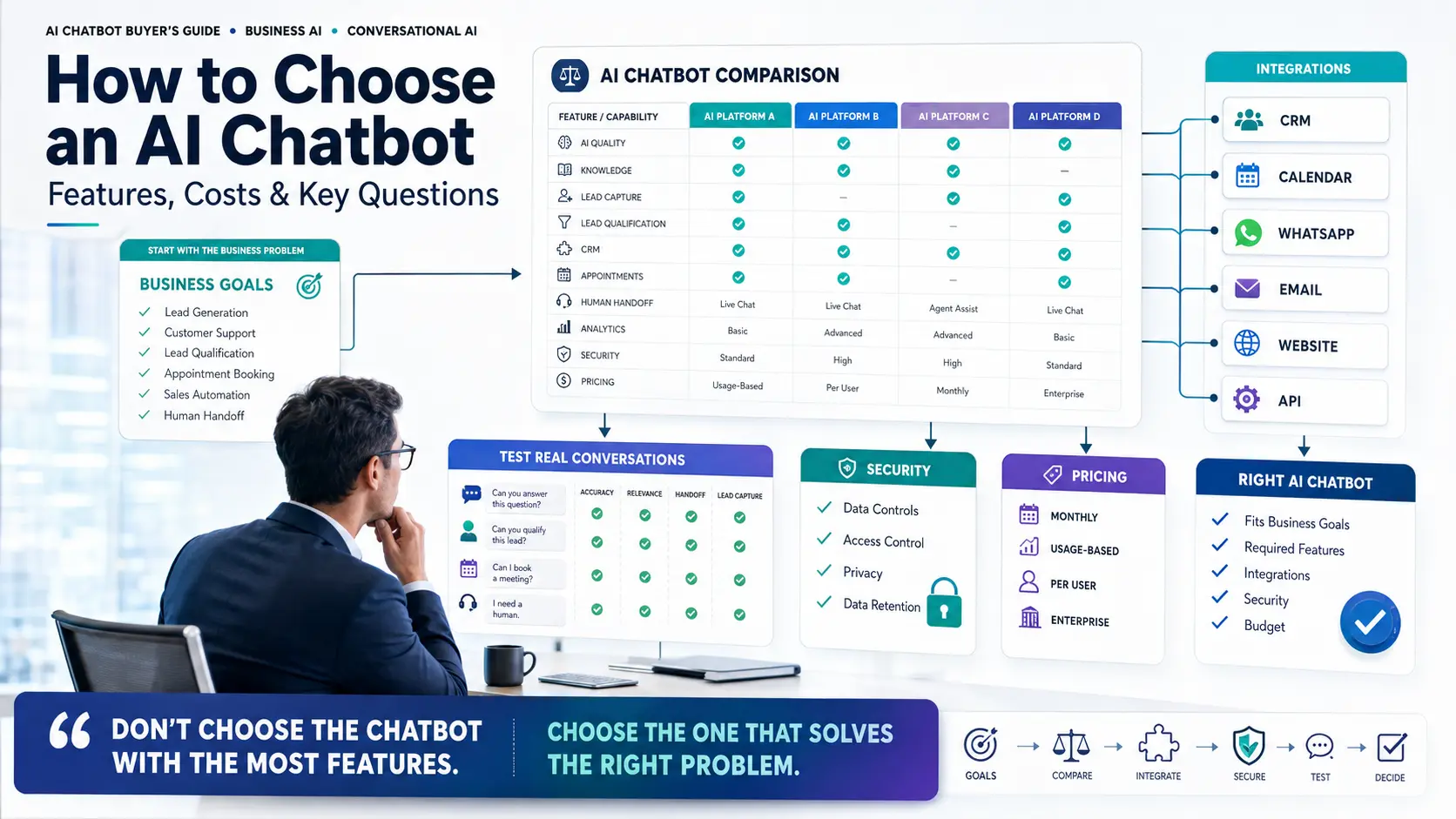
If you are comparing different conversational AI tools, ensure your platform includes:
- AI-Powered Knowledge Ingestion: The ability to read your website, PDFs, and Help Center to learn your business perfectly.
- CRM Integration: Crucial. Without connecting to a Pre-Sales CRM like Salesforce or Zoho CRM, leads will get lost.
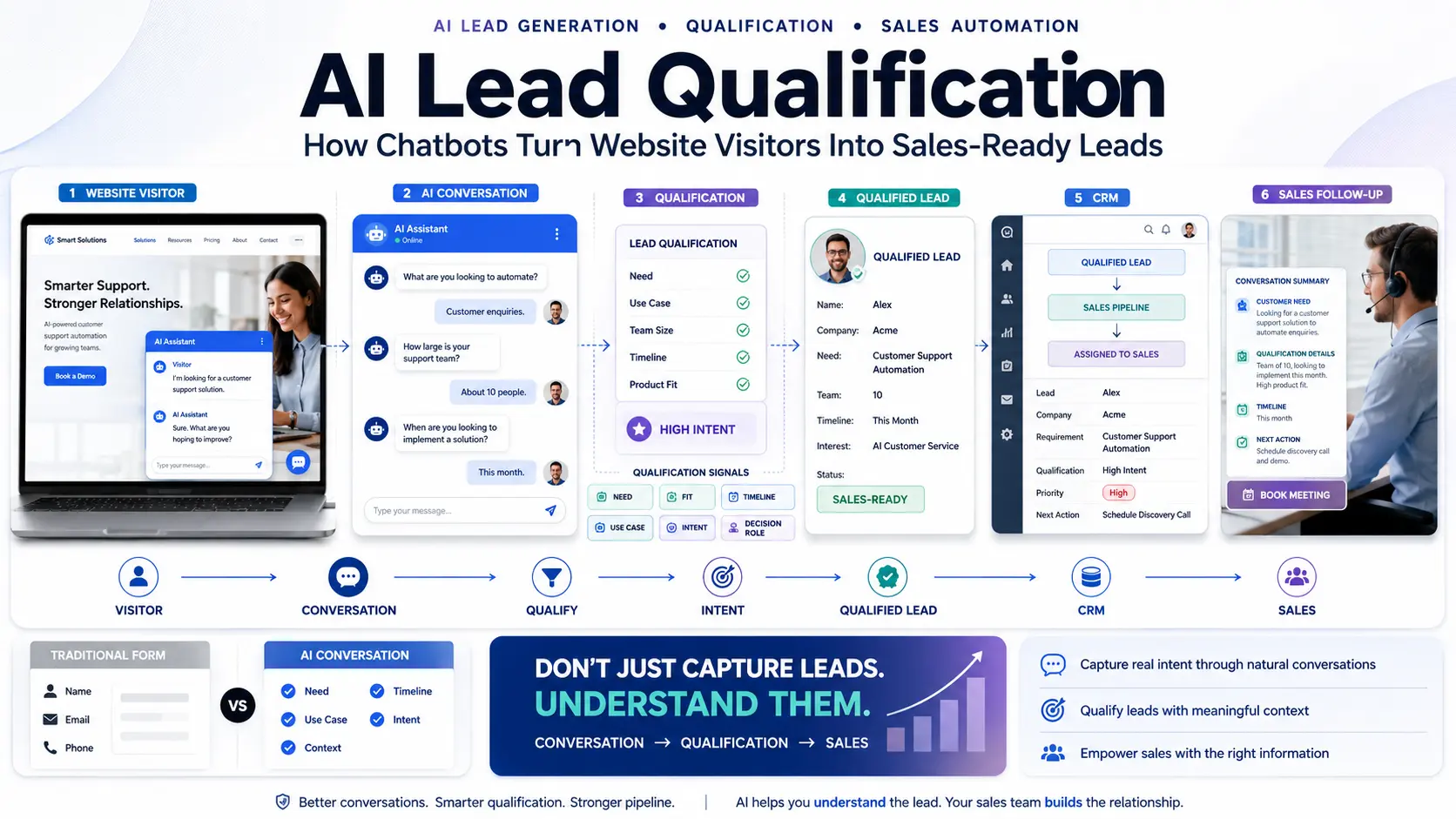
- Lead Qualification Workflows: Tools to ask specific BANT (Budget, Authority, Need, Timeline) questions.
- Appointment Booking: Native integrations to book demos directly on the calendar.
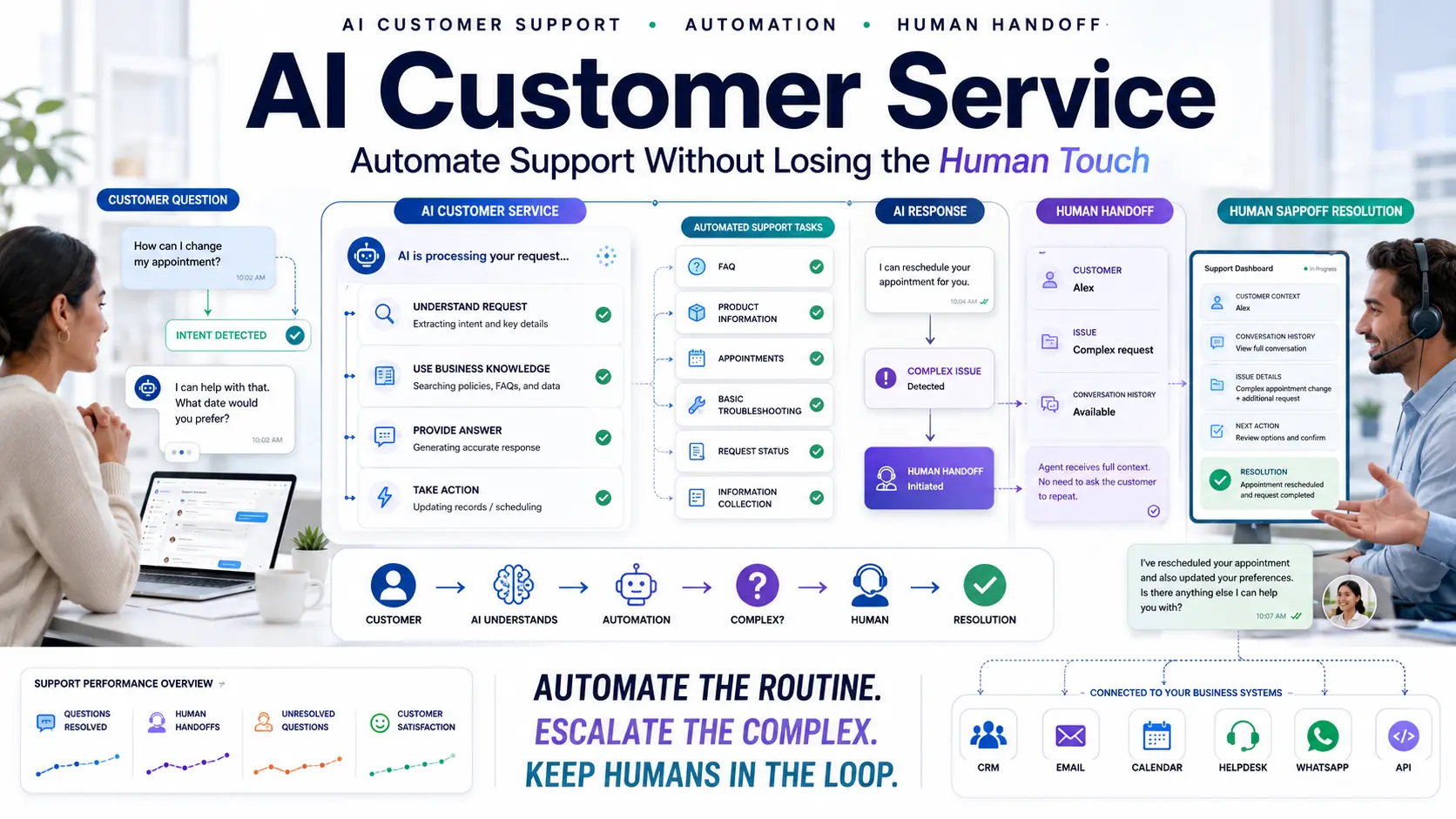
- Human Handoff: When a high-value lead requires the human touch, the AI must instantly route the chat to a live agent.
- Multi-Language & WhatsApp Integration: For reaching global audiences on their preferred platforms.
Industry Use Cases
Lead generation chatbots adapt to virtually any industry that relies on a website to generate business.
Real Estate
In PropTech, a real estate chatbot qualifies buyers based on budget, answers questions about amenities, and seamlessly schedules physical or virtual site visits for property developers.
Education
An educational chatbot assists with student recruitment by answering admission criteria, suggesting courses, and connecting prospective students with counselors.
SaaS
For software companies, a SaaS chatbot qualifies website traffic, answers technical API questions, and books demos directly into Account Executives' calendars.
E-commerce
Retail stores use ecommerce AI chatbots to recommend products, assist with sizing, recover abandoned carts, and capture emails for discount codes.
Healthcare
In medical fields, healthcare chatbots securely answer general health procedure inquiries and assist with patient appointment bookings without overwhelming reception staff.
Financial Services
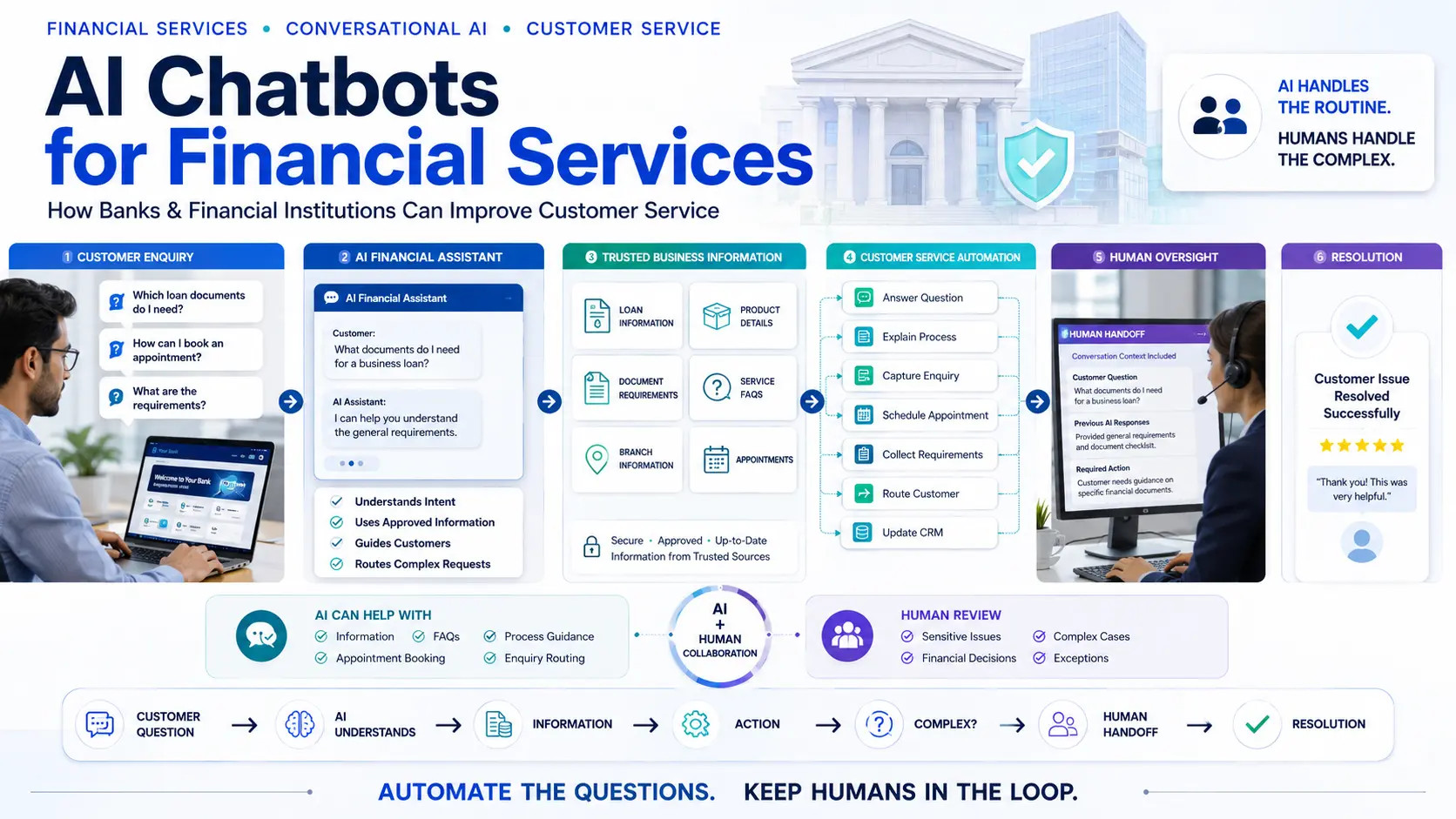
Banks and insurance providers leverage financial chatbots to qualify loan applicants and provide instant quotes while adhering to compliance.
Travel
Agencies use travel chatbots to recommend holiday packages and assist with booking inquiries 24/7 across multiple time zones.
How to Implement a Lead Generation Chatbot
Deploying a conversational AI doesn't require a team of engineers if you use the right platform. Here is the step-by-step implementation guide:
- Identify Business Goals: Are you trying to book more demos, collect more emails, or reduce support tickets?
- Analyze Website Traffic: Place the chatbot on high-intent pages (Pricing, Product Features, Contact).
- Build a Knowledge Base: Upload your PDFs, website URLs, and FAQs so the AI (powered by modern LLMs) can learn your business.
- Create Qualification Questions: Define the 2 or 3 questions the bot must ask to qualify a lead.
- Connect CRM: Integrate your chatbot with a CRM Platform to ensure no data is lost.
- Configure Automation: Set up routing rules so enterprise leads go to senior sales reps, while small businesses get automated emails.
- Test Conversations: Try to "break" the bot internally before launching.
- Monitor Analytics & Optimize: Review transcripts weekly to add missing answers to the knowledge base.
Common Mistakes Businesses Make
Treating Chatbots like Forms
If your bot's first message is "Please enter your email", you have failed. Provide value first.
No CRM Integration
If the bot sends leads via email instead of to a CRM, sales teams will inevitably lose track of them.
No Human Escalation
Users get frustrated if they hit a wall. Always provide a clear path to speak to a human.
Asking Too Many Questions
Keep qualification questions to 3 or fewer. The goal is to capture the lead, not conduct an interrogation.
How Quillive Helps Businesses Generate Better Leads
Choosing the right technology is the foundation of a successful automation strategy. Quillive is a powerful conversational AI platform designed specifically to modernize how businesses engage visitors and capture leads.
Instead of forcing users to navigate complex menus, Quillive uses generative AI to answer questions instantly and accurately based exclusively on your company's knowledge base. It helps businesses:
- Engage Visitors 24/7: Ensuring no high-intent traffic is ever ignored.
- Qualify Automatically: Dynamically asking the right questions to score leads.
- Book Demos: Integrating seamlessly with calendar tools to secure meetings on the spot.
- Integrate Flawlessly: Connecting directly with tools like QuillCRM, HubSpot, and Salesforce.
- Ensure Human Handoff: Allowing your sales team to take over the chat window the moment a VIP lead is detected.
By replacing friction-heavy forms with natural, intelligent conversations, Quillive acts as an extension of your sales team, driving measurable ROI. Discover more on our Features page.
Frequently Asked Questions
What is a lead generation chatbot?
An AI-powered conversational tool on a website that engages visitors, answers questions, and collects contact info to qualify sales leads.
Are AI chatbots better than contact forms?
Yes. They provide instant, frictionless interactions whereas forms are static, have low conversion rates, and offer no immediate value.
Can AI qualify leads?
Yes. Conversational AI asks dynamic qualifying questions regarding budget, timeline, and company size to pass only high-intent leads to sales.
How does a chatbot integrate with CRM?
Leading chatbots use APIs to instantly push the lead’s data and chat transcript into CRMs like QuillCRM, HubSpot, or Salesforce.
Which industries benefit most?
Real estate, SaaS, education, healthcare, ecommerce, and financial services see the biggest ROI due to complex customer journeys.
Can chatbots book appointments?
Yes. Advanced bots integrate with scheduling tools like Calendly to let visitors book demos or site visits instantly.
Do chatbots replace sales teams?
No. They handle repetitive top-of-funnel work, freeing human sales teams to focus on relationship building and closing deals.
How much does a lead generation chatbot cost?
Costs range from $50/month for basic tools to over $1,000/month for enterprise conversational AI platforms.
Can chatbots work with WhatsApp?
Yes. Modern AI platforms support omnichannel deployment, allowing businesses to generate leads directly on WhatsApp.
What should businesses look for in a chatbot?
Look for custom knowledge ingestion, CRM integration, seamless human handoff, multilingual support, and robust analytics.
How long does it take to set up?
With modern AI platforms, initial setup—including knowledge ingestion and basic routing—can often be completed in a few hours.
Does an AI chatbot improve SEO?
Indirectly, yes. Chatbots improve "time on page" and reduce bounce rates, which are positive engagement signals for Google.
Can an AI chatbot hallucinate?
If not configured correctly, yes. However, business-grade AI platforms use strict "grounding" techniques to only answer from your provided documents.
Is the data secure?
Yes, enterprise platforms comply with GDPR, SOC2, and HIPAA (for healthcare) to ensure prospect data is handled securely.
Can I customize the chatbot's personality?
Absolutely. You can instruct the AI to be highly professional (for finance) or casual and witty (for ecommerce).
Will the chatbot slow down my website?
No. Modern chatbot widgets are loaded asynchronously, meaning they do not affect your core web vitals or page load speed.
Can a chatbot handle multiple languages?
Yes, AI chatbots can instantly translate and converse in dozens of languages, perfect for international businesses.
What happens if the bot doesn't know the answer?
The bot is programmed to gracefully apologize, ask for the user's email, and promise that a human specialist will follow up shortly.
Do users like talking to chatbots?
Yes, provided the bot is actually helpful. Consumers prefer instant answers from an AI over waiting 24 hours for a human email.
Can the bot recognize returning visitors?
Yes, advanced platforms can greet returning visitors by name and reference previous conversations to continue the sales process.
Can it send proactive messages?
Yes. The chatbot can be programmed to pop open and say "Need help with pricing?" if a user stays on the pricing page for more than 10 seconds.
How do I measure the ROI of a chatbot?
Measure the increase in lead volume, the reduction in support tickets, and the conversion rate from chat-leads to closed deals in your CRM.
Do I need a developer to implement this?
Usually not. Most platforms offer a simple snippet of JavaScript that you can copy and paste into your website's header.
Can it capture leads on mobile devices?
Yes, chat widgets are mobile-responsive and often provide a better user experience on phones than traditional web forms.
Can the chatbot integrate with marketing automation tools?
Yes, through Zapier or native integrations, captured emails can be instantly sent to tools like Mailchimp or ActiveCampaign for nurturing.
Conclusion
The days of relying solely on static contact forms to capture B2B and high-value B2C leads are over. Modern consumers demand instant gratification, immediate answers, and personalized experiences.
Lead generation chatbots powered by Conversational AI represent the most significant shift in website optimization in the last decade. By intelligently engaging visitors, answering their queries precisely, and qualifying their intent before they ever reach a human sales rep, businesses can drastically increase their conversion rates and improve their bottom line.
As you evaluate solutions to modernize your website, prioritize platforms that offer deep CRM integration, human escalation protocols, and powerful knowledge ingestion. Whether you choose to explore Quillive or another platform, integrating an AI chatbot into your lead generation stack is an investment that pays immediate dividends.

Quillnext Team
The Quillnext Team helps businesses implement cutting-edge conversational AI to modernize lead capture, automate support, and integrate seamlessly with platforms like QuillCRM.
Visit Quillnext