Introduction
A common problem in the software industry is that many SaaS companies invest heavily in marketing and product development but still lose potential customers during the evaluation and onboarding stages. They successfully drive traffic to their website, but fail to convert that traffic into active trial users, and ultimately, into paying subscribers.
Visitors often leave because they cannot quickly find pricing information, feature details, integration answers, or implementation guidance. When they do start a trial, they get stuck. Support teams become overwhelmed answering repetitive product questions, while sales teams waste valuable time qualifying leads that may never convert.
The primary challenge for modern software companies is no longer just attracting visitors—it is helping them succeed at every stage of the customer journey. This is where deploying AI chatbots for SaaS becomes a critical strategy for sustainable growth.
Why the SaaS Buying Journey Has Changed
The software buying process has evolved dramatically. Today's B2B and B2C software buyers operate differently than they did a decade ago.
- Self-Service Buying: Buyers prefer to educate themselves before speaking to a sales rep. They want instant access to documentation, pricing, and case studies.
- Product-Led Growth (PLG): Free trials and freemium models have shifted the focus from sales presentations to product experiences. The product must sell itself.
- Instant Product Evaluation: Users expect to sign up and see value within minutes, not days.
- High Customer Expectations: In a crowded market, poor support during the trial phase is a primary reason users switch to a competitor.
Common Challenges for SaaS Companies
Managing a growing SaaS user base presents several scaling challenges:
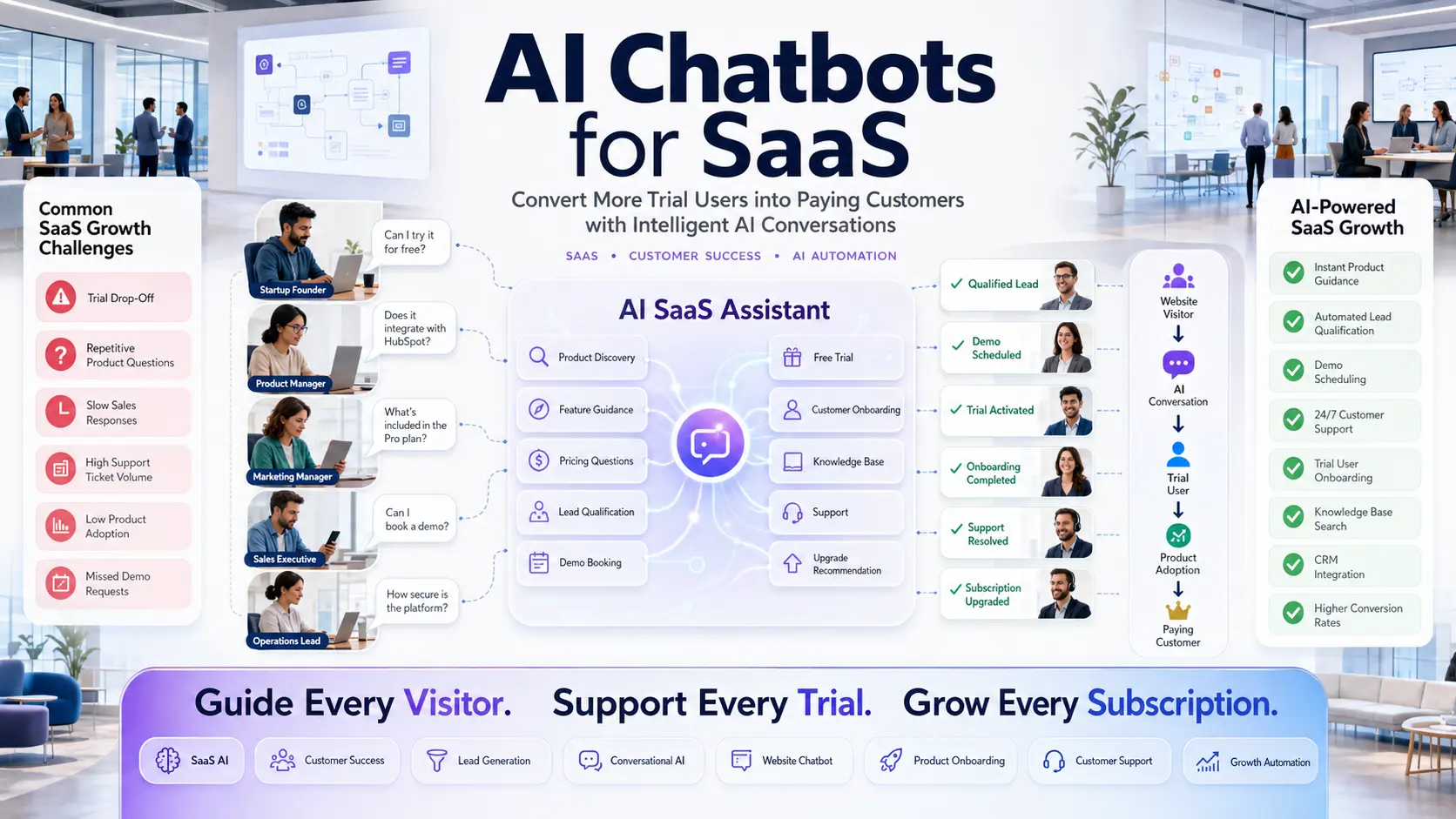
Core Growth Bottlenecks
- Trial Abandonment: Users sign up, get confused by the interface, and never log in again.
- Slow Sales Responses: When a high-intent enterprise lead asks a question, waiting hours for an email reply kills momentum.
- High Support Ticket Volume: Repetitive "how do I reset my password" or "where is the API key" queries drown customer success teams.
- Low Activation Rates: Users fail to reach the core value proposition of the product during their free trial.
- Churn: Existing customers leave because they cannot quickly figure out how to use advanced features.
What Is an AI Chatbot for SaaS?
Definition
An AI chatbot for SaaS (often referred to as a customer success chatbot) is a conversational virtual assistant integrated into a software company's website or web application. Powered by advanced Large Language Models (LLMs), it acts as an always-on product expert.
Unlike rigid, rule-based chatbots that force users through frustrating decision trees, conversational AI understands context. If a user asks, "How do I integrate this with Slack?", the AI instantly references the company's knowledge base and provides the exact steps, rather than just linking to a generic help article.
How AI Chatbots Support the Entire SaaS Customer Journey
A well-implemented customer support chatbot acts as a continuous guide across the entire lifecycle.
The AI-Assisted Lifecycle
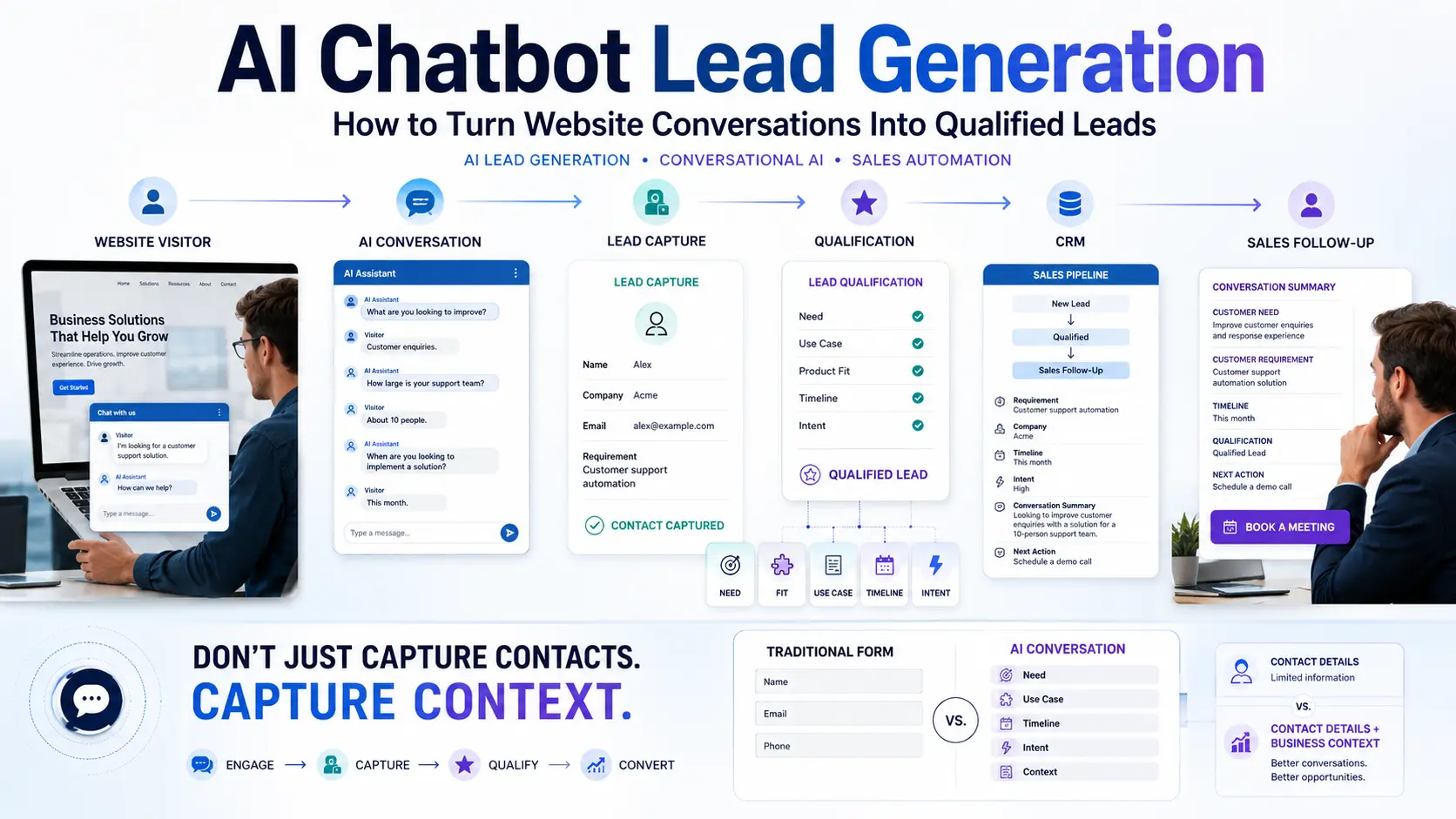
- Website Visitor: A prospect lands on the homepage. The AI proactively engages them, offering to help find specific features.
- Product Discovery: The visitor asks about pricing tiers. The AI explains the differences clearly based on the visitor's stated needs.
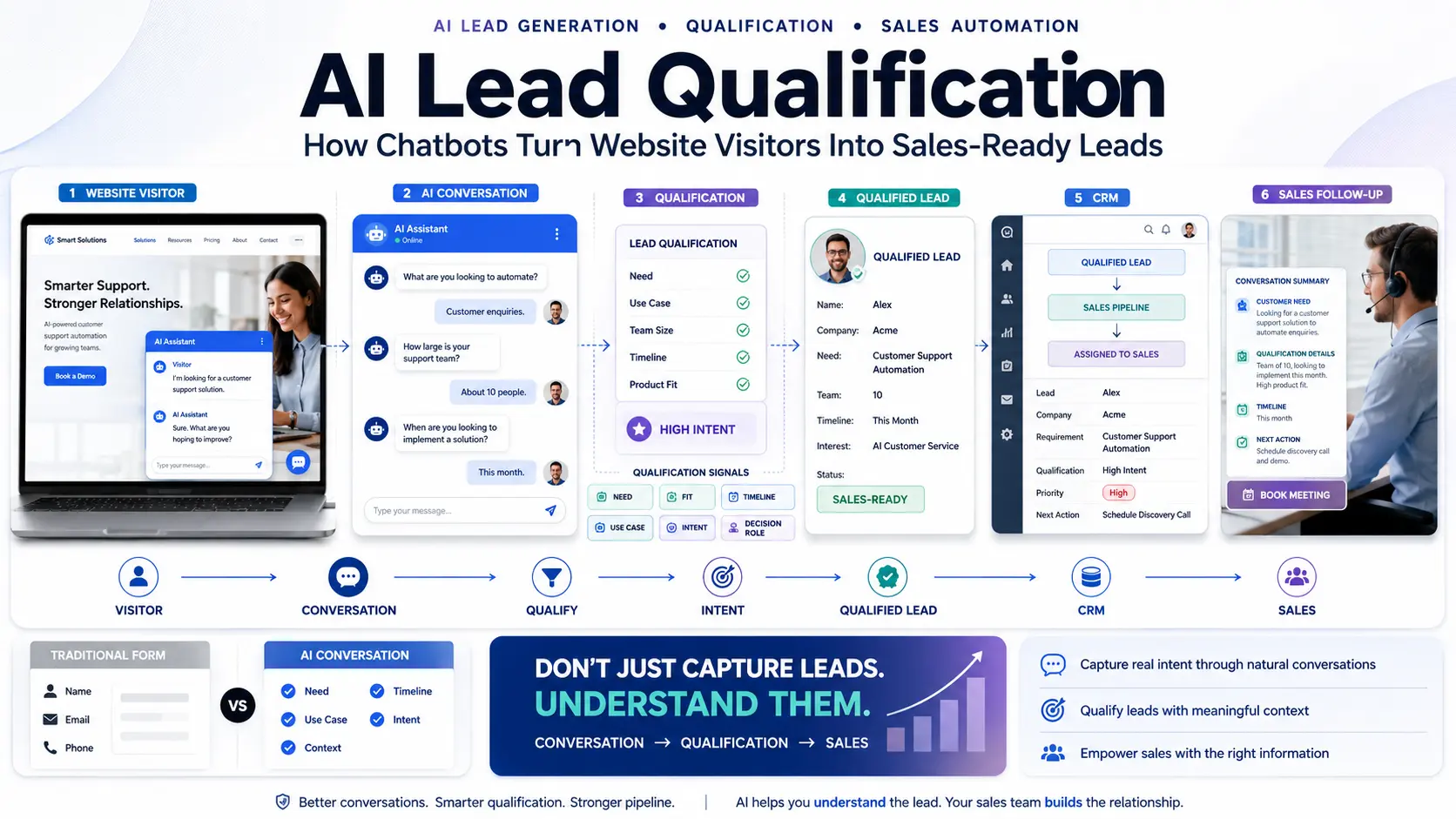
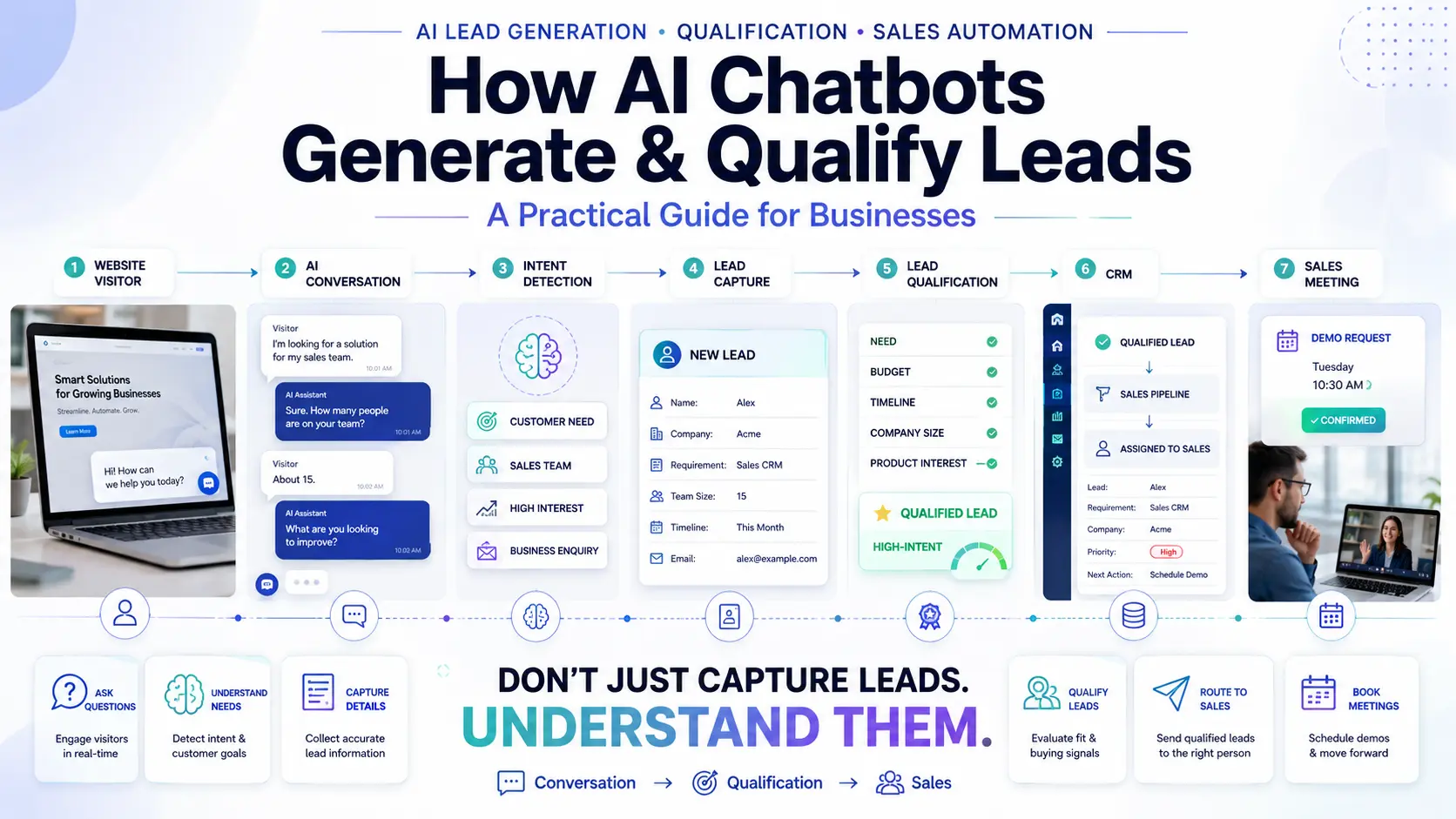
- Lead Qualification: The AI asks for the visitor's company size and email, routing enterprise leads to sales and self-serve leads to the free trial.
- Demo Booking: High-value leads can book a calendar slot instantly via the chat interface.
- Free Trial & Onboarding: Inside the app, the AI acts as an interactive guide, answering "how-to" questions and helping users reach their "Aha!" moment.
- Customer Support: As the user adopts the product, the AI instantly resolves common technical queries, deflecting L1 support tickets.
- Subscription Upgrade: When a user hits a paywall limit, the AI can explain the benefits of the next tier and facilitate the upgrade process.
Practical SaaS Use Cases
Forward-thinking software companies deploy AI for a variety of specific workflows:
- Answering Pricing Questions: Navigating complex usage-based pricing or seat-based tiers for confused prospects.
- Demo Scheduling: Completely automating the top-of-funnel meeting booking process.
- Trial User Onboarding: In-app assistance that guides users through configuring their first dashboard or setting up their profile.
- Knowledge Base Search: Allowing developers to ask natural language questions about the API documentation.
- Integration Guidance: Providing step-by-step instructions on connecting third-party tools like Zapier or Salesforce.
- Upsell Opportunities: Identifying users asking about premium features and seamlessly introducing the upgrade path.
Benefits of AI Chatbots for SaaS
Higher Trial-to-Paid Conversion
Users who get their questions answered instantly are far more likely to successfully activate and upgrade to a paid plan.
Reduced Support Workload
AI can deflect up to 60% of repetitive level 1 support tickets, allowing your success team to focus on strategic account management.
Better Lead Qualification
Sales teams spend zero time on unqualified leads, as the AI pre-filters and routes only high-fit prospects to Account Executives.
Improved Product Adoption
In-app AI assistance reduces the friction of learning a new software tool, directly lowering user churn.
Features to Look for in a SaaS AI Chatbot
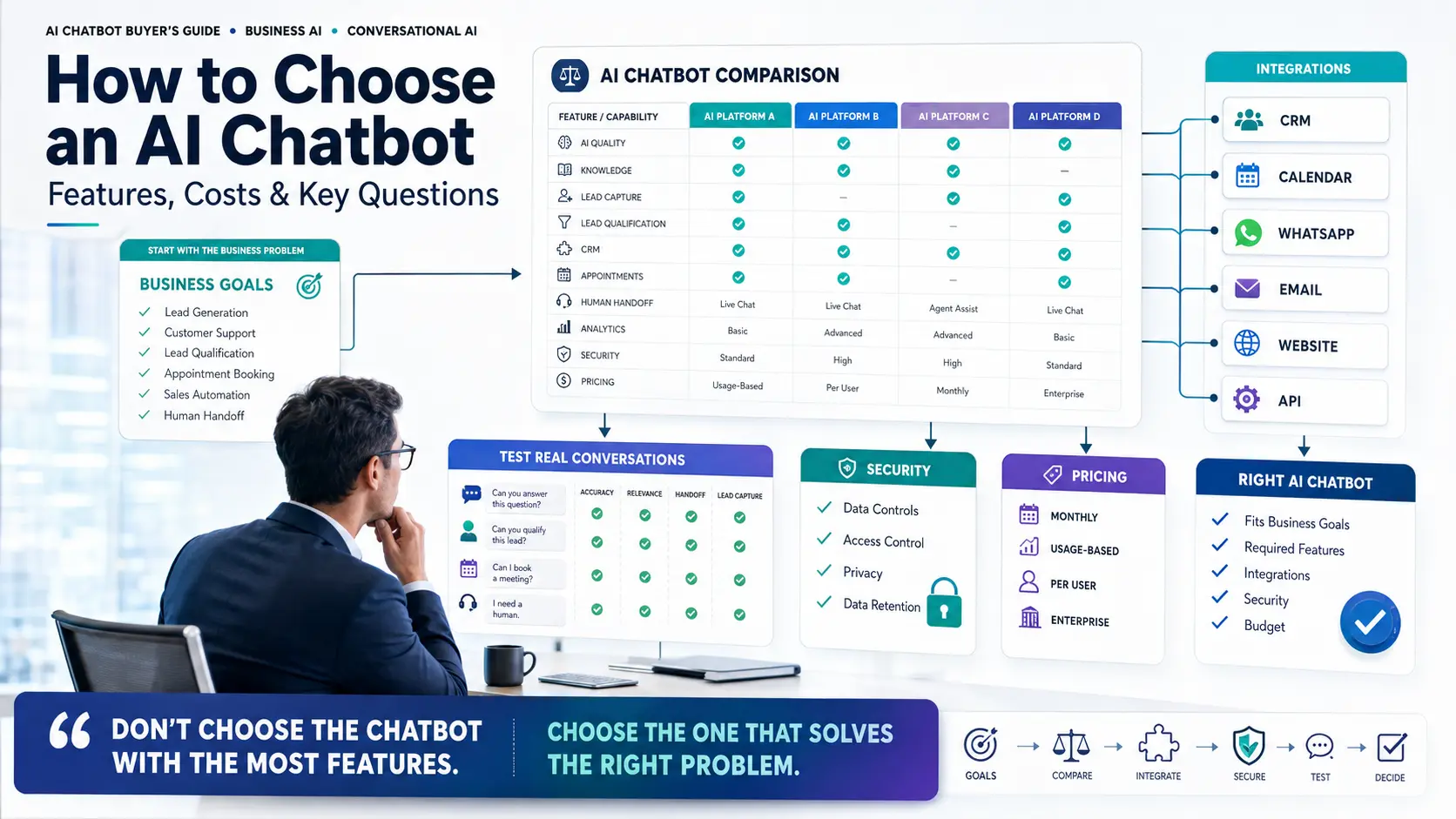
When evaluating a business AI Chatbot, SaaS leaders must prioritize these specific capabilities:
- Knowledge Base Training: It must securely ingest your Zendesk/Intercom articles, API docs, and public website data.
- CRM Integration: Seamless data flow into HubSpot, Salesforce, or your chosen CRM to track lead interactions.
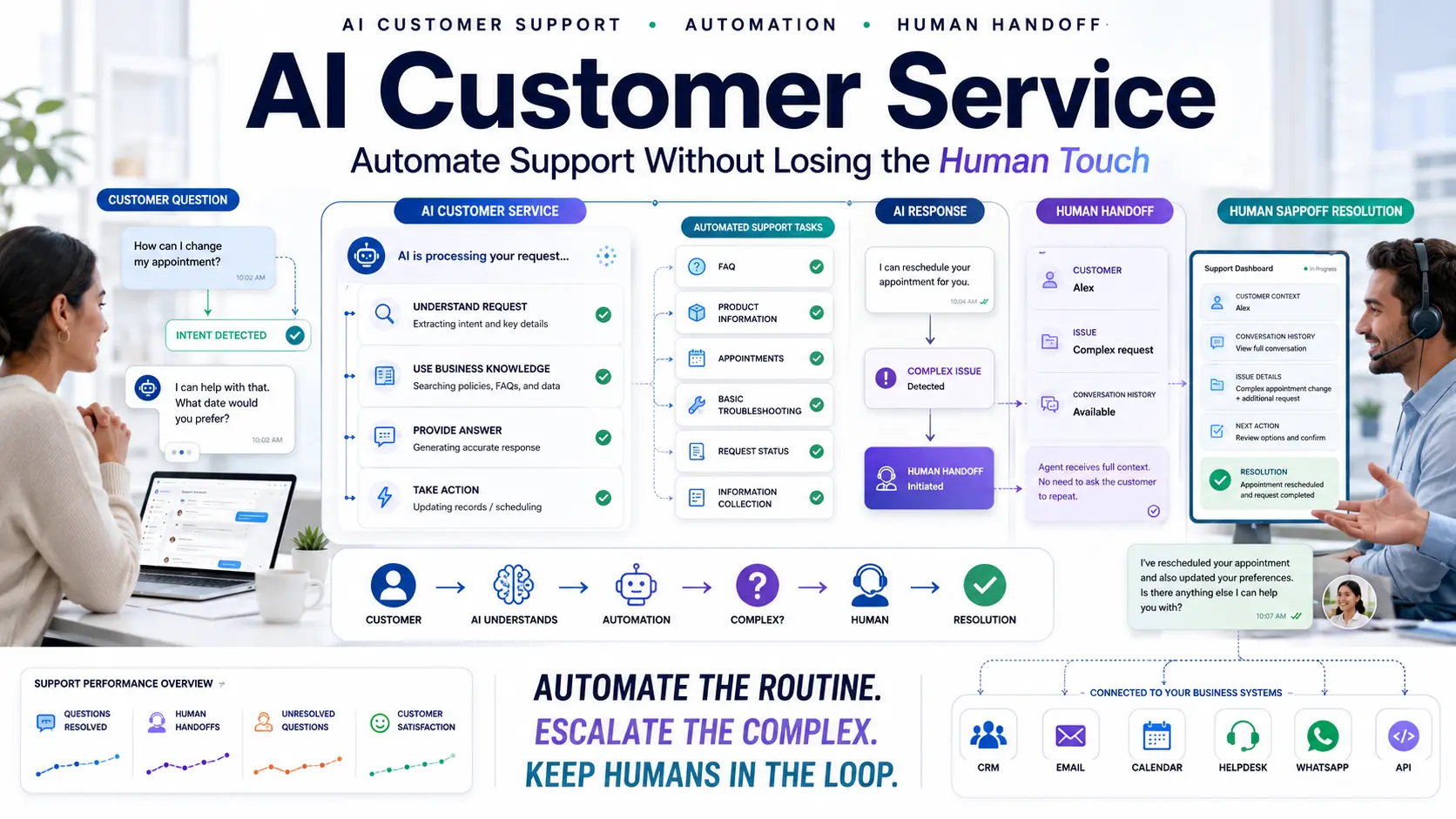
- Live Chat Handoff: The ability to seamlessly transfer a frustrated user to a human support agent during business hours.
- Lead Qualification & Routing: Customizable workflows to route enterprise leads differently than self-serve prospects.
- Appointment Booking: Native integration with tools like Calendly for instant demo scheduling.
- Analytics: Dashboards that reveal exactly what features users are struggling with, providing valuable product feedback.
How to Successfully Implement an AI Chatbot
To maximize ROI, software companies should follow a structured deployment strategy.
Implementation Guide
- Identify Repetitive Questions: Audit your helpdesk to find the top 20 questions users ask during onboarding.
- Train the Chatbot: Upload your product documentation, feature release notes, and pricing PDFs for the AI to ingest.
- Define Escalation Rules: Set parameters for when the AI should hand off to sales (e.g., if the user asks for an Enterprise quote) or support (e.g., if the user reports a bug).
- Connect CRM and Help Desk: Ensure the AI is integrated into your existing tech stack to prevent data silos.
- Monitor and Improve: Review chat transcripts weekly to identify knowledge gaps and refine the AI's responses.
Where Quillive Fits
Modernizing the SaaS customer journey requires an intelligent, adaptable platform. This is where Quillive acts as a highly effective implementation solution.
Quillive is designed specifically to help software businesses engage website visitors instantly, capture qualified leads, and book product demos without friction. When deployed inside a SaaS application, it acts as an in-app product expert—answering complex documentation queries and supporting trial users 24/7.
By dramatically reducing repetitive support tickets and integrating seamlessly with major CRM systems, Quillive ensures that complex conversations are handed to human teams only when necessary, empowering SaaS companies to scale their growth efficiently.
Frequently Asked Questions
What is a SaaS chatbot?
A SaaS chatbot is a conversational AI assistant integrated into a software company's website or web application. It engages visitors, answers product queries, supports trial onboarding, and handles tier-1 customer support.
Can AI improve SaaS onboarding?
Yes. By acting as an interactive guide inside your application, AI chatbots can answer "how-to" questions in real-time, helping users discover core features and reach their "Aha!" moment faster.
Can AI reduce support tickets?
Absolutely. By instantly answering repetitive questions directly from your knowledge base and product documentation, AI chatbots can deflect a significant volume of level 1 support tickets.
Can AI qualify SaaS leads?
Yes. The chatbot can ask strategic questions about company size, role, use case, and timeline to determine if a lead fits your ideal customer profile (ICP) before handing them to sales.
Can AI book product demos?
Yes. Modern SaaS chatbots integrate seamlessly with calendar tools like Calendly or native CRM schedulers, allowing qualified prospects to book a live demo instantly.
Can AI integrate with CRM systems?
Leading conversational AI platforms integrate securely with popular CRMs like Salesforce, HubSpot, and Pipedrive, ensuring all lead data and chat transcripts are synced to customer records.
Can AI answer product documentation questions?
Yes. You can train the AI by linking it to your Zendesk, Intercom, or custom API documentation, allowing it to provide highly technical answers to developers and power users.
How much does an AI chatbot cost for SaaS?
Pricing varies widely depending on the platform, conversation volume, and required integrations. Robust B2B SaaS platforms capable of deep knowledge ingestion typically range from a few hundred to several thousand dollars per month.
Can a chatbot help reduce churn?
Yes, by providing instant support and preventing users from getting frustrated with complex features, chatbots directly contribute to higher user retention and lower churn.
Will a chatbot annoy my users?
Not if implemented correctly. AI chatbots should be helpful, context-aware, and unobtrusive, providing value rather than acting as a barrier to human support.
Can the AI hand off a chat to a human agent?
Yes, enterprise platforms feature seamless live-chat handoff, transferring the user to a human agent along with the full conversation history when necessary.
How long does it take to train the AI on my product?
With modern LLM-powered platforms that automatically ingest URLs and PDFs, initial training can often be completed in hours rather than weeks.
Can I customize the chatbot's appearance?
Yes, most platforms allow you to fully customize the chatbot's colors, logo, and chat bubble to match your software's branding.
Does the AI work in multiple languages?
Yes, advanced conversational AI can automatically translate and respond in dozens of languages, supporting global SaaS expansion.
Can it help with product upsells?
When a user asks about a feature available on a higher tier, the AI can naturally explain the benefits and provide a link to upgrade their subscription.
Is the data secure?
Reputable AI platforms employ strict data encryption and comply with privacy frameworks like GDPR and SOC2 to ensure enterprise data security.
Does the chatbot provide user analytics?
Yes, robust analytics dashboards show you what features users are asking about most frequently, serving as valuable input for your product roadmap.
Can I place the chatbot behind a login screen?
Absolutely. SaaS chatbots can be deployed both on the public marketing website and inside the authenticated web application.
What if the AI gives a wrong answer?
By strictly constraining the AI to only reference your official documentation, the risk of hallucination is minimized. You can also review transcripts to correct any gaps.
How is this different from traditional live chat?
Traditional live chat requires a human to be online and respond manually. AI chatbots handle the majority of queries autonomously, 24/7, at scale.
Conclusion
For SaaS companies, growth is dictated by the ability to activate and retain users effectively. By deploying AI chatbots for SaaS, software companies can deliver faster customer support, drastically improve onboarding, increase trial conversions, and create superior product experiences.
These intelligent systems bridge the gap between marketing, sales, and customer success, ensuring that users always have the guidance they need to realize the full value of the software.
Platforms like Quillive enable SaaS businesses to automate customer conversations confidently, allowing your sales and support teams to step away from repetitive queries and focus entirely on high-value interactions that drive revenue and retention.
Want to optimize your funnel further? Discover how deploying a Lead Generation Chatbot can accelerate your B2B software sales cycle.

Quillnext Team
The Quillnext Team helps SaaS founders and customer success leaders implement conversational AI to increase trial conversions, streamline onboarding, and scale customer support.
Book a Demo →