Introduction
Every day, online stores lose potential customers because shoppers leave before completing a purchase. Some can't find the right product. Others have questions about shipping, returns, payment methods, sizes, warranties, or delivery timelines.
According to studies from the Baymard Institute, nearly 70% of digital shopping carts are abandoned before checkout. Many shoppers abandon their carts simply because they don't receive answers quickly enough. When an online shopper is confused or hesitant, any delay in customer support usually results in a lost sale.
Modern ecommerce success depends not only on attracting visitors but also on guiding them through the buying journey with timely, personalized support. This is where an AI chatbot for ecommerce becomes a vital growth asset, bridging the gap between automated self-service and human-like sales assistance.
Why Customer Expectations Have Changed
The digital retail landscape has evolved dramatically over the last few years, driven by several key factors:
- Mobile-First Shopping: Consumers are browsing and buying on their smartphones while on the go. They demand frictionless, conversational interfaces that don't require navigating complex menus.
- Instant Messaging Culture: Because people use WhatsApp and iMessage daily, they expect brands to communicate with them in the same fast, conversational format.
- Personalized Shopping Experiences: Giant retailers like Amazon have trained customers to expect highly relevant product recommendations tailored to their unique preferences.
- Faster Purchasing Decisions: In an era of infinite choice, shoppers will immediately bounce to a competitor if they encounter friction.
- Rising Expectations: Following guidelines like those set out in Google Search Central regarding helpful page experience, consumers now demand sites that are both fast and immensely helpful.
Common Challenges for Ecommerce Businesses
Growing an online store comes with immense operational hurdles. Whether you are running a boutique D2C brand or a massive marketplace, you likely face these common challenges:
- High Customer Enquiry Volume: Managing emails, DMs, and live chats during seasonal peaks (like Black Friday) can overwhelm support teams.
- Cart Abandonment: Losing highly qualified traffic right at the finish line because of unanswered shipping doubts.
- Repeated Support Questions: Agents wasting hours typing the same answers to "Where is my order?" or "What is your return policy?"
- Slow Response Times: Forcing an eager buyer to wait 24 hours for an email response guarantees a lost conversion.
- Limited Support Hours: Missing out on night-owl shoppers and international customers because the support team is offline.
- High Support Costs: Scaling a human support team linearly with revenue growth destroys profit margins.
What Is an Ecommerce AI Chatbot?
Definition
An ecommerce AI chatbot is a conversational virtual assistant powered by large language models (LLMs) that integrates directly with an online store. It acts as a 24/7 digital shop assistant—capable of understanding natural language, searching product catalogs, and answering complex customer queries instantly.
It is crucial to understand the difference between rigid rule-based bots and true AI. Rule-based bots force users to click buttons in a maze-like menu. In contrast, an AI shopping assistant allows a customer to type, "I need a blue waterproof jacket for hiking under $100," and instantly receives accurate product recommendations. To dive deeper into how this works across industries, see our guide on the AI Chatbot for Business.
How AI Chatbots Support the Entire Shopping Journey
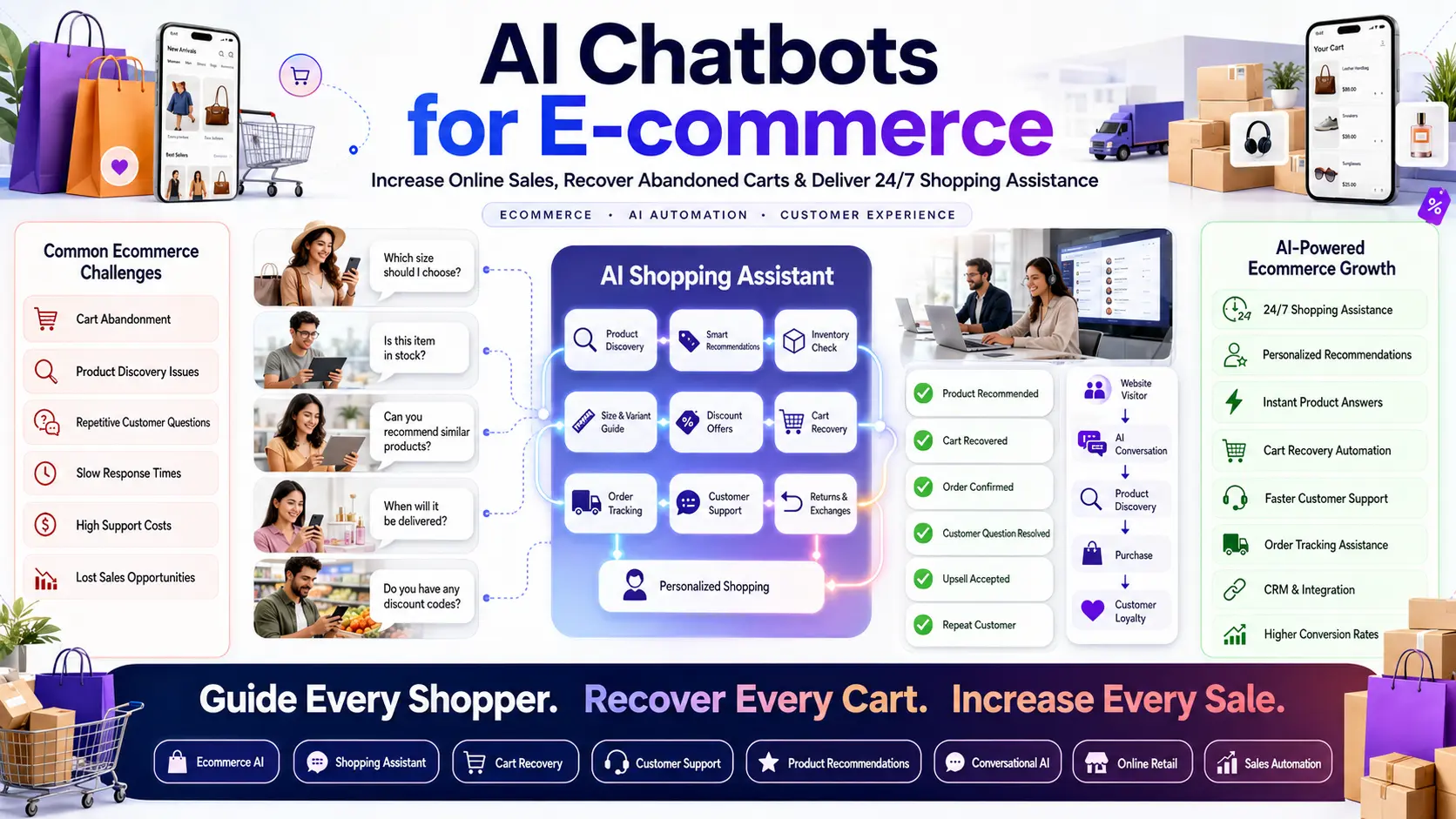
An intelligent Customer Support Chatbot acts as a continuous guide across the entire lifecycle:
- Website Visitor Lands: The AI proactively greets the visitor with a tailored welcome message (e.g., highlighting a current sale).
- Product Discovery: The shopper asks for a specific category. The AI searches the catalog and recommends matching products.
- Answering Questions: The shopper asks about material, sizing, or warranty. The AI answers instantly based on the product description and FAQs.
- Product Comparison: The AI helps the customer decide between two different models by highlighting key differences.
- Suggesting Related Items: Just like a great in-store clerk, the AI suggests matching accessories (cross-selling).
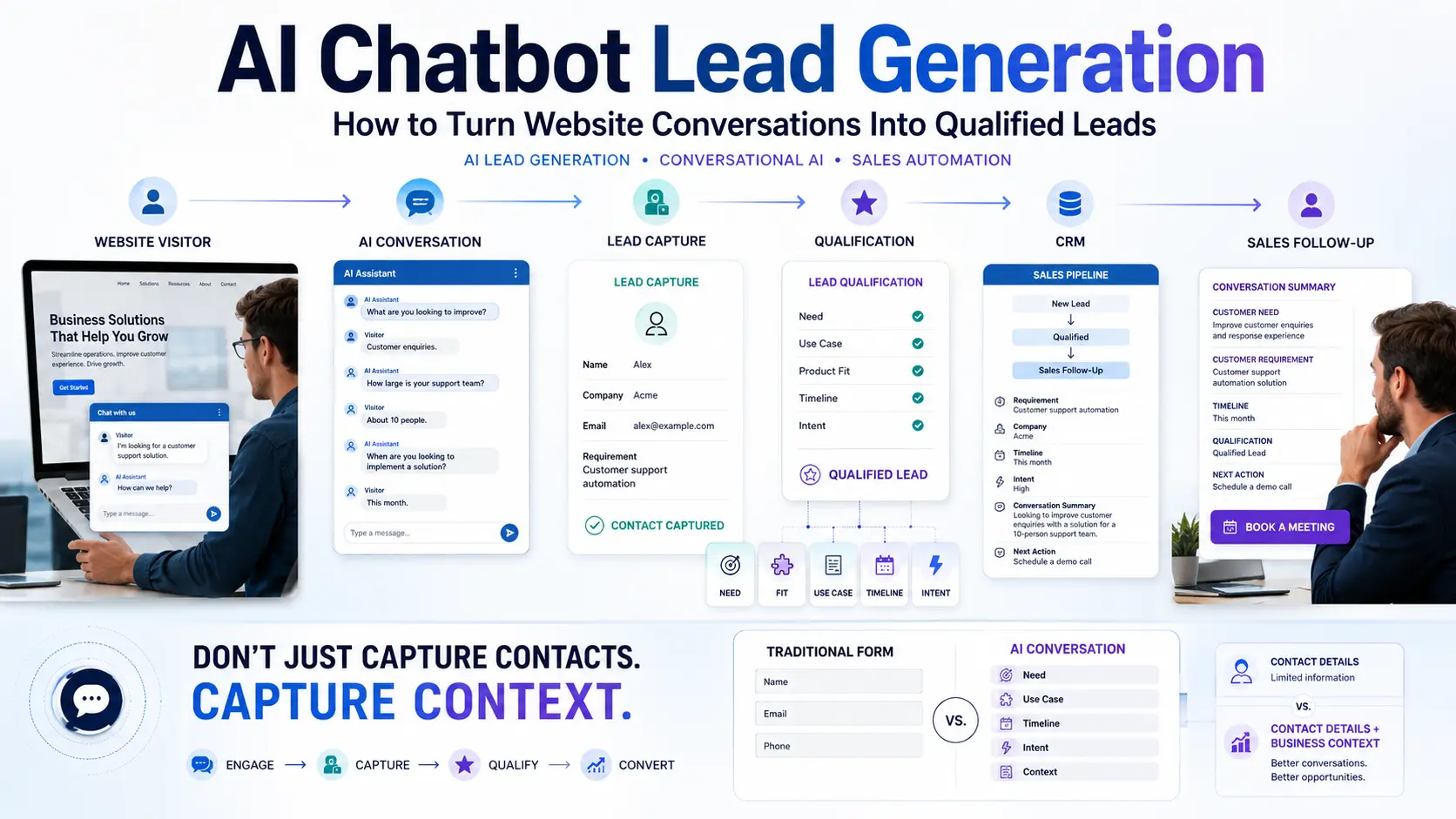
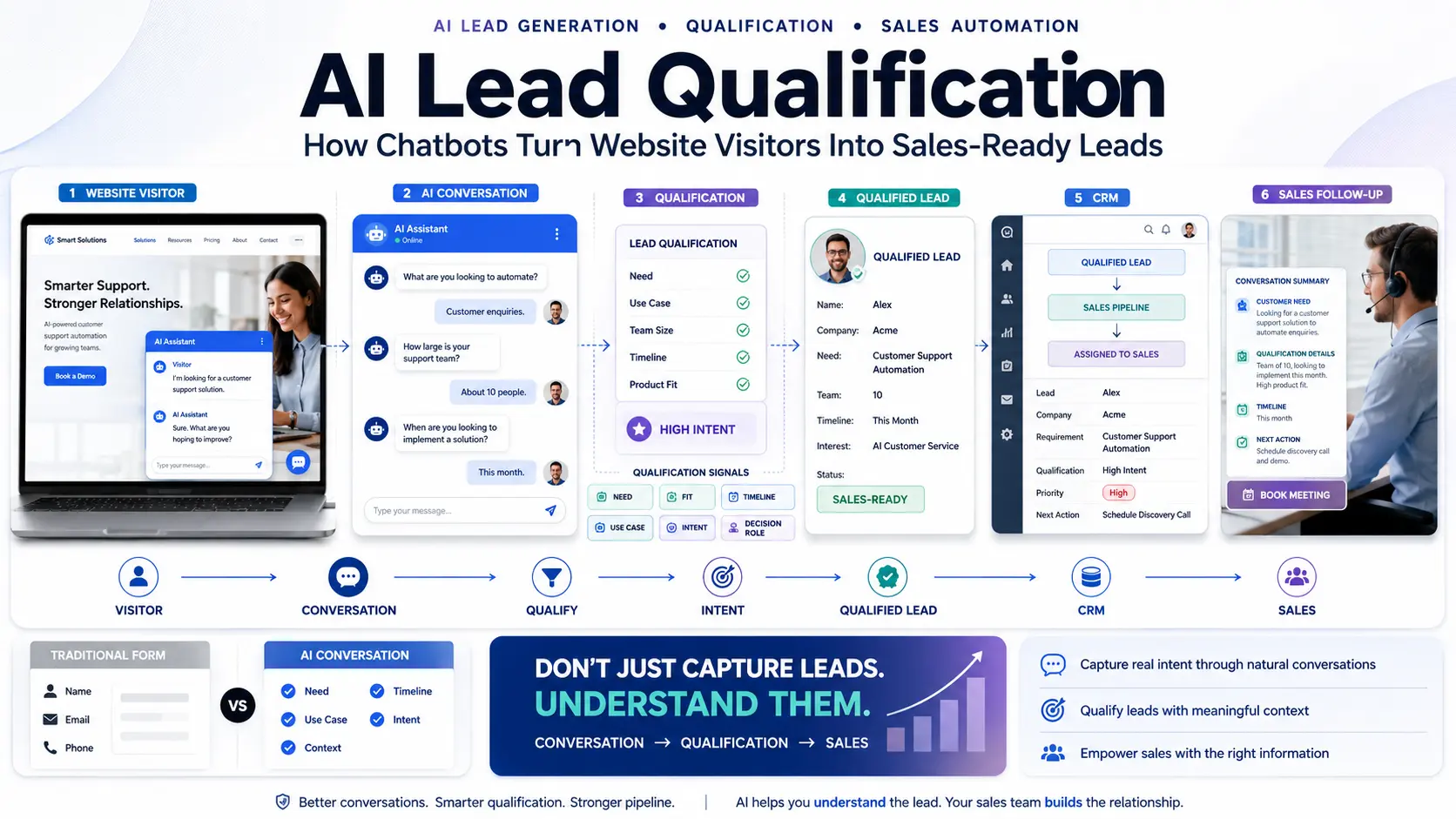
- Capturing Information: The bot acts as a Lead Generation Chatbot, capturing the email address in exchange for a discount code.
- Supporting Checkout: The AI answers last-minute doubts about secure payments or shipping timelines, reducing cart abandonment.
- Post-Purchase Support: The AI handles WISMO ("Where Is My Order?") requests and return processing effortlessly.
Real Ecommerce Use Cases
Different retail sectors leverage AI to solve unique problems:
- Fashion Stores: Helping customers find the right fit and answering questions about fabric care.
- Electronics Retailers: Explaining technical specifications, compatibility, and warranty details for complex gadgets.
- Beauty Brands: Recommending skincare routines based on customer-provided skin types and concerns.
- Furniture Stores: Providing dimensions, delivery estimates, and assembly instructions.
- Grocery Delivery & Subscription: Allowing customers to easily modify their recurring orders or report missing items.
- B2B Ecommerce: Automating bulk pricing quotes and invoice requests.
How AI Chatbots Increase Ecommerce Sales
Deploying AI is not just about saving money on support; it's a direct revenue driver.
Recovering Abandoned Carts: If a user leaves items in their cart, the AI can trigger a proactive chat (or an integrated WhatsApp message) offering help or a limited-time discount, bringing them back to checkout.
Cross-Selling and Upselling: By analyzing what the customer is looking at, the AI can naturally suggest premium alternatives (upsell) or complementary items (cross-sell), directly increasing the Average Order Value (AOV).
Instant Customer Confidence: The primary reason people abandon purchases is uncertainty. When an AI instantly confirms that an item can be returned within 30 days for free, that hesitation vanishes, leading to a higher conversion rate.
Benefits of AI Chatbots for Online Stores
24/7 Customer Support
Your store never closes. Provide instant answers at 2 AM or during major holidays without paying overtime.
Higher Sales Conversion
Real-time assistance removes buying friction, guiding hesitant shoppers smoothly through checkout.
Reduced Support Workload
Deflect up to 70% of repetitive queries (like order tracking), allowing your human agents to handle complex escalations.
Scalable Support
Handle 10 chats or 10,000 chats simultaneously during Black Friday without breaking a sweat.
Features to Look for in an Ecommerce AI Chatbot
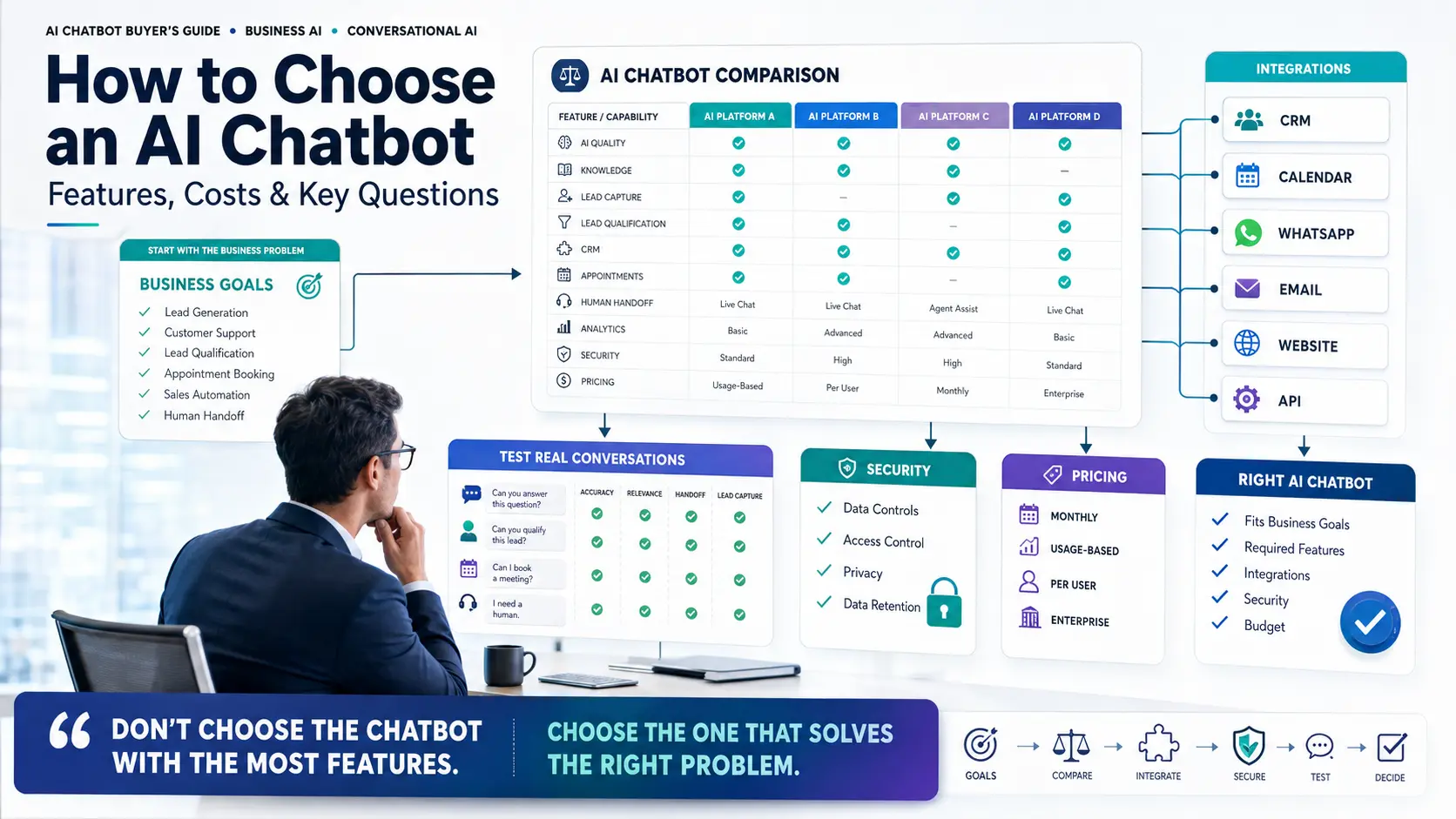
To maximize ROI, your conversational AI platform should include:
- Ecommerce Integration: Native hooks into Shopify or WooCommerce to sync product catalogs and inventory levels in real-time.
- Knowledge Base Training: The ability to easily ingest your FAQ pages and return policies.
- Order Tracking Capabilities: API access to logistics platforms so the bot can answer "Where is my order?" instantly.
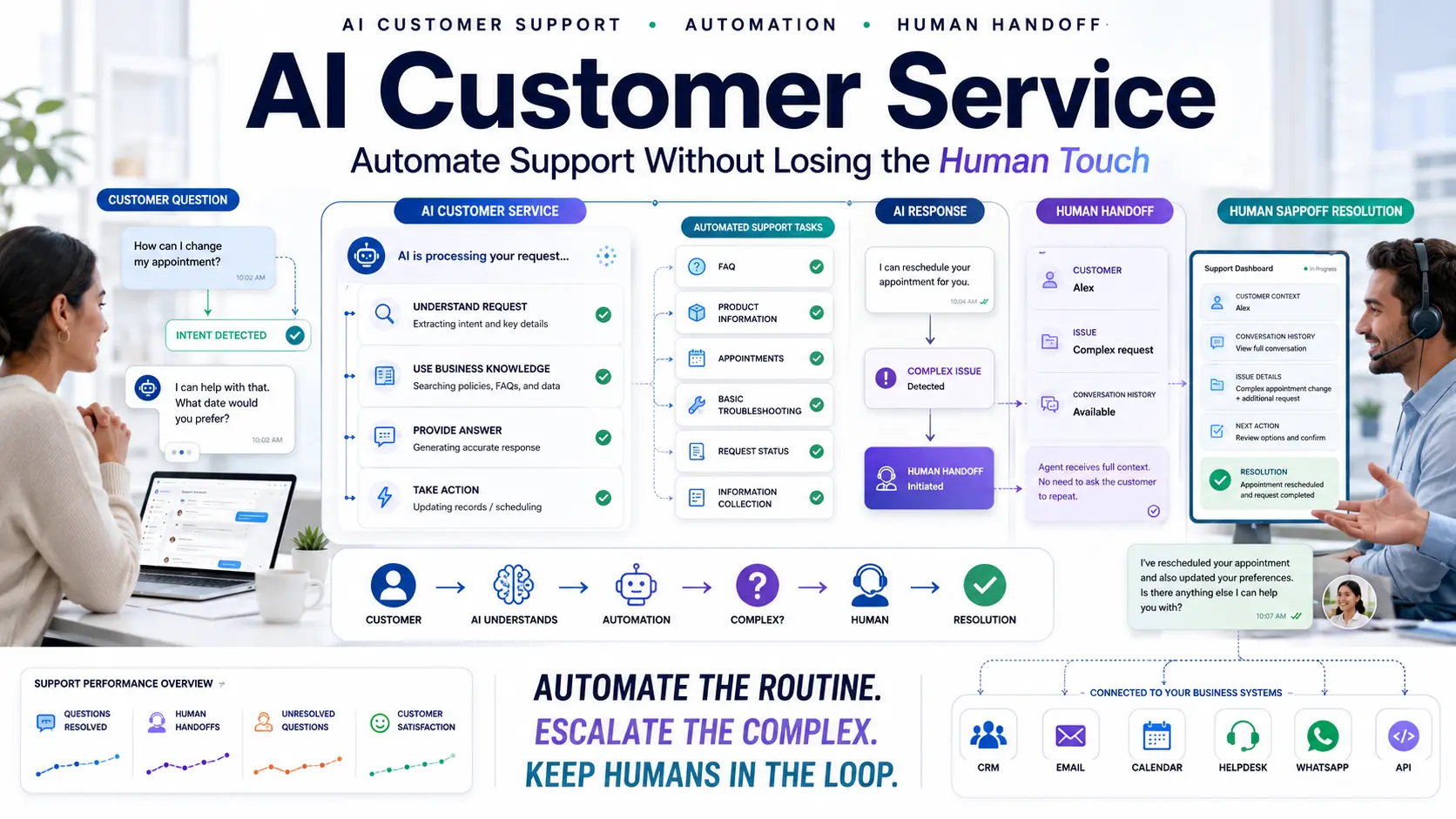
- Live Agent Handoff: The ability to seamlessly transfer a frustrated customer to a human support rep. (A strategy also popular in SaaS and Healthcare.)
- Analytics: Dashboards that show what products users are asking for, helping you identify trends or gaps in your catalog.
- Multilingual Support: Automatic translation to serve international buyers effortlessly.
How to Successfully Implement an Ecommerce AI Chatbot
Step-by-Step Implementation
- Identify Common Questions: Audit your helpdesk to find the most frequent queries (shipping, sizing, returns).
- Train the Chatbot: Connect the AI to your product catalog, website URLs, and internal policy documents.
- Integrate with Your Store: Connect the bot to Shopify, WooCommerce, or your custom backend for order tracking.
- Configure Escalation Rules: Set up triggers for when the AI should hand off to a live agent (e.g., processing a complex refund).
- Test Customer Journeys: Run mock conversations to ensure the bot recommends products accurately and handles edge cases.
- Optimize Using Analytics: Review chat transcripts weekly to fill knowledge gaps and improve AI responses.
Where Quillive Fits
Transforming your online store into a responsive, 24/7 sales machine requires a robust platform. This is where Quillive acts as a highly effective implementation solution.
Quillive helps ecommerce businesses welcome website visitors instantly, recommend relevant products based on natural language queries, and answer shipping questions immediately. By automating these interactions, it dramatically reduces cart abandonment and captures qualified leads round-the-clock.
Designed to integrate with major ecommerce platforms and CRM systems, Quillive ensures that your store provides top-tier support 24/7. It flawlessly handles repetitive questions while escalating complex enquiries to your human agents. Discover more about how it works by exploring our Features, experiencing the Demo, or visiting the FAQ.
Frequently Asked Questions
What is an ecommerce chatbot?
An ecommerce chatbot is a conversational AI tool that acts as a digital shopping assistant. It helps online stores answer customer questions, recommend products, and facilitate checkout 24/7.
Can AI recommend products?
Yes. AI chatbots analyze a customer's questions and browsing behavior to suggest relevant products, significantly improving cross-selling and upselling opportunities.
Can AI reduce cart abandonment?
Absolutely. By proactively engaging shoppers who are hesitating at checkout and instantly answering doubts about shipping or returns, AI chatbots can effectively recover abandoned carts.
Can AI answer shipping questions?
Yes, if trained on your store's shipping policies, the AI can provide instant, accurate answers about delivery timelines, costs, and return procedures.
Can AI integrate with Shopify?
Yes, most advanced conversational AI platforms offer seamless integrations with Shopify to pull product catalogs, inventory data, and customer order history.
Can AI integrate with WooCommerce?
Yes, similar to Shopify, leading AI chatbots can connect directly with WooCommerce to provide real-time product recommendations and order tracking.
Can AI track orders?
When integrated with your ecommerce backend, an AI chatbot can instantly retrieve and provide order tracking updates to customers who ask "Where is my order?"
Can AI support multiple languages?
Yes. Modern AI chatbots automatically translate conversations, allowing online stores to serve global customers in their native language.
Can AI improve ecommerce conversions?
Yes. By removing friction from the buying journey through instant support and personalized recommendations, AI chatbots directly increase sales conversion rates.
Will a chatbot annoy my shoppers?
Not if configured correctly. Modern AI chatbots are designed to be helpful and context-aware, providing unobtrusive assistance rather than aggressive pop-ups.
How do chatbots handle returns?
They can instantly guide a customer through your return policy, generate a return shipping label if integrated with your logistics software, and update the customer on the refund status.
Can the AI hand off a chat to a human?
Yes, enterprise platforms feature seamless live-chat handoff, transferring the customer to a human agent along with the full conversation history for complex issues.
Is the customer data secure?
Reputable AI platforms employ strict data encryption and comply with privacy frameworks like GDPR to ensure all customer payment and contact data is secure.
Does the AI work on mobile devices?
Absolutely. The chatbot widgets are fully responsive and optimized for mobile shoppers, providing a native messaging experience.
Can the chatbot offer discount codes?
Yes, you can configure the chatbot to offer exclusive coupon codes in exchange for a customer's email address or to incentivize a purchase during a cart recovery flow.
Conclusion
For online stores, the customer experience is the brand. By deploying an AI chatbot for ecommerce, retailers can provide instant, 24/7 support that matches the speed and convenience of digital shopping. From product discovery to order tracking, these intelligent assistants remove friction, recover abandoned carts, and directly increase online sales.
By automating repetitive queries, AI allows your human support team to focus on high-value interactions, drastically reducing operational costs while improving customer satisfaction.
Platforms like Quillive enable ecommerce businesses to deliver world-class shopping assistance effortlessly. Discover more strategies on our Blog, or read about similar applications like AI Chatbots for Travel to see how AI is revolutionizing digital commerce.

Quillnext Team
The Quillnext Team helps ecommerce brands and online retailers implement conversational AI to increase sales conversions, automate order tracking, and deliver 24/7 customer support.
Visit Quillnext