Introduction
Customers today expect instant access to information about banking services, insurance policies, loans, credit cards, investments, and account-related processes. Whether they want to understand the eligibility criteria for a mortgage or need to know the coverage limits of their health insurance, they demand immediate clarity.
As a result, financial institutions receive thousands of repetitive enquiries every day. This places significant pressure on customer support teams. When call wait times stretch into hours and email replies take days, customer trust erodes rapidly.
The challenge for modern financial organizations is delivering fast, consistent, and secure service while maintaining operational efficiency. By deploying AI chatbots for financial services, banks, fintechs, and insurance providers can automate routine interactions, qualify high-value leads, and ensure their human experts focus entirely on complex advisory roles.
Why Customer Expectations in Financial Services Have Changed
The financial services industry has undergone a massive digital transformation, permanently shifting consumer behavior:
- Digital Banking First: Customers prefer handling their finances via mobile apps rather than visiting physical branches.
- Mobile-First Experiences: With everything available on a smartphone, clients expect to communicate with their bank via instant messaging.
- Self-Service Expectations: Modern consumers prefer finding answers themselves instantly rather than waiting on hold to speak to a representative.
- 24/7 Accessibility: Financial anxiety doesn't keep business hours. Customers want support on weekends and late at night.
- Secure Communication: While customers want speed, they also demand that digital channels look and feel secure and professional.
Common Challenges with Traditional Customer Support
Without intelligent automation, financial institutions struggle with several operational bottlenecks:
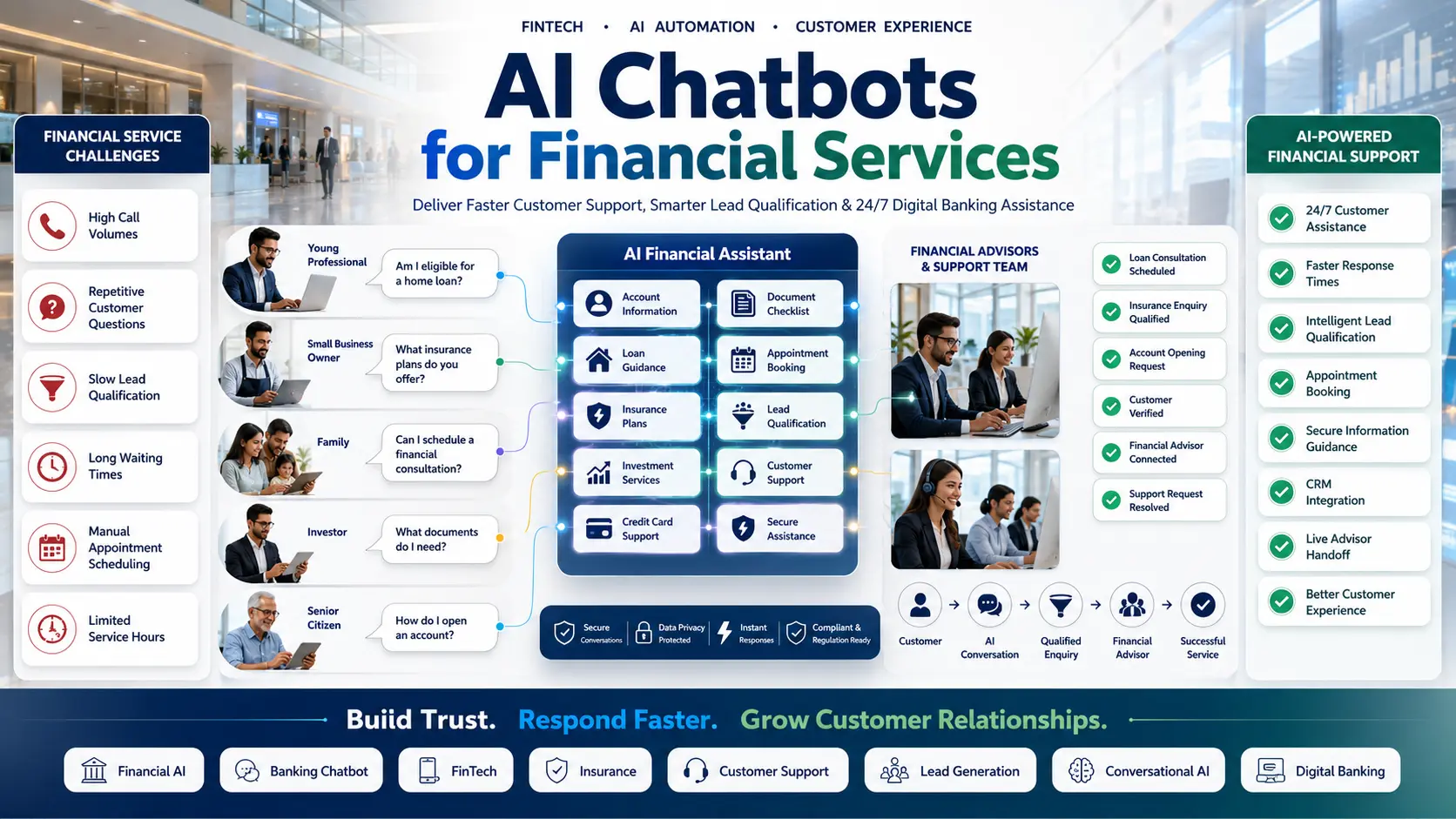
- High Enquiry Volume: Call centers are frequently overwhelmed during tax season, policy renewal periods, or economic shifts.
- Repeated FAQs: Human agents spend hours answering mundane questions like "What are your branch hours?" or "How do I reset my banking PIN?"
- Lead Qualification Inefficiency: Loan officers waste time speaking to applicants who do not meet basic eligibility criteria.
- Long Waiting Times: Customers become frustrated when placed in long IVR (Interactive Voice Response) loops.
- Rising Support Costs: Scaling a human support team linearly with customer acquisition destroys profit margins for fast-growing fintechs.
What Is an AI Chatbot for Financial Services?
Definition
An AI chatbot for financial servicesis a conversational virtual assistant trained on a financial institution's specific product brochures, FAQs, and public documentation. It interacts with website visitors in natural language to provide factual information and automate customer service workflows.
It is crucial to clarify a major distinction: these tools act as an AI Chatbot for Business communication. They assist with information retrieval (e.g., explaining the difference between two types of savings accounts) and workflows (booking appointments, generating leads), but they do not provide financial, investment, or legal advice.
Unlike older rule-based chatbots that offer frustrating "press 1 for loans, press 2 for accounts" menus, conversational AI understands nuance and context, allowing customers to ask complete, natural questions.
How AI Supports the Financial Customer Journey
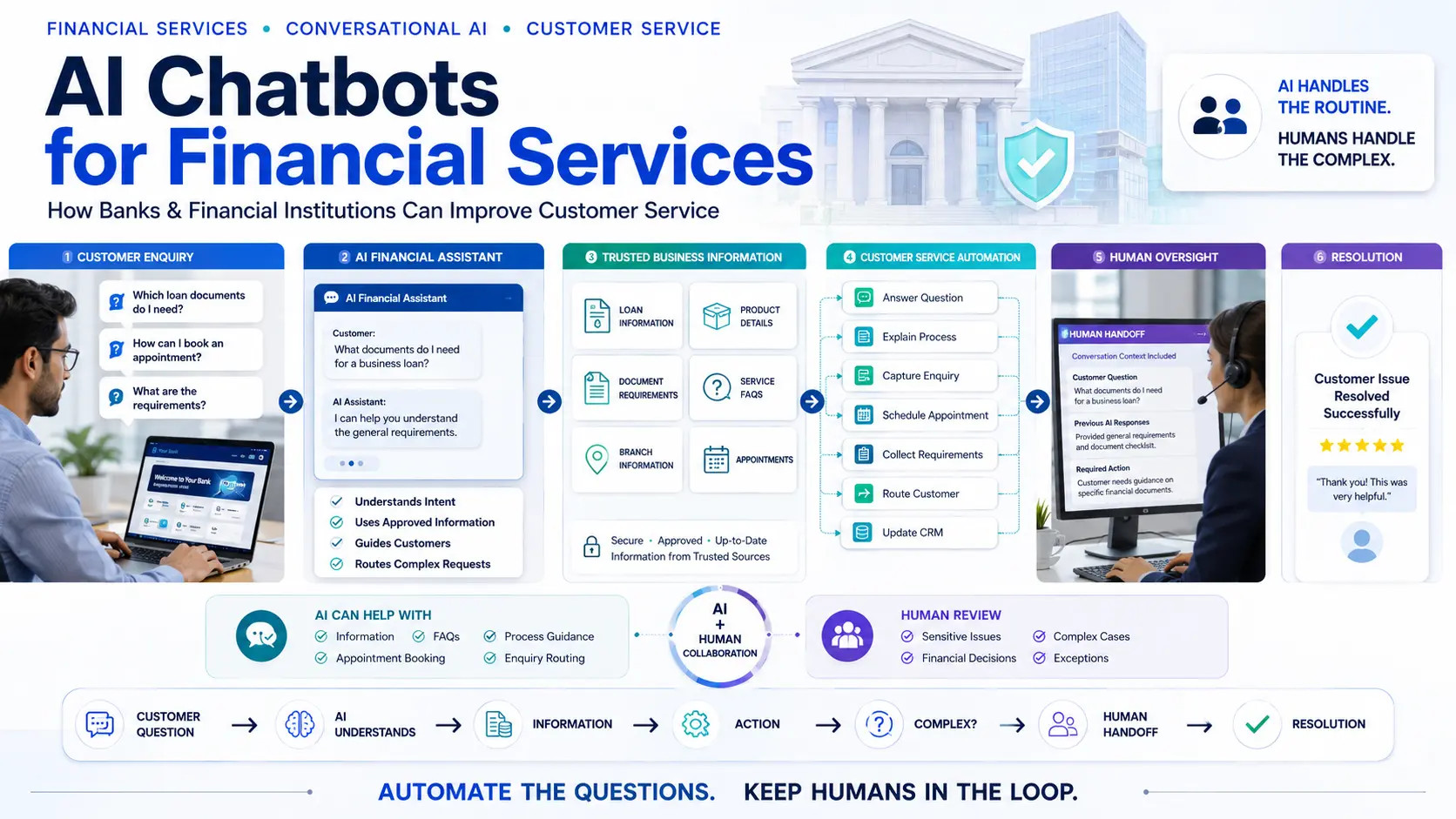
An intelligent Customer Support Chatbot acts as a digital concierge across the entire client lifecycle:
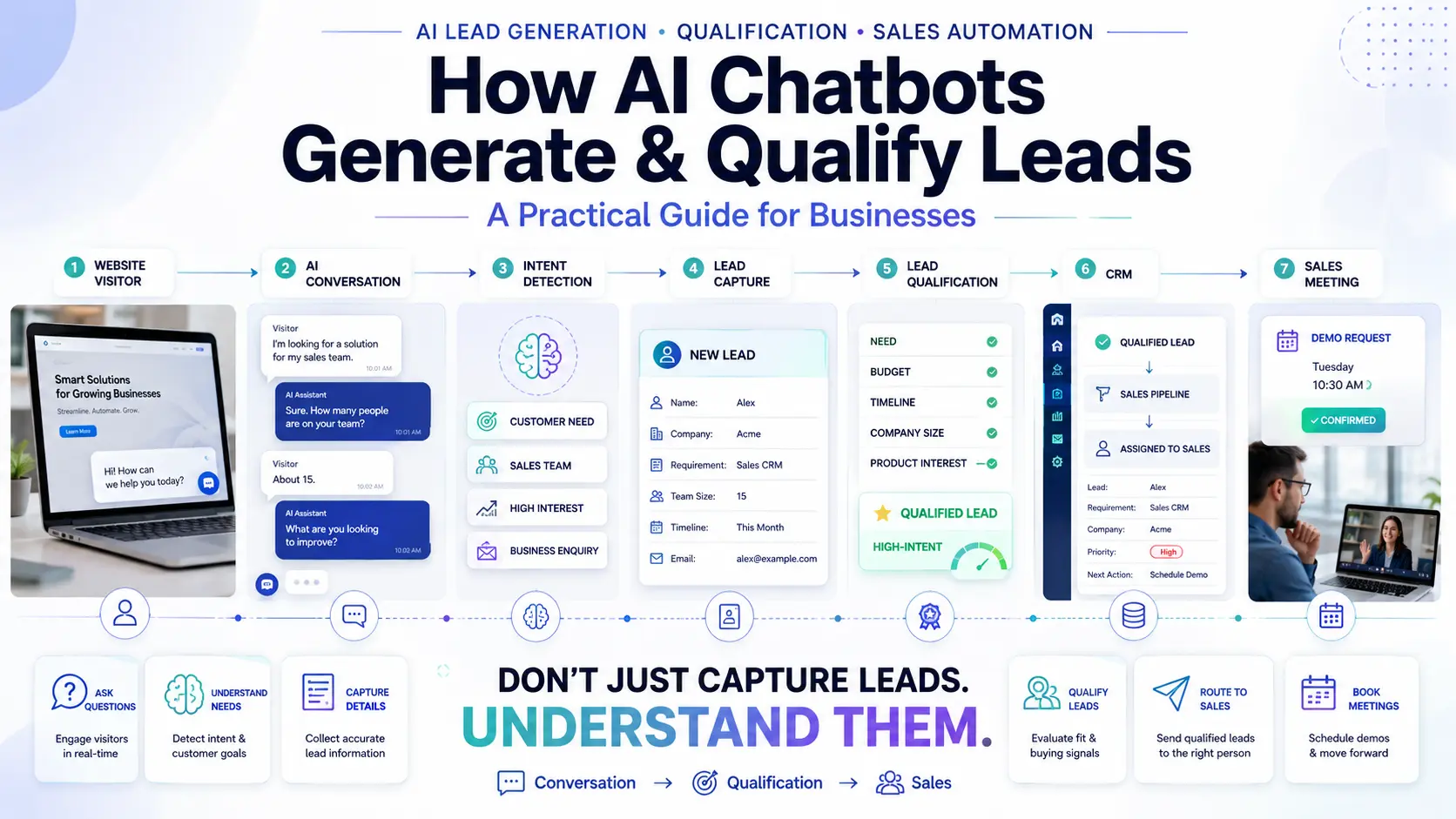
- Website Visitor: A prospect lands on the bank's website looking for mortgage rates. The AI greets them proactively.
- Service Discovery: The prospect asks for current rates. The AI provides the publicly available rate information.
- Eligibility Questions: The visitor asks about minimum credit score requirements, which the AI answers instantly based on the bank's public documentation.
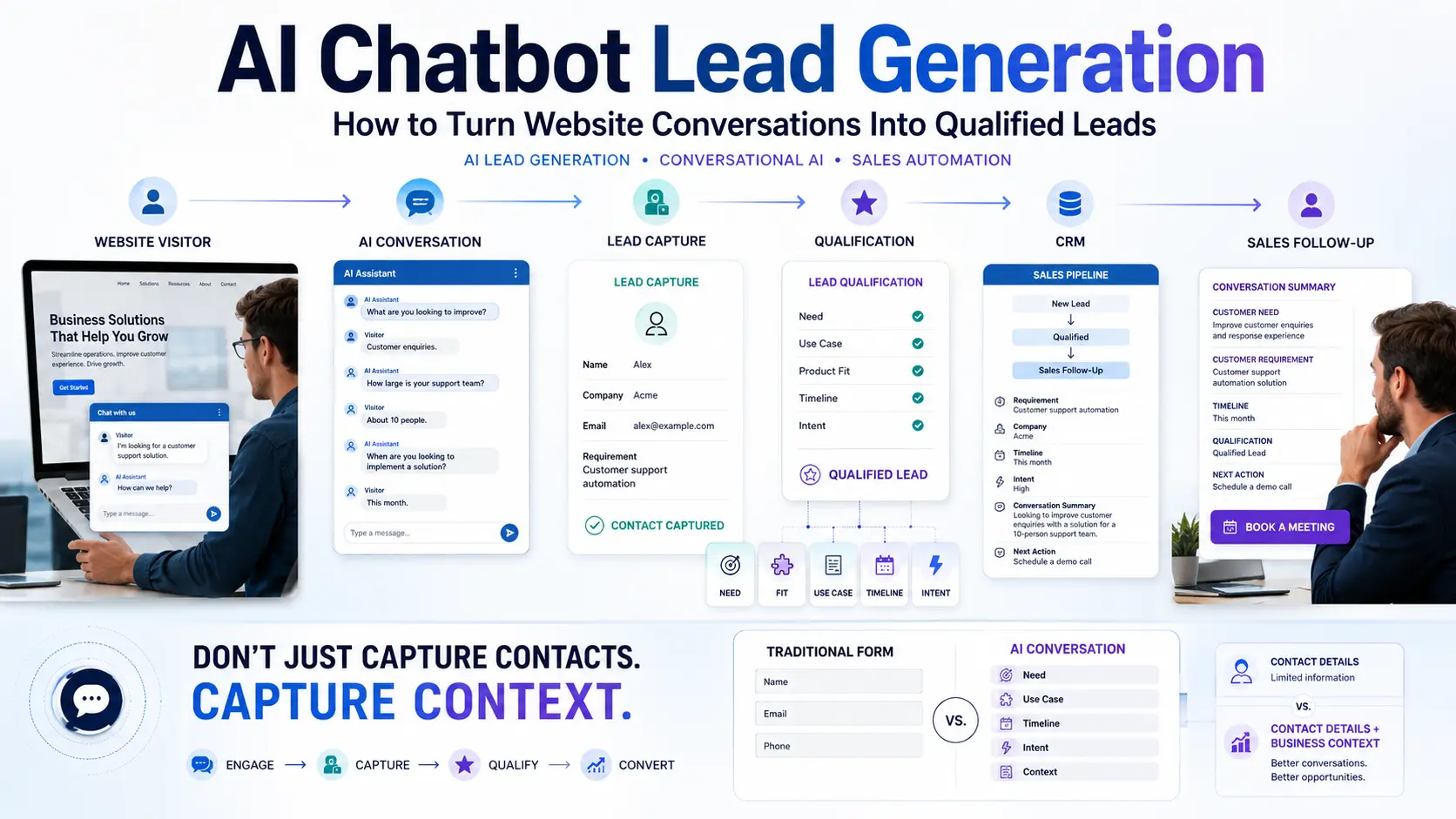
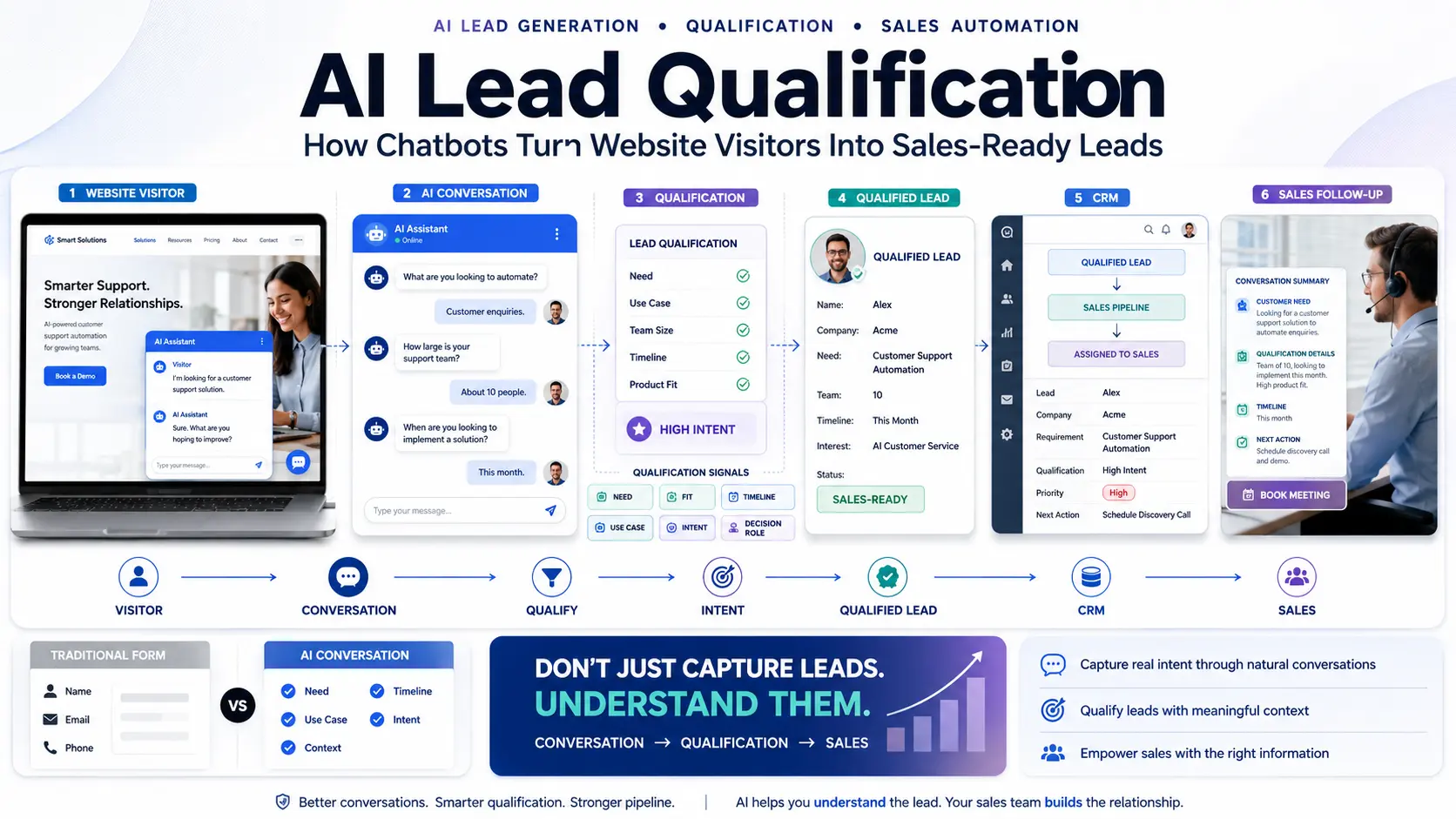
- Lead Qualification: Operating as a Lead Generation Chatbot, the AI asks for the visitor's contact details and expected loan amount.
- Appointment Booking: The AI offers to schedule a call with a human mortgage advisor and books it via calendar integration.
- Document Guidance: Prior to the meeting, the AI can provide the applicant with a checklist of required documents (e.g., pay stubs, ID).
- Post-Sales Support: Existing clients can ask the AI routine questions regarding branch locations, SWIFT codes, or basic policy details.
Real Industry Use Cases
Different financial sectors utilize conversational AI for specific strategic goals:
- Retail Banks: Answering general FAQs about account types, debit card limits, and branch routing numbers to deflect call center volume.
- Insurance Companies: Guiding prospects through policy coverage definitions and assisting existing policyholders in finding the right claims forms.
- FinTech Platforms: Providing rapid 24/7 support for app usage questions and digital onboarding troubleshooting. (Similar to strategies used in SaaS AI chatbots.)
- NBFCs & Loan Providers: Automating the top-of-funnel loan qualification process to ensure sales reps only speak to viable candidates.
- Credit Unions: Offering a personalized, community-focused digital assistant that highlights member benefits.
- Wealth Management Firms: Acting as a digital concierge that schedules discovery calls with high-net-worth individuals while maintaining utmost professionalism.
Benefits of AI Chatbots for Financial Organizations
24/7 Customer Support
Provide accurate answers round-the-clock, ensuring customers have peace of mind even outside regular banking hours.
Faster Response Times
Eliminate queue times for routine questions, vastly improving customer satisfaction scores.
Lower Operational Costs
Deflecting high volumes of L1 support queries reduces the strain on call centers, saving significant operational budget.
Automated Lead Qualification
Ensure your loan officers and advisors spend their time speaking to pre-vetted prospects rather than unqualified leads.
Features to Look For
Financial institutions must prioritize security, accuracy, and professional presentation. Key features include:
- Controlled Knowledge Base: The AI must be strictly constrained to your approved PDFs, policy documents, and website data to prevent hallucinations.
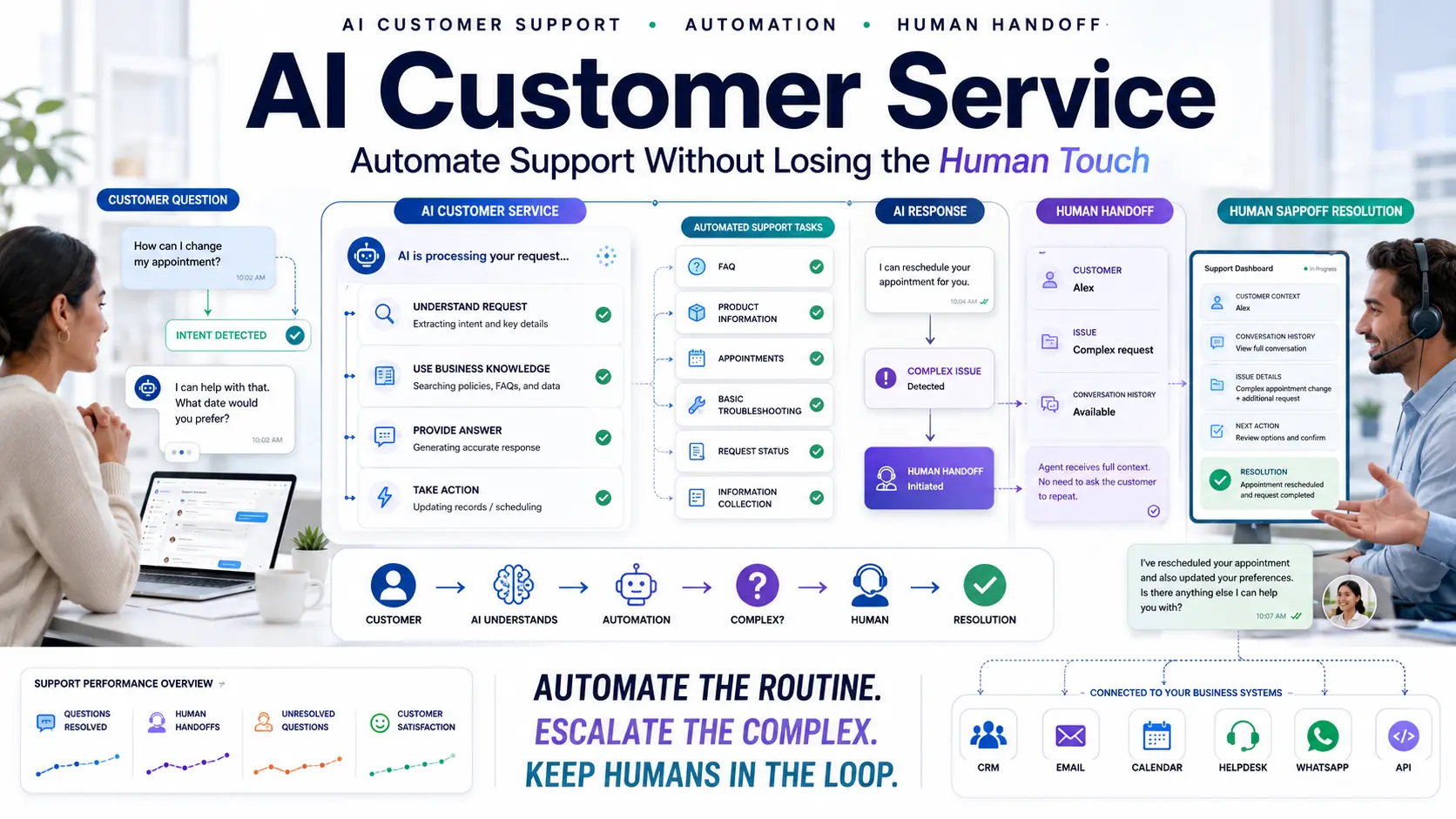
- Live Agent Handoff: Crucial for financial services. The bot must seamlessly transfer complex or sensitive issues to a human representative. (A strategy also vital in Healthcare AI chatbots.)
- CRM Integration: Lead data must flow securely into your CRM (e.g., Salesforce, HubSpot) without manual data entry.
- Appointment Booking: Native scheduling capabilities to convert website visitors into advisory meetings.
- Multilingual Support: The ability to converse accurately in multiple languages to support diverse client bases.
How to Successfully Implement
Step-by-Step Implementation Guide
- Identify Routine Enquiries: Analyze contact center data to find the most common, non-sensitive questions.
- Create an Approved Knowledge Base: Gather official product brochures, public FAQs, and compliance-approved marketing materials.
- Train the Chatbot: Ingest the approved documents into the conversational AI platform.
- Define Escalation Rules: Set clear rules for when the AI must hand off the conversation (e.g., if a customer says "fraud" or "stolen card").
- Integrate with CRM: Connect the chatbot to your lead management and scheduling systems.
- Test Thoroughly: Run mock scenarios to ensure the AI behaves professionally and does not provide financial advice.
- Monitor and Improve: Continuously review chat transcripts to optimize responses and fill knowledge gaps.
Where Quillive Fits
Executing a digital transformation in financial services requires a secure, adaptable communication platform. This is where Quillive acts as a highly effective implementation solution.
Quillive helps banks, insurance providers, and fintechs answer routine customer questions instantly, capture qualified leads, and book appointments with financial advisors—all without requiring complex coding. By strictly constraining the AI to your approved documentation, Quillive ensures that your digital assistant provides factual information while entirely avoiding the provision of financial advice.
Designed to reduce repetitive support work and integrate seamlessly with major CRM systems, Quillive ensures your clients receive immediate assistance while escalating sensitive or complex conversations to your human experts. Discover more about how it works by exploring our Features, experiencing the Demo, or visiting the FAQ.
Frequently Asked Questions
What is a financial services chatbot?
A financial services chatbot is a conversational AI tool designed to assist customers of banks, insurance companies, and fintech firms by answering routine questions, providing product information, and guiding them through service workflows 24/7.
Can AI chatbots provide financial advice?
No. AI chatbots for financial services are designed to provide factual information and automate workflows (like lead generation and appointment booking), not to provide personalized financial or investment advice.
Can a chatbot help with insurance claims?
Yes. An AI chatbot can guide policyholders through the initial steps of filing a claim, securely capturing necessary details and routing them to a human claims adjuster.
How do banking chatbots handle security?
Reputable banking chatbots do not collect sensitive information like full account numbers or passwords directly in public chat widgets. For authenticated environments, they integrate with secure login portals and adhere to stringent compliance protocols.
Can AI qualify loan leads?
Yes. The chatbot can ask prospective borrowers preliminary questions about their income, employment status, and loan requirements, passing qualified leads directly to loan officers.
Can the chatbot schedule appointments with advisors?
Absolutely. Financial chatbots can integrate with calendar systems to allow clients to instantly book discovery calls or branch appointments with wealth managers or financial advisors.
What happens if the chatbot cannot answer a question?
The AI is configured with seamless live agent handoff protocols. If it encounters a complex or sensitive query, it immediately transfers the conversation to a human representative.
Can AI reduce support costs for banks?
Yes, by automating responses to repetitive FAQs such as branch hours, routing numbers, and basic fee structures, AI chatbots significantly reduce the volume of calls to support centers.
Can AI explain complex insurance policies?
Yes, if trained on your policy documents, the AI can instantly retrieve definitions for terms like "deductibles" or "coverage limits" for confused prospects.
Is the AI prone to hallucinations?
By strictly constraining the language model to only reference your officially uploaded documents and URLs, the risk of the AI making up information (hallucinating) is heavily minimized.
Does the chatbot support multiple languages?
Yes, modern AI platforms can automatically translate conversations, allowing financial institutions to serve diverse demographic groups in their native languages.
How long does it take to implement?
By simply uploading existing PDFs and connecting website URLs, a foundational knowledge-based chatbot can be deployed in a matter of days or weeks, depending on internal compliance reviews.
Will the chatbot replace financial advisors?
No. The chatbot acts as a digital assistant that handles routine administrative tasks, ensuring that human financial advisors can dedicate their time to relationship building and strategic advice.
Can the chatbot integrate with Salesforce?
Yes, enterprise AI chatbots seamlessly integrate with CRMs like Salesforce to ensure all lead data and chat transcripts are logged directly into client records.
Can it help with employee onboarding?
Yes, many financial institutions deploy internal-facing chatbots to help new employees quickly find answers regarding HR policies and internal software procedures.
Conclusion
For banks, insurance providers, and fintech companies, digital customer experience is a primary competitive differentiator. By implementing AI chatbots for financial services, organizations can improve their responsiveness, engage customers 24/7, and drastically reduce the operational burden on their support centers.
Crucially, these intelligent assistants automate information delivery and lead qualification workflows, ensuring that licensed financial professionals remain entirely responsible for advisory and decision-making services.
Platforms like Quillive act as robust communication tools that support—not replace—your human experts, helping your institution scale efficiently while maintaining customer trust. Discover more digital transformation strategies on our Blog, or read about similar applications like Ecommerce AI to see cross-industry automation in action.

Quillnext Team
The Quillnext Team helps banks, insurance agencies, and fintech companies implement conversational AI to automate routine support, generate qualified leads, and deliver secure 24/7 digital assistance.
Visit Quillnext