Introduction
Universities today compete for student attention more than ever before. Prospective students are bombarded with choices, exploring multiple institutions, comparing courses online, and attending virtual events simultaneously. Crucially, they expect instant answers to their questions before making an application.
A major problem is that many institutions invest heavily in sophisticated marketing campaigns but lose potential applicants at the very last mile because enquiries are answered too slowly or not at all.
Student recruitment is no longer only about generating enquiries—it is about responding quickly, building trust, and dynamically guiding students through their complex decision-making process. Solving this bottleneck requires scalable technology, which is why a chatbot for student recruitment has become a vital asset for modern higher education institutions.
Why Student Recruitment Has Become More Competitive
The higher education landscape has experienced a dramatic shift.
- Global Competition: Institutions are no longer just competing locally. A student in London might simultaneously consider a university in Australia, a college in Canada, or an online degree from the US.
- Online Research: Today's applicants are digital natives. According to the National Center for Education Statistics (NCES), the majority of research occurs online long before a student ever speaks to a counselor.
- Mobile-First Generation: Gen Z students navigate via mobile. They expect the communication speed they experience with major tech brands to be mirrored by their prospective university.
- Increasing Acquisition Costs: The cost per lead in higher education marketing continues to rise, meaning every unengaged website visitor represents a significant financial loss.
The Biggest Challenges in Student Recruitment
Recruitment and admissions teams are consistently overwhelmed.
Core Bottlenecks
- High Enquiry Volume: Peak recruitment periods generate a flood of questions that outpace human capacity.
- Repeated Questions: Up to 80% of enquiries are repetitive (e.g., "What is the IELTS requirement?" or "When is the application deadline?").
- Slow Email Replies: A 48-hour response time often means the student has already engaged elsewhere.
- No After-Hours Support: International students often research during their day, which is the middle of the night for the university.
Why Traditional Recruitment Methods No Longer Scale
The traditional toolkit—email, phone calls, contact forms, and printed brochures—was designed for an era that no longer exists.
When a prospective student submits a contact form, they enter a state of waiting. If a recruitment officer manually follows up two days later via email, the momentum of the applicant's initial interest is lost. Education fairs are excellent for brand awareness, but they are episodic and expensive. Office hours constrain support to a narrow window. None of these methods scale effectively to provide the immediate, personalized engagement required by modern applicants.
What Is a Student Recruitment Chatbot?
Definition
A student recruitment chatbot is an AI-powered conversational interface designed specifically to engage prospective students. Unlike older, simple bots that force users to click rigid buttons, modern Conversational AI understands natural language, context, and intent.
This means when an applicant asks a complex question like, "I have a GPA of 3.2 and want to study Computer Science, do I qualify for any scholarships?", a university AI chatbot can comprehend multiple variables (GPA, intended major, financial aid intent) and deliver an accurate, helpful response.
How AI Chatbots Improve Student Recruitment
To understand the impact, let us walk through a modernized recruitment journey powered by AI.
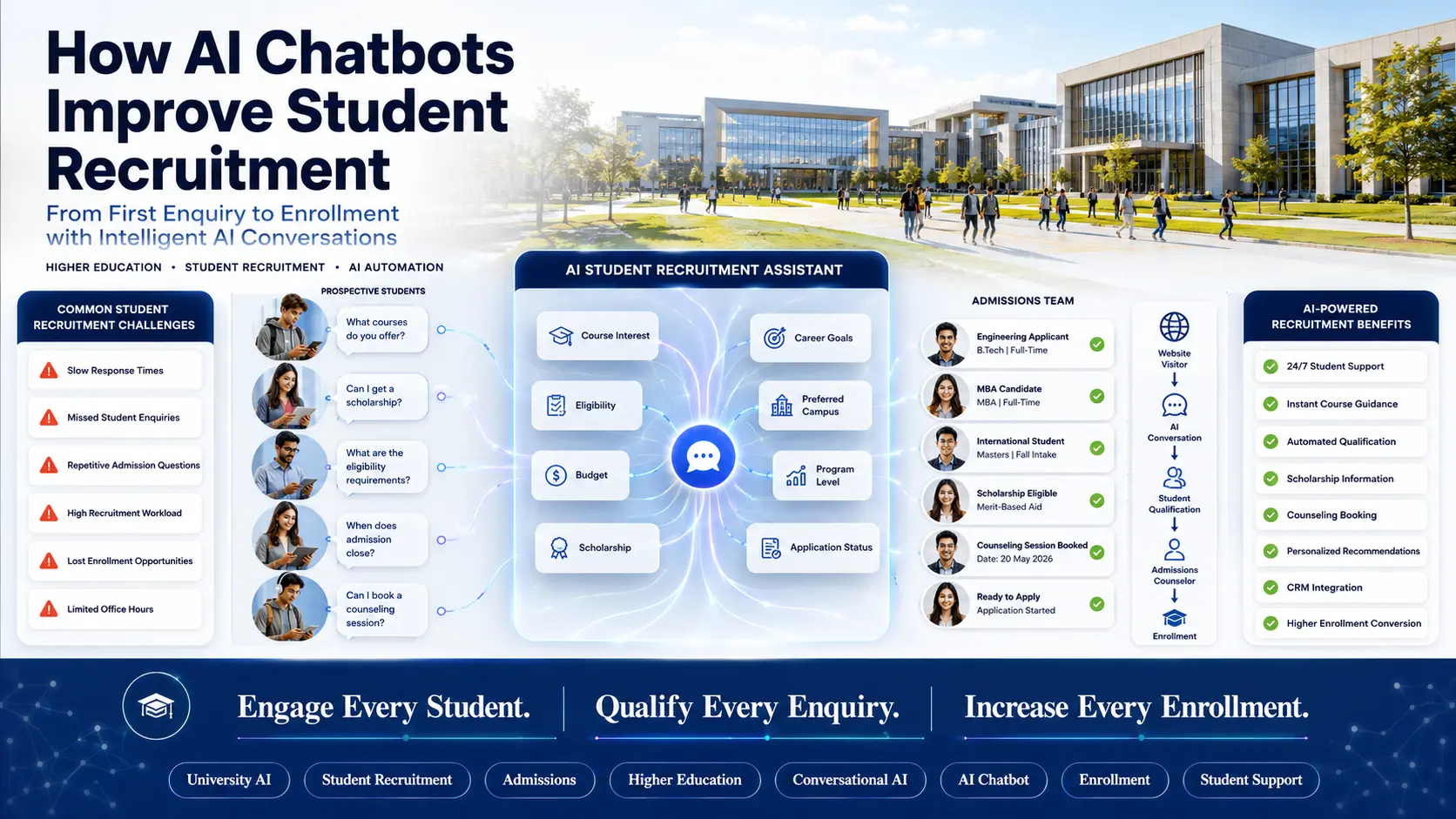
The AI Recruitment Workflow
- Instant Welcome: A visitor lands on the university website. The AI proactively offers assistance tailored to the specific page (e.g., the Engineering faculty page).
- Answering Queries: The student asks about course modules or admission deadlines. The AI instantly retrieves the answer from its trained knowledge base.
- Information Sharing: The AI can share specific PDFs, brochures, or video links directly in the chat.
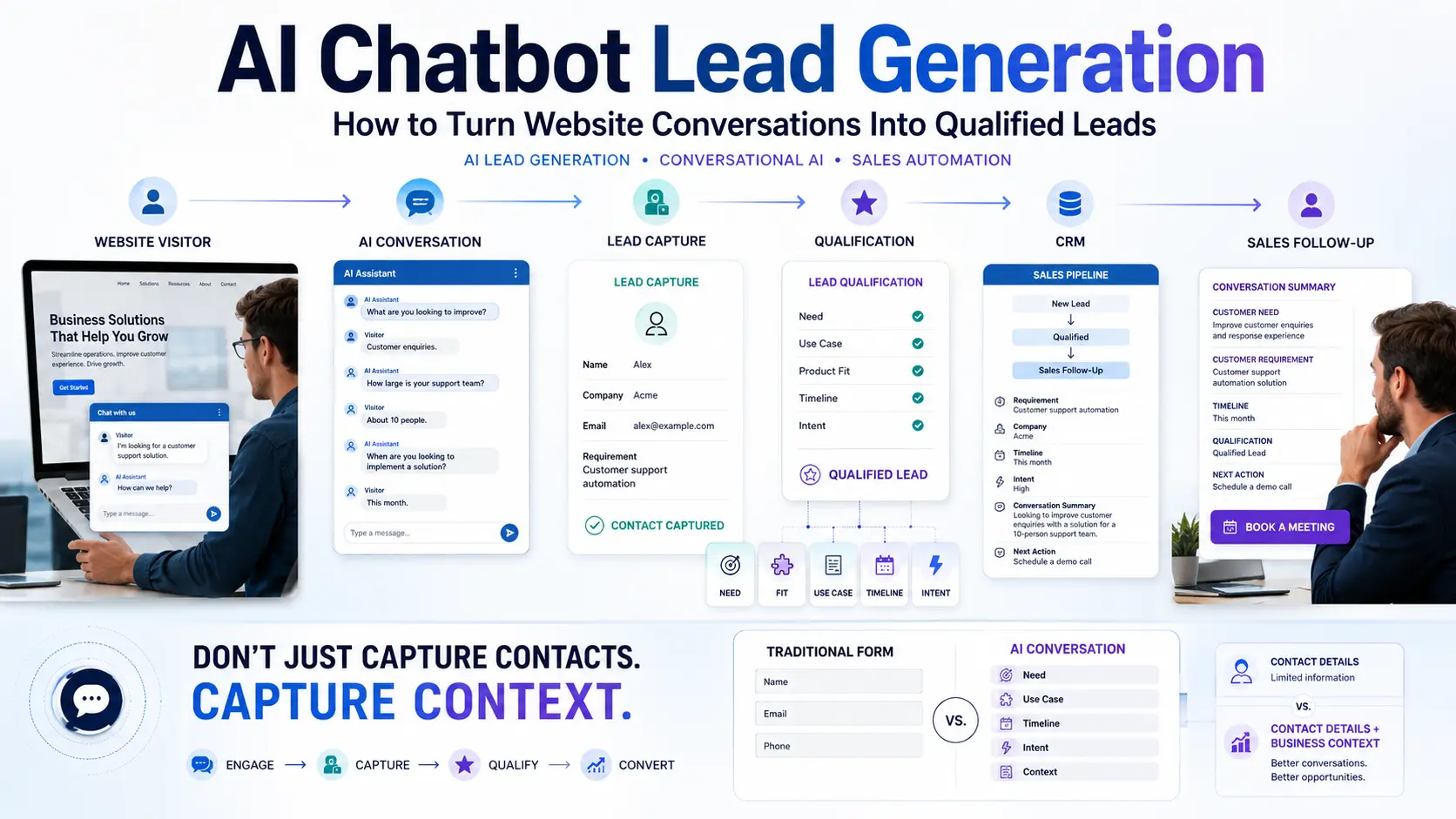
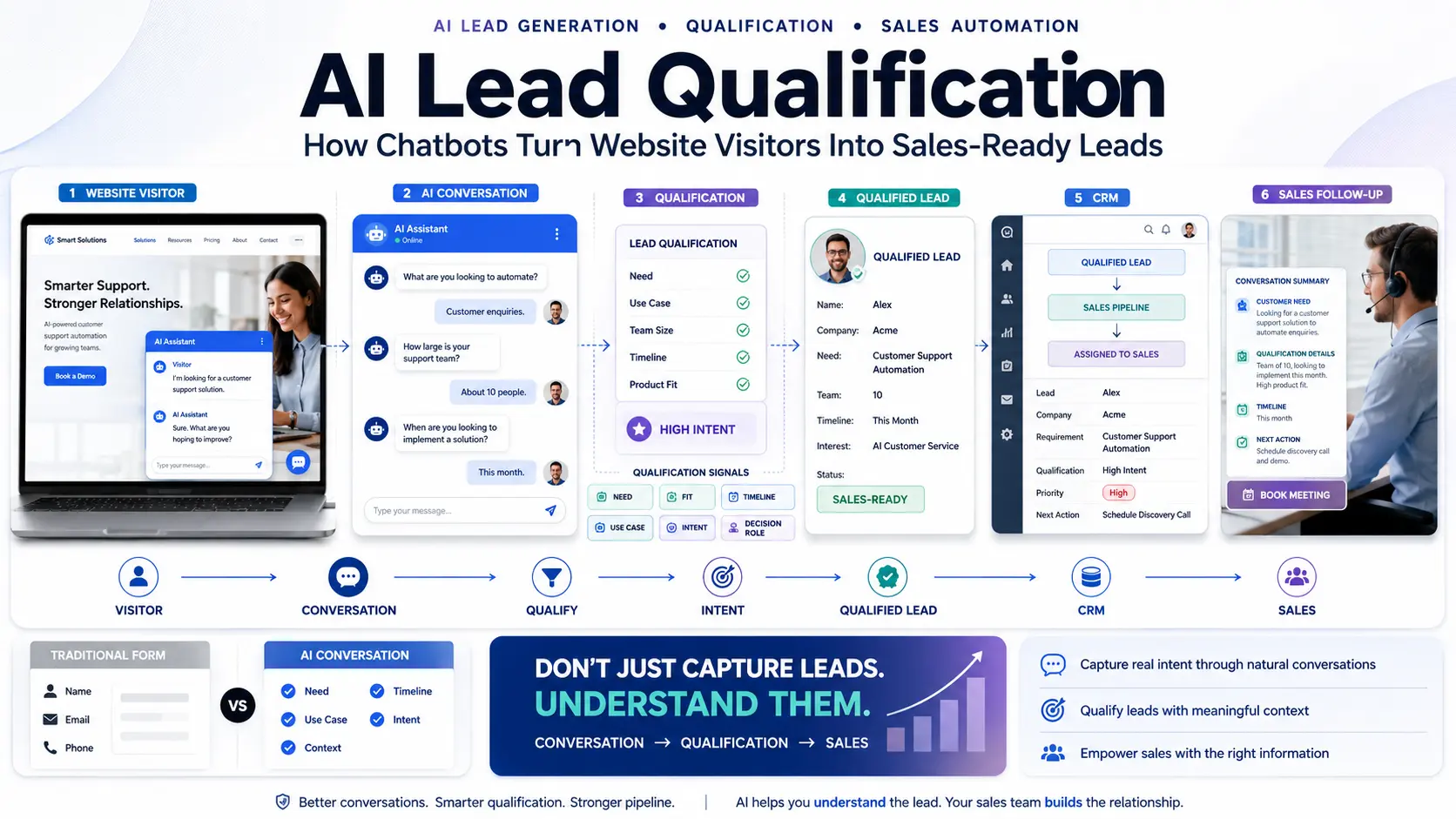
- Qualification: The AI asks the student for their contact details, current qualifications, and desired start term, turning an anonymous visitor into a qualified lead.
- Action Automation: If the student is highly qualified, the AI can seamlessly book a virtual counseling session by integrating with the recruitment team's calendar.
- CRM Sync: The entire conversation transcript and student data profile are automatically pushed into the university's CRM system.
Real Student Recruitment Scenarios
Let's look at how this technology adapts to different applicant profiles.
Example 1: The Domestic Undergraduate
A high school senior is anxious about entry requirements. They chat with the bot to check if their predicted grades meet the threshold for the Business Management degree. The AI confirms the requirements and automatically provides a link to register for an upcoming open day on campus.
Example 2: The International Student
It is 2:00 AM at the university, but 10:00 AM for a prospective student in India. They ask the bot in their native language about visa sponsorship rules and English language test requirements. The AI provides accurate answers instantly, ensuring the student doesn\'t abandon their search due to the time zone difference.
Example 3: The Working Professional
A professional exploring an Executive MBA needs to know if classes are held on weekends. The AI provides the exact schedule, shares an alumni testimonial video, and prompts the user to book a quick call with the program director.
Benefits of AI Chatbots for Universities
24/7 Student Engagement
The recruitment office never truly closes. Enquiries are captured and addressed around the clock.
Reduced Administrative Workload
Staff are freed from answering the same 20 repetitive questions every single day.
Higher Enrollment Conversion
Faster responses build trust, directly correlating to higher conversion rates from enquiry to application.
Scalable Communication
Whether traffic doubles during clearing or a major marketing campaign, the AI handles the volume without delay.
Features to Look for in a Student Recruitment Chatbot
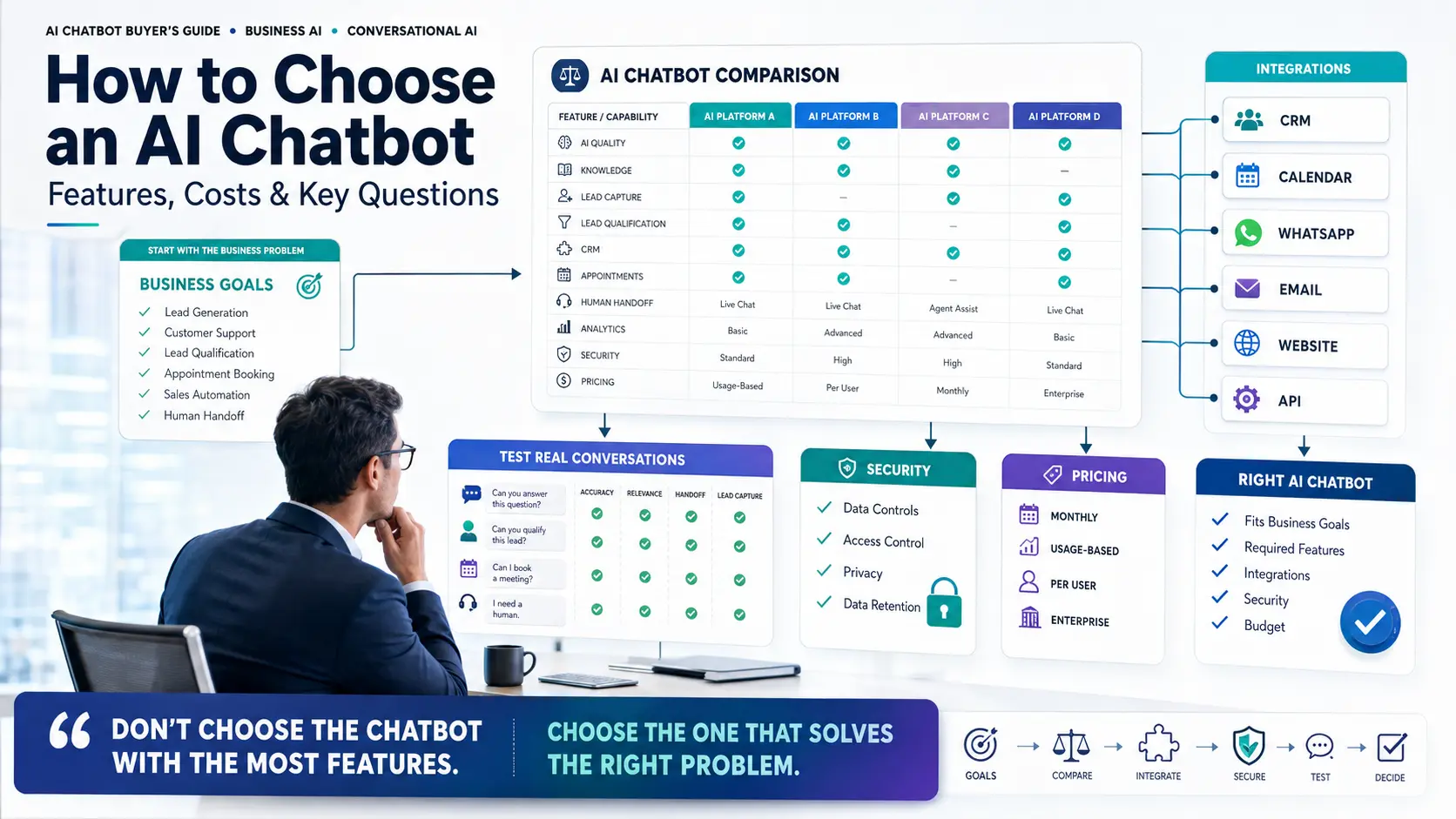
When selecting a platform, universities must ensure the technology possesses specific capabilities.
- Knowledge Base Training: The AI must be able to securely ingest massive university documents, course catalogs, and compliance PDFs.
- Lead Qualification: It must logically route conversations based on the user's input (e.g., separating undergraduates from postgraduates).
- Appointment Booking: Native integration to let students schedule a call with a recruitment officer.
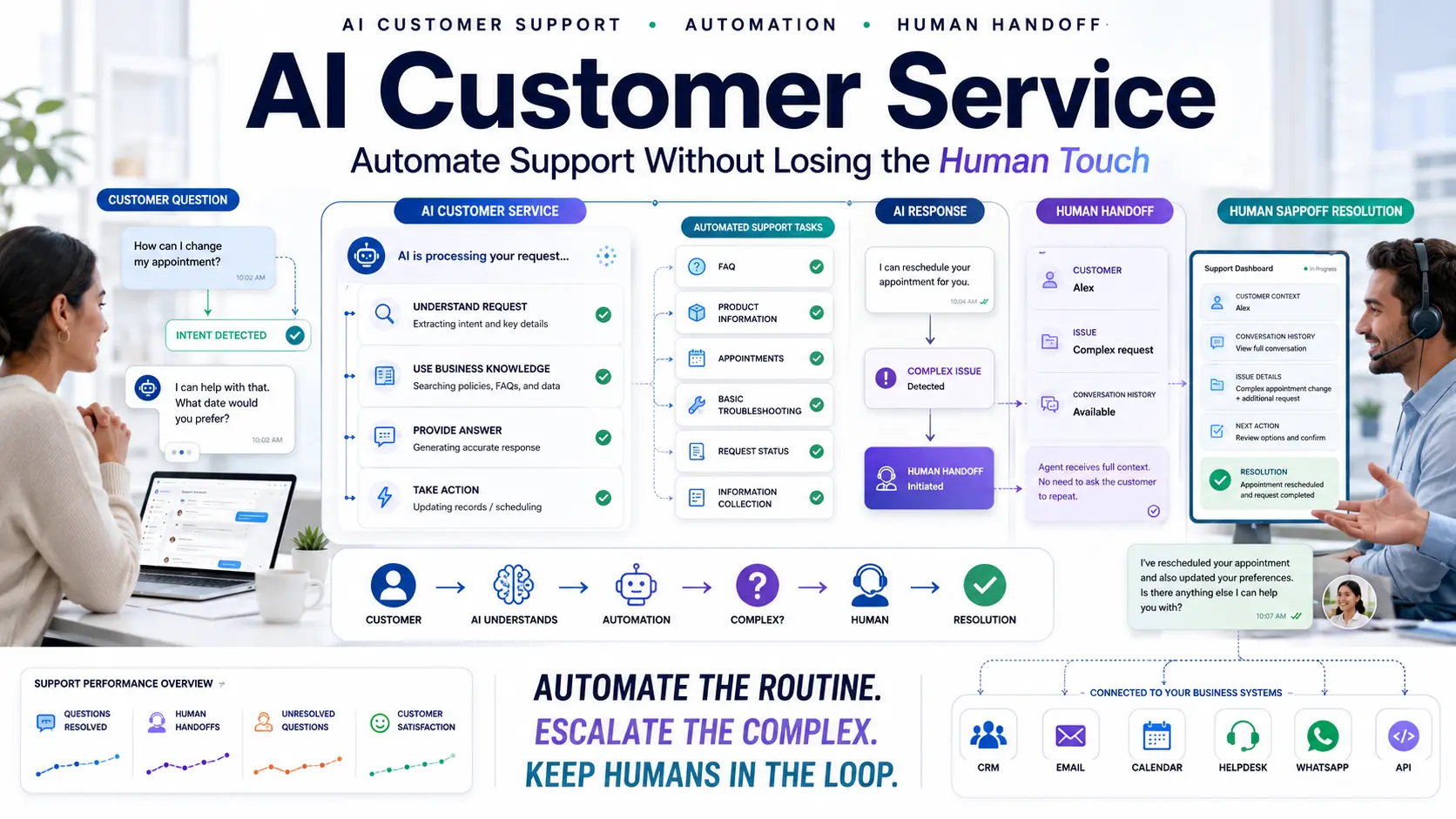
- Live Human Handoff: When a conversation becomes too complex (e.g., specific credit transfer queries), the AI must seamlessly transfer the chat to a live human agent with the full transcript attached.
- CRM Integration: Crucial for maintaining a single source of truth for student records.
How Universities Can Successfully Implement AI Chatbots
Deploying a business-grade AI Chatbot in higher education requires strategic planning.
Step-by-Step Implementation
- Identify Common Questions: Audit past emails to discover what prospective students actually ask.
- Build an Accurate Knowledge Base: Compile clean, up-to-date PDFs, FAQs, and URLs for the AI to ingest.
- Define Escalation Rules: Decide exactly when and how the AI should hand off a chat to a human counselor.
- Integrate the CRM: Connect the chatbot to your central database to prevent data silos.
- Monitor and Improve: Regularly review chat transcripts to discover knowledge gaps and improve the AI's responses.
Where Quillive Fits
Modernizing student recruitment requires a platform built to handle complex knowledge and high-volume conversations seamlessly. This is where Quillive provides significant value as a practical implementation platform.
Rather than relying on rigid, outdated bots, Quillive helps universities leverage generative AI securely. It engages prospective students instantly, intelligently answering their specific course and admissions questions based strictly on the university's approved documentation.
By capturing student enquiries, qualifying applicants dynamically, and booking counseling appointments directly in the chat, Quillive acts as an extension of the admissions team. Crucially, it provides a smooth transfer to human counselors for complex issues, ensuring the university provides a supportive, modern, and highly efficient recruitment experience.
Frequently Asked Questions
What is a student recruitment chatbot?
A student recruitment chatbot is an AI-powered conversational tool deployed on a university's website designed to engage prospective students, answer academic queries, and guide them through enrollment automatically.
How do AI chatbots improve student recruitment?
They provide instant 24/7 responses, qualify prospective students, and eliminate wait times, keeping students engaged and preventing them from applying to competing institutions.
Can AI answer university admission questions?
Yes. Conversational AI can be trained on a university's specific admission guidelines, fee structures, and deadlines to provide accurate answers.
Can AI recommend courses?
Absolutely. By asking the prospective student about their interests and qualifications, the AI can suggest relevant degree programs and share brochures.
Can AI schedule counseling appointments?
Yes. A chatbot for higher education can integrate directly with calendar tools to allow students to book a call or campus visit with an admissions counselor.
Can AI support international students?
Yes. AI chatbots offer multilingual support and 24/7 availability, eliminating the friction caused by time zone differences when recruiting international students.
Can AI qualify prospective students?
Yes, by asking qualifying questions regarding previous scores, budget, and program interest, the AI can score leads before passing them to the recruitment team.
Can AI integrate with university CRM systems?
Leading platforms integrate seamlessly with CRMs like Salesforce Education Cloud to automatically sync student profiles and chat transcripts.
How much does an education chatbot cost?
Costs vary, but comprehensive AI platforms typically range from a few hundred to over a thousand dollars monthly, delivering ROI through increased enrollment.
Will a chatbot replace human admissions staff?
No. AI handles repetitive queries and initial qualification, freeing human staff to focus on complex advisory roles and relationship building.
Can AI chatbots handle high volumes of traffic?
Yes, one of the primary benefits is scalability. AI can handle thousands of simultaneous conversations during peak periods like results day or clearing.
How long does it take to deploy an AI chatbot for a university?
With modern platforms capable of automatic knowledge ingestion, initial deployment can often happen in a matter of days or weeks.
Is the data collected by the chatbot secure?
Reputable enterprise AI platforms comply with strict data privacy regulations (like GDPR) to ensure student data is protected.
Can the chatbot capture email addresses for marketing?
Yes, AI can effectively ask for contact details as part of a lead capture strategy to build the university's marketing database.
What if the AI gives the wrong information?
By strictly constraining the AI to only answer based on uploaded university documents, the risk of hallucinations or incorrect information is minimized.
Do prospective students like talking to chatbots?
Yes, research shows Gen Z applicants strongly prefer immediate answers via chat over waiting days for an email response, provided the chatbot is genuinely helpful.
Can chatbots help reduce summer melt?
Yes. AI can be used to send automated, personalized check-ins to accepted students over the summer to keep them engaged and reduce drop-off.
Does the AI provide analytics?
Robust platforms provide dashboards showing metrics like popular queries, lead volume, and drop-off points, which is invaluable for marketing teams.
Can the AI share PDFs or links?
Yes, an AI can proactively drop links to application forms or share downloadable PDFs directly within the conversation window.
Is a chatbot useful for postgraduate recruitment?
Absolutely. Postgraduate applicants often have highly specific, complex queries that a well-trained AI can answer quickly, accelerating the decision process.
Conclusion
Student recruitment is becoming increasingly digital, competitive, and experience-driven. Universities that provide timely, personalized communication are better positioned to attract and convert prospective students than those relying on legacy methods.
AI chatbots are becoming an indispensable part of that recruitment strategy. By helping institutions engage students instantly, accurately answer academic questions, and intelligently qualify leads, they support recruitment teams at scale.
Platforms like Quillive can help universities modernize their student recruitment processes while ensuring that human counselors remain available and unburdened for the complex conversations that truly require a personal touch.
You can explore more on our Blog or discover how to use a Lead Generation Chatbot effectively.

Quillnext Team
The Quillnext Team helps educational institutions implement conversational AI to modernize student recruitment, improve support, and scale admissions processes.
Book a Demo →