Introduction
Many businesses invest heavily in advertising, SEO, and content marketing to drive traffic to their website, only to lose potential customers because they lack an effective system to capture and qualify them. Generating traffic is only half the battle; converting that traffic into actionable leads is where real revenue is built.
Lead generation today is no longer just about slapping a static "Contact Us" form on a webpage and hoping for the best. It's about creating meaningful conversations, understanding visitor intent instantly, and connecting prospects with the right solution before they navigate to a competitor.
With thousands of software options available, choosing the best lead generation tools for businesses can feel overwhelming. In this comprehensive guide, we will break down the different categories of lead generation software, how they work together, and how to build the perfect technology stack for your unique business needs.
What Are Lead Generation Tools?
Before diving into tool comparisons, it is important to define the core concepts that make up the lead generation ecosystem:
- Lead Generation: The overall process of attracting and converting strangers into prospects who have indicated an interest in your company's product or service.
- Lead Capture: The specific mechanism used to collect visitor information (e.g., name, email, phone number) in exchange for value (e.g., a newsletter, a demo, a quote).
- Lead Qualification: The process of determining whether a captured lead has the budget, authority, need, and timeline (BANT) to become a customer.
- Lead Nurturing: Building relationships with prospects who are not yet ready to buy, usually through automated emails or retargeting.
- Sales Pipeline: The visual representation of where prospects are in the sales process within a CRM.
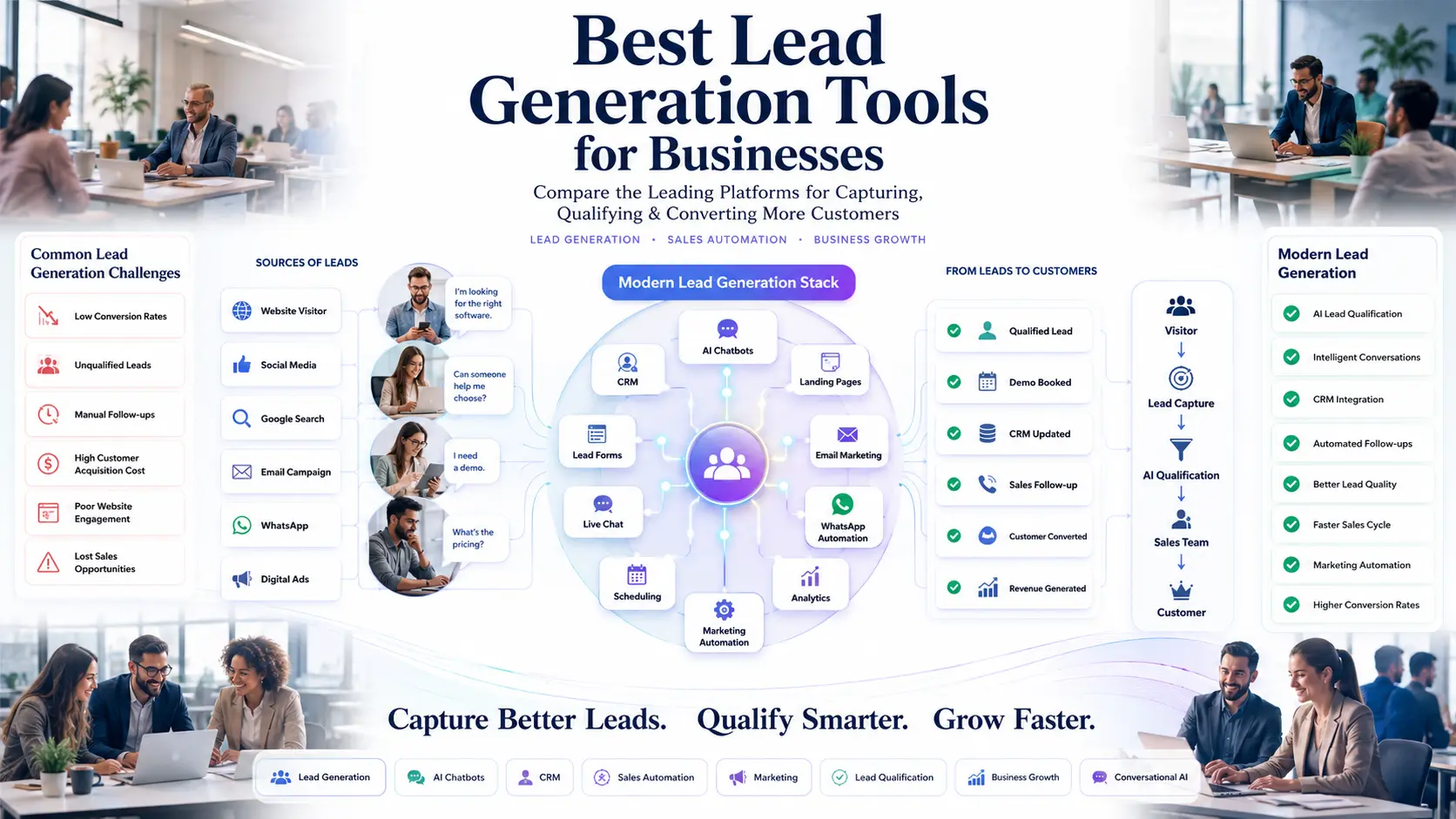
No single tool does all of these things perfectly. A successful strategy requires a stack of tools that integrate seamlessly to move a prospect from a casual visitor to a closed deal.
Why Businesses Need Lead Generation Tools
Operating without dedicated lead generation software is like fishing with your bare hands. You might catch something occasionally, but it is not scalable. Here is why investing in the right tools is critical:
- Rising Customer Acquisition Costs (CAC): Ad clicks are more expensive than ever. You must maximize the conversion rate of the traffic you already pay for.
- Higher Buyer Expectations: Modern B2B and B2C buyers expect instant answers. If they have to wait 24 hours for an email reply, they will go elsewhere.
- Multi-Channel Marketing: Leads arrive from Instagram, Google Search, LinkedIn, and email. You need tools to consolidate these interactions.
- Faster Sales Cycles: Automated qualification tools route hot leads directly to sales teams instantly.
- Data-Driven Decisions: Lead gen tools provide analytics on which marketing channels produce the most qualified prospects.
Categories of Lead Generation Tools
Lead generation software is broadly divided into categories based on where they sit in the marketing funnel. Let's compare the most critical categories and the leading software in each.
1. AI Chatbots (Conversational AI)
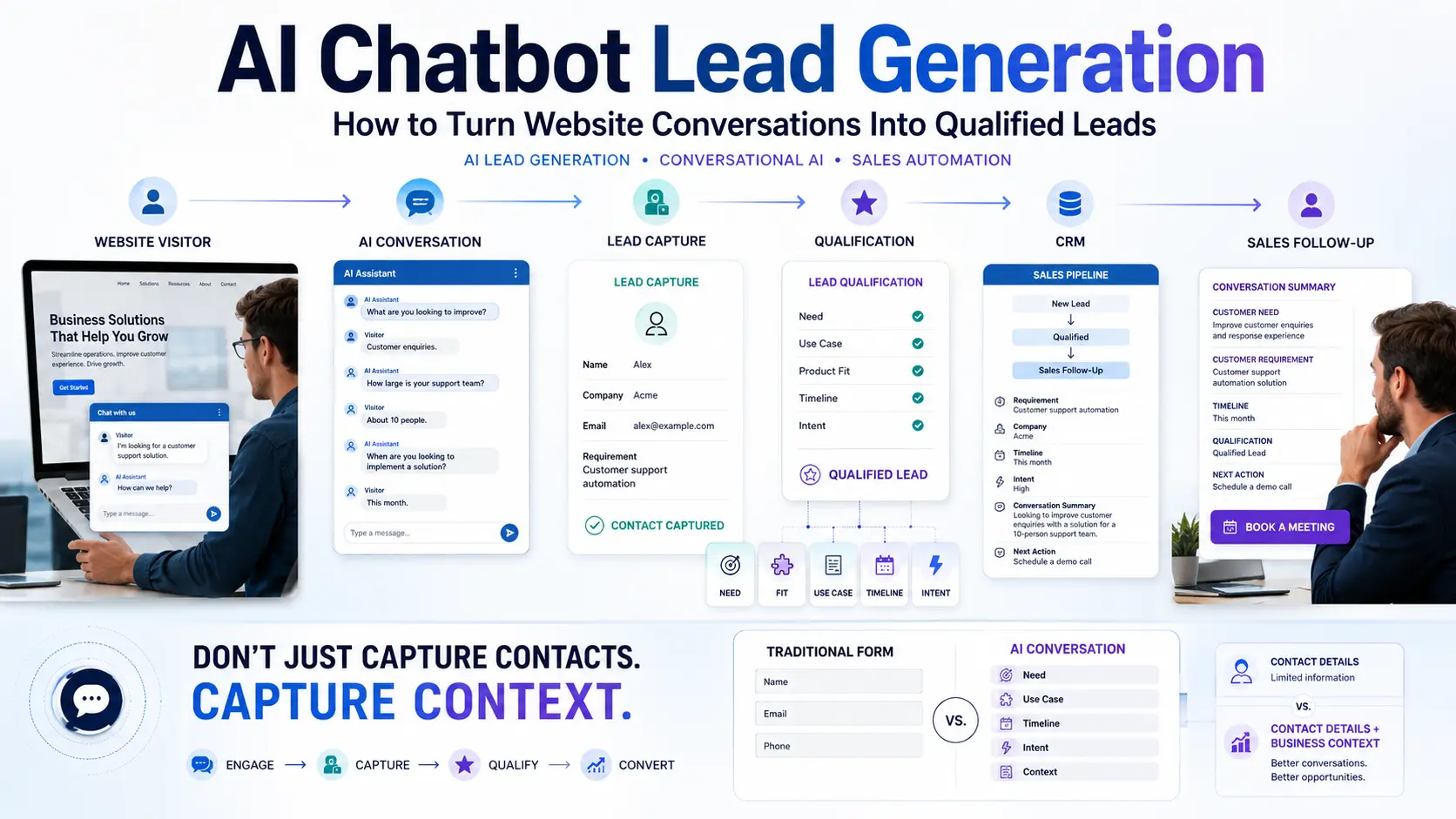
AI chatbots have revolutionized lead capture by replacing static forms with dynamic, natural conversations. By acting as a 24/7 digital assistant, they engage visitors instantly, answer questions, and capture contact information effortlessly.
Examples:
- Quillive: Advanced conversational AI that ingests your business data to answer questions and capture qualified leads round-the-clock.
- Intercom: A powerful customer messaging platform heavily focused on software companies.
- Drift: The pioneer of "conversational marketing," designed primarily for enterprise B2B sales teams.
- Tidio: A popular, simpler live chat and bot tool for small ecommerce sites.
Best For:
Businesses with high website traffic that want to qualify leads instantly and provide 24/7 engagement without hiring more staff. Excellent for SaaS, Education, and Real Estate.
2. CRM Platforms
Customer Relationship Management (CRM) software is the foundation of any lead generation stack. It is where captured leads are stored, tracked, and managed by your sales team.
Examples:
- HubSpot CRM: Widely considered the best all-in-one inbound marketing and CRM platform.
- Salesforce: The enterprise standard for complex, highly customized sales pipelines.
- Zoho CRM: A highly affordable and feature-rich CRM for small to mid-sized businesses.
Best For:
Every business that plans to scale needs a CRM. Without it, leads are lost in chaotic email threads.
3. Landing Page Builders
Landing page builders allow marketers to quickly launch highly targeted, conversion-optimized webpages for specific ad campaigns without needing a developer.
Examples:
- Unbounce: Famous for its drag-and-drop builder and AI-driven A/B testing features.
- Leadpages: Great for small businesses looking to quickly deploy simple pages to capture emails.
- Instapage: A premium tool designed for enterprise ad teams that need personalized post-click experiences.
Best For:
Agencies and marketing teams running Google Ads or Facebook Ads who need dedicated landing pages that convert better than generic website homepages.
4. Forms & Surveys
Traditional lead capture relies heavily on web forms. Modern form tools focus on beautiful UI and conversational design to reduce form abandonment.
Examples:
- Typeform: Known for its elegant "one question at a time" interface that mimics a conversation.
- Jotform: A highly customizable, robust form builder for complex data collection and payment processing.
Best For:
Businesses needing to collect structured data, applications, or extensive feedback from users who are already highly motivated to submit their information.
5. Email Marketing & Nurturing
Once a lead is captured, email marketing tools automate the follow-up sequences required to nurture that prospect until they are ready to buy.
Examples:
- Mailchimp: The most famous entry-level email marketing tool for newsletters and basic automations.
- Brevo (formerly Sendinblue): An excellent, cost-effective platform for email, SMS, and marketing automation.
- Kit (formerly ConvertKit): Built specifically for creators, bloggers, and solopreneurs looking to build audiences.
Best For:
Long-term lead nurturing. Essential for B2B companies with long sales cycles or ecommerce brands driving repeat purchases.
6. Traditional Live Chat
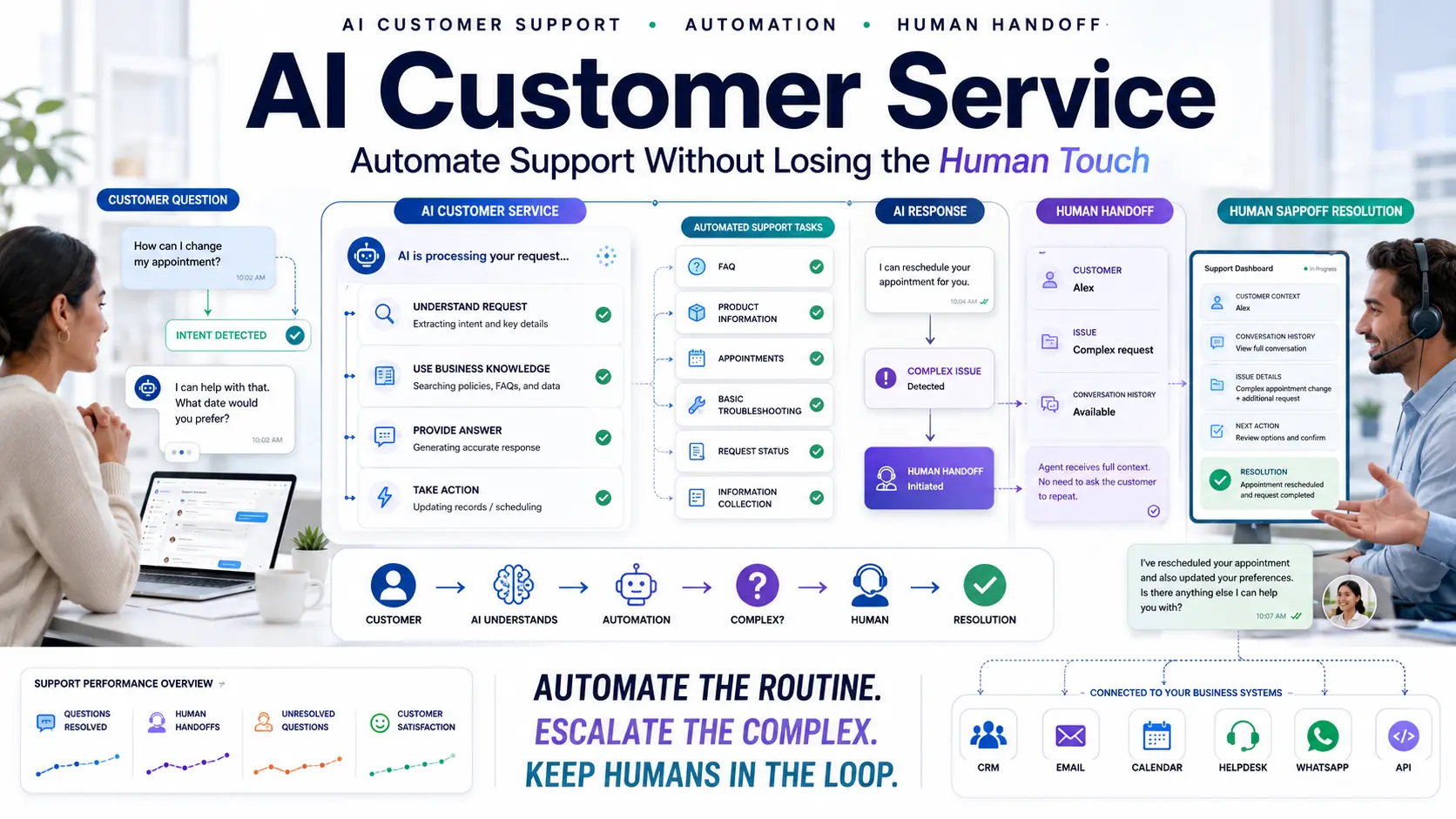
Live chat widgets allow human agents to talk to website visitors in real-time. While effective, they require dedicated staff to be online during business hours.
Examples:
- LiveChat: A robust, enterprise-grade platform for managing customer support teams.
- Crisp: A modern, multi-channel shared inbox tailored for startups.
Best For:
Companies with large, dedicated customer support or sales teams who are staffed to respond within seconds during working hours.
7. Scheduling Tools
Friction in booking meetings kills deals. Scheduling tools remove the endless "when are you free?" emails by allowing prospects to book directly into a sales rep's calendar.
Examples:
- Calendly: The undisputed leader in calendar automation and booking links.
- Cal.com: An open-source alternative gaining massive popularity for its flexibility and developer-friendly features.
Best For:
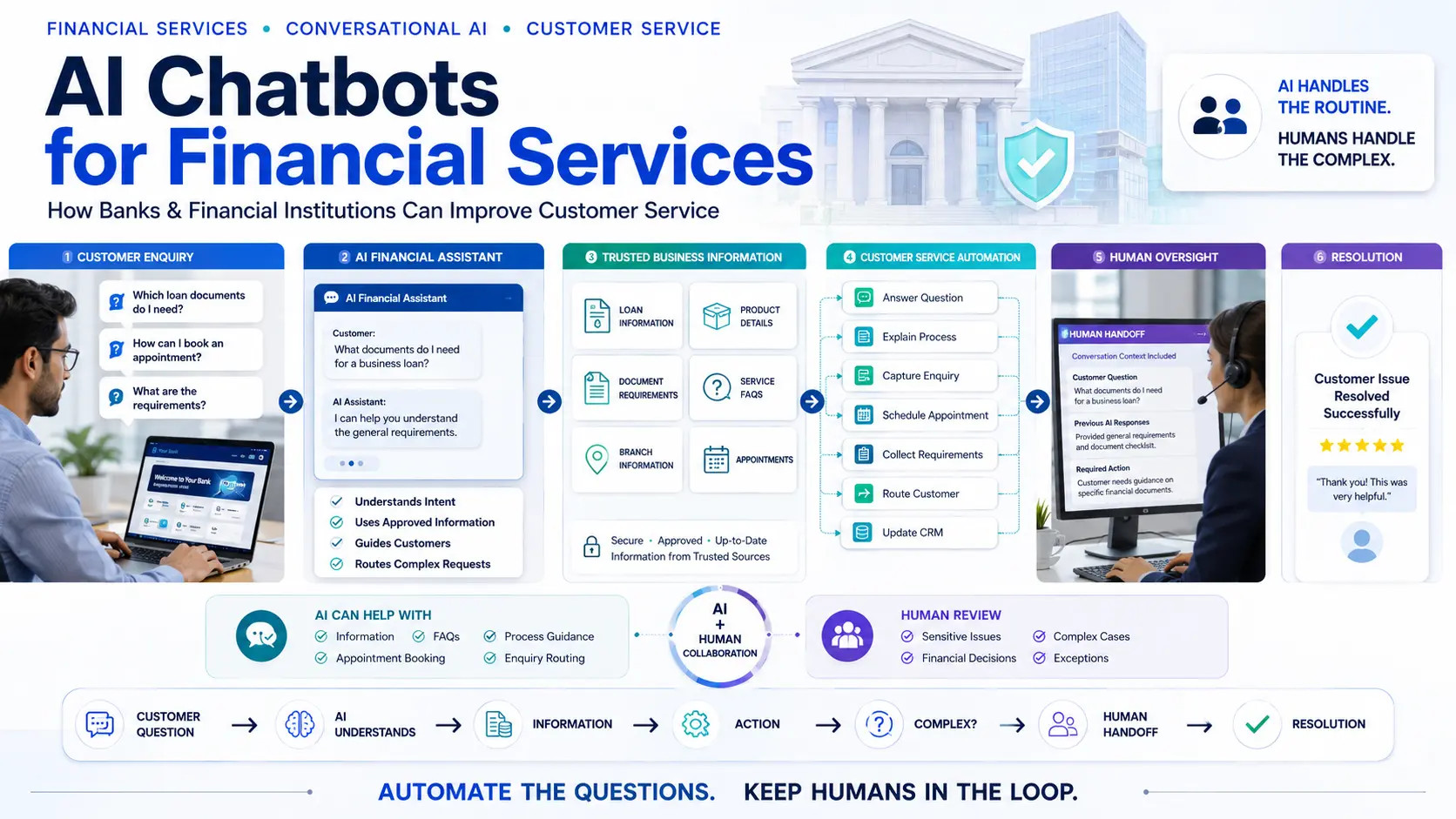
B2B sales teams, consultants, and service businesses (like Financial Services) where the goal is to get the prospect on a discovery call.
How AI Chatbots Have Changed Lead Generation
The lead generation landscape has experienced a major paradigm shift. For decades, the process looked like this:
Traditional Forms: A user lands on a page, is forced to fill out a 7-field form just to get a question answered, and abandons the page out of frustration.
Live Chat: A user asks a question, but because it is 9 PM, the chat widget says "We will be back tomorrow," and the prospect goes to a competitor.
The AI Era: Enter Lead Generation Chatbots. Modern AI acts as a 24/7 sales development representative.
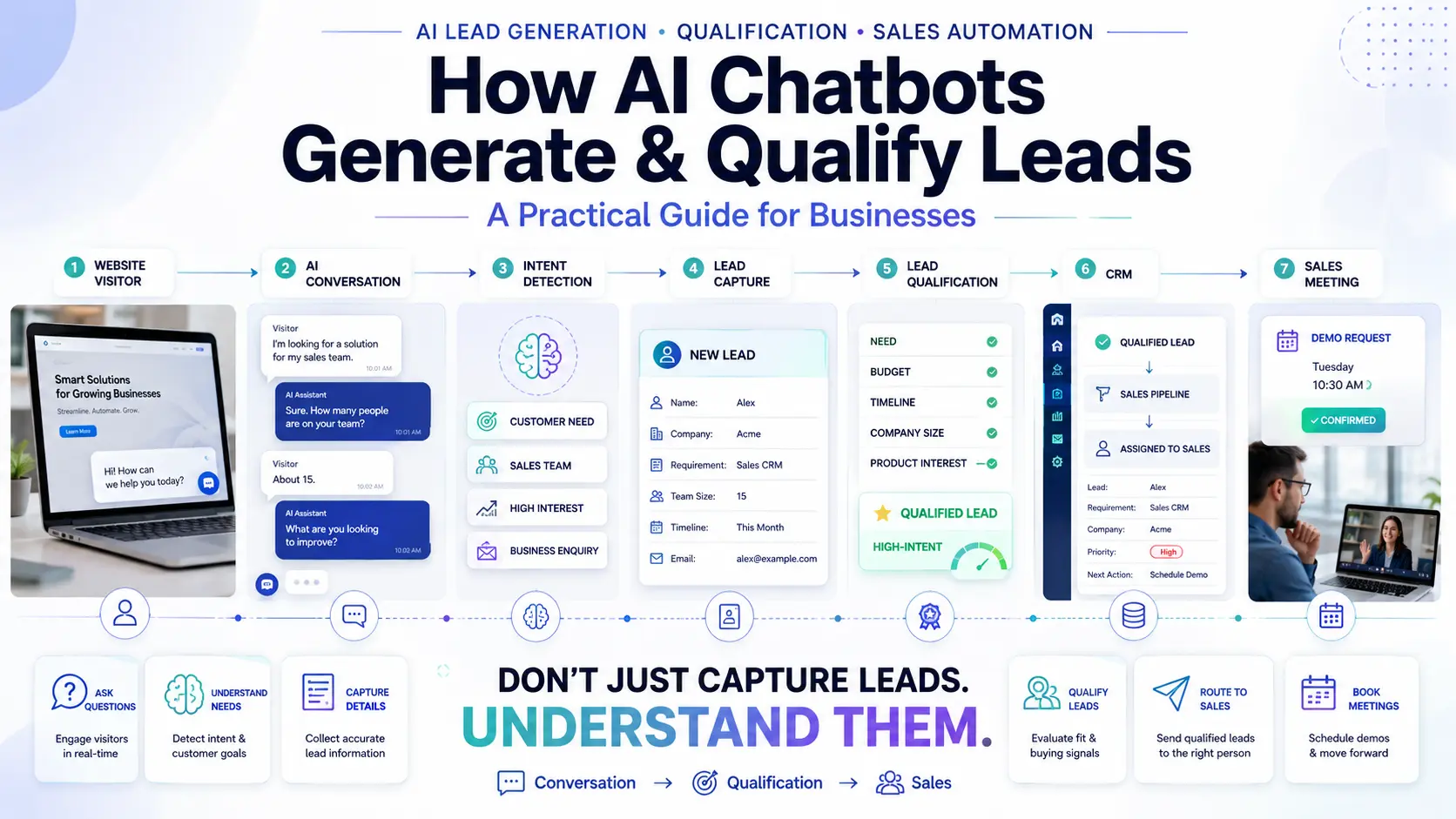
When a visitor lands on a website, the AI can instantly greet them, accurately answer their specific questions about product features or pricing, and naturally ask for their contact details to follow up. It provides value first (answering the question) before extracting value (asking for the email). This conversational approach dramatically increases conversion rates and ensures that all leads sent to the CRM are highly qualified.
How to Choose the Right Lead Generation Tool
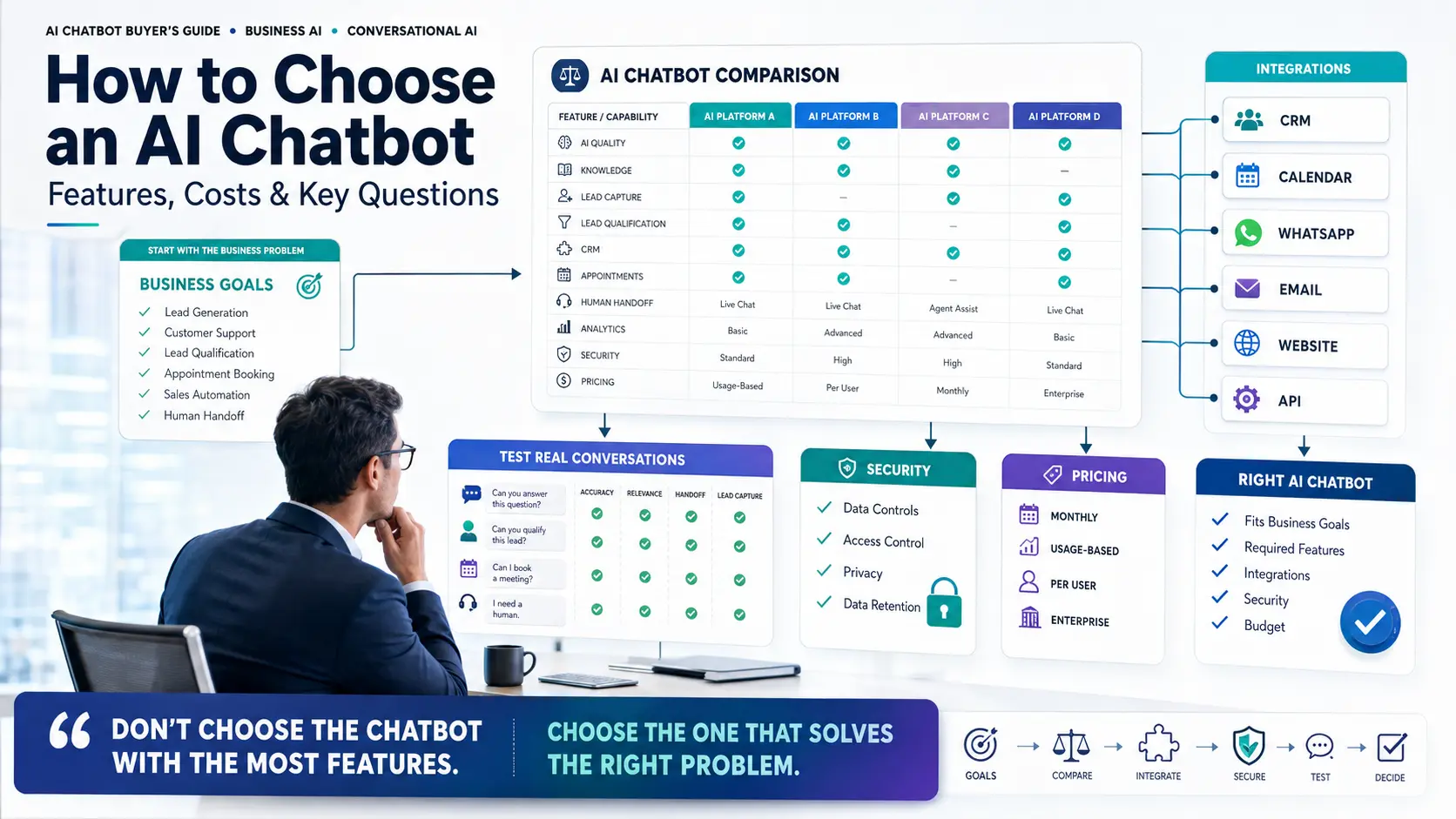
You don't need every tool on this list. To build the right stack, evaluate these core factors:
- Business Size & Budget: A small business might just need an AI chatbot and a basic CRM, while an enterprise needs dedicated landing page builders and complex routing rules.
- Traffic Volume: If you get 10,000 visitors a day, live chat will overwhelm your staff. An AI chatbot is necessary to automate the volume.
- Sales Cycle: If you sell $50 shoes, you need ecommerce automation and cart recovery. If you sell $50,000 software, you need scheduling tools and deep CRM integration.
- Internal Resources: Do you have human agents available 24/7? If not, automation is non-negotiable.
- Integrations: The tools you select must integrate seamlessly. If your chatbot cannot send data to your CRM, it is effectively useless.
Mistakes Businesses Make
Disconnected Tools
Using a form builder that doesn't connect to the CRM forces staff to copy-paste data, leading to lost leads and human error.
Ignoring Follow-Up
Generating 500 leads means nothing if your sales team takes 48 hours to reply. Speed to lead is everything.
No Qualification Process
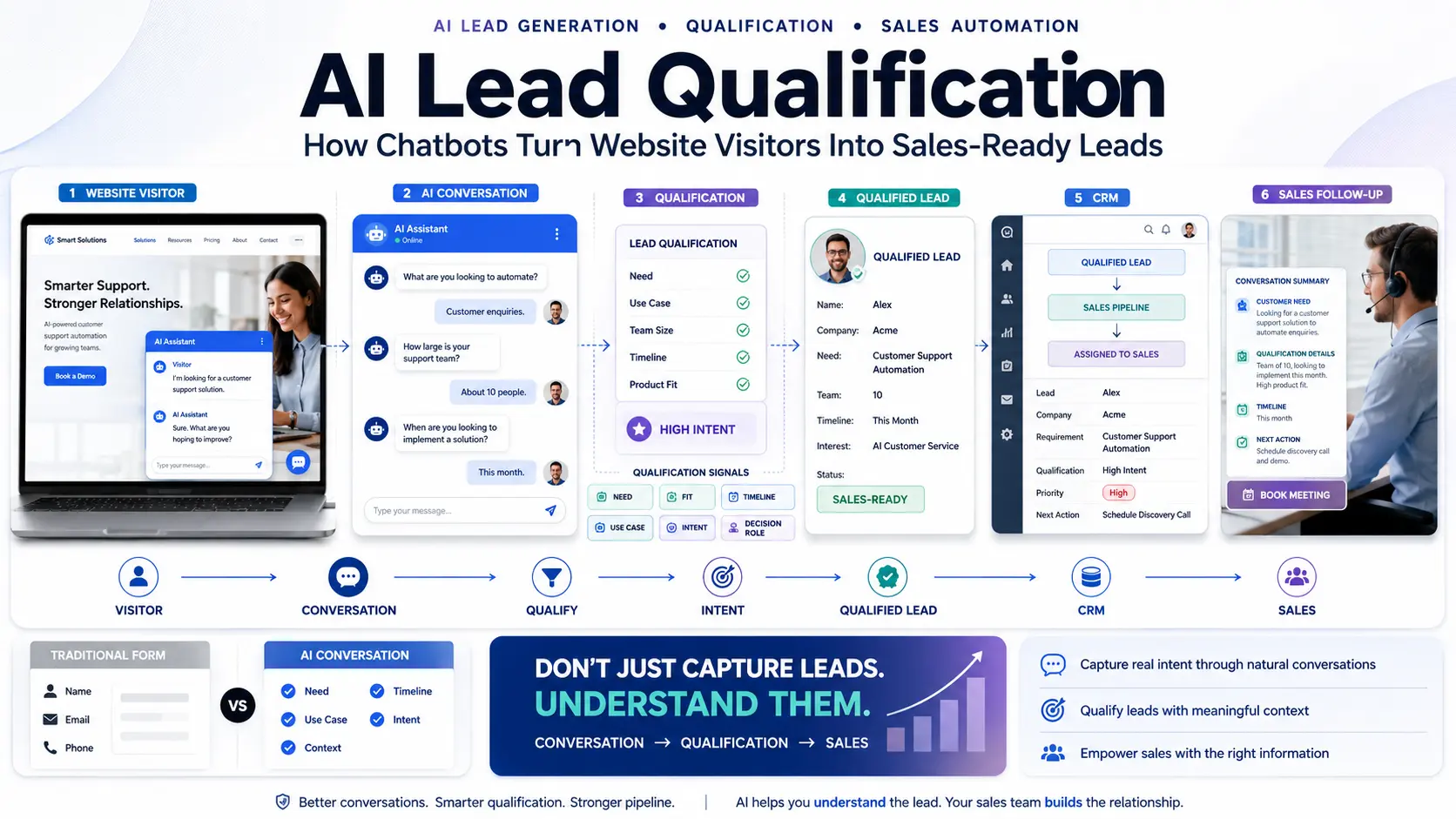
Allowing every single enquiry to book a meeting wastes your sales team's time on unqualified prospects.
Poor Website Experience
Using aggressive pop-ups that block content on mobile devices infuriates visitors and ruins brand trust.
Where Quillive Fits
While a robust CRM is essential for managing your sales pipeline, the mechanism you use to capture visitors at the top of the funnel dictates how fast your business grows. This is where Quillive plays a pivotal role in the modern lead generation stack.
Quillive helps businesses replace static, low-converting forms with intelligent conversational experiences. By engaging website visitors 24/7, accurately answering their questions based on your data, and naturally asking for their contact details, Quillive captures highly qualified leads while you sleep.
It integrates flawlessly with your CRM and scheduling tools (like Calendly) to ensure that the moment a qualified prospect provides their details, they are routed to the right salesperson instantly.
Unlike basic live chat that requires human staffing, or rigid rule-based bots that frustrate users, Quillive acts as an empathetic, knowledgeable digital assistant. Discover how it can modernize your lead capture strategy by exploring our Features or experiencing the Demo.
Frequently Asked Questions
What are lead generation tools?
Lead generation tools are software applications that help businesses attract, capture, and qualify potential customers. They include chatbots, forms, CRMs, and email marketing platforms.
What is the best lead generation software?
The best software depends on your business needs. HubSpot is excellent for CRM, Typeform for surveys, and AI chatbots like Quillive for conversational lead capture on your website.
Can AI generate leads?
Yes. AI chatbots engage website visitors in natural conversations, answer their questions 24/7, and collect contact information, acting as an automated lead generation engine.
Are chatbots better than forms?
Often, yes. Chatbots provide an interactive, frictionless experience compared to static forms, which typically have lower conversion rates because they require more effort from the user without offering immediate answers.
How much does lead generation software cost?
Costs vary widely. Basic forms might be free or $10/month, while enterprise CRM and conversational AI suites can range from $50 to over $1,000 per month depending on features and volume.
Can AI qualify leads?
Yes. AI chatbots can ask qualifying questions (like budget, company size, or timeline) during a natural conversation and route only the qualified leads to your sales team.
Do I need a CRM?
Yes, a CRM is highly recommended. Without a CRM, leads captured by chatbots or forms get lost in email inboxes. A CRM centralizes your prospect data for better follow-up.
Can lead generation tools integrate with WhatsApp?
Yes, many modern lead generation tools and AI platforms offer WhatsApp integration, allowing you to capture and nurture leads directly on the messaging platform they prefer.
What is lead nurturing?
Lead nurturing is the process of developing relationships with buyers at every stage of the sales funnel, usually through targeted email marketing campaigns, until they are ready to buy.
How do I increase my website conversion rate?
Reduce friction. Replace long forms with conversational AI, ensure your site loads fast, and make it incredibly easy for visitors to get answers to their specific questions.
Should I use live chat or an AI chatbot?
If you have a dedicated 24/7 support team, live chat is great. If you don't, an AI chatbot is far superior because it guarantees instant answers for visitors at any time of day.
What is BANT in lead generation?
BANT stands for Budget, Authority, Need, and Timeline. It is a framework used by sales teams and AI chatbots to determine if a prospect is qualified to buy.
What is a lead magnet?
A lead magnet is a free item or service (like an ebook, webinar, or discount code) given away for the purpose of gathering contact details.
Can scheduling tools generate leads?
Yes, by removing the friction of emailing back and forth, tools like Calendly allow high-intent visitors to book a meeting instantly, securing the lead.
How fast should I follow up with a lead?
Within 5 minutes. The odds of qualifying a lead drop exponentially if you wait longer than 5 minutes to follow up. This is why AI automation is so critical.
Conclusion
Modern lead generation requires a strategic combination of tools—not just a single platform. A high-performing business needs a robust CRM to store data, email marketing software to nurture prospects, and a frictionless way to capture leads on their website.
In the era of instant gratification, AI chatbots have become the most critical top-of-funnel tool. By providing immediate, personalized answers 24/7, they engage visitors before they bounce and qualify them before they ever reach your sales team.
Platforms like Quillive are designed to sit perfectly within this modern stack, acting as the conversational bridge between your website traffic and your CRM. By implementing the right tools, you can ensure that the money you spend driving traffic actually translates into sustainable revenue. To learn more, read our guide comparing an AI Chatbot vs ChatGPT.

Quillnext Team
The Quillnext Team helps businesses implement conversational AI to automate lead capture, qualify prospects, and seamlessly integrate website traffic into modern CRM pipelines.
Visit Quillnext