The Modern Business Problem
Imagine a prospective client lands on a company website late on a Friday evening. They have a clear budget and are ready to make a purchasing decision, but they have one specific question about pricing or compatibility. They look for answers, but the only options are a dense FAQ page or a "Contact Us" form that promises a reply within 24 to 48 business hours.
Frustrated, they leave the site and find a competitor who provides an instant answer.
Across industries, businesses are experiencing a massive disconnect. Leaders are investing heavily in new technology, yet customers remain frustrated by slow response times, repetitive questions going unanswered, and a severe lack of immediate support when they need it most. Marketing teams are spending significant budgets to drive traffic to their websites, only to watch those hard-earned leads bounce away due to friction in the communication process. This bottleneck directly chokes business growth.
Why This Disconnect Exists
Why does this happen, especially when businesses have more tools at their disposal than ever before? The root cause lies in misaligned priorities and a fragmented approach to communication.
- Internal Focus Over External Support: Companies often prioritize internal productivity tools while neglecting the external, customer-facing experience.
- High Enquiry Volume: Support teams are overwhelmed with repetitive, basic questions, preventing them from promptly addressing high-value leads.
- Office-Hour Limitations: Consumer behavior has shifted; buyers do research 24/7, but traditional business support still operates on a 9-to-5 schedule.
- Disconnected Systems: Businesses deploy multiple communication channels (email, social media, phone), leading to scattered inquiries and delayed manual follow-ups.
The Impact on Business Growth
The consequences of this communication gap are measurable and severe. As highlighted by research from organizations like Harvard Business Review, when businesses fail to provide instant gratification to website visitors, they suffer from:
Lost Leads
Potential customers drop off when they cannot find quick answers, resulting in missed sales opportunities.
High Support Costs
Hiring human agents to answer repetitive questions drives up operational costs unnecessarily.
Employee Burnout
Support staff become fatigued answering the same basic queries instead of solving complex problems.
Poor Customer Experience
Long wait times damage brand reputation and lower overall customer satisfaction and loyalty.
Why Traditional Solutions Fail
Historically, businesses have tried to patch these leaks using conventional methods. They hire more support staff or outsource to call centers. They build lengthy, static FAQ pages, hoping visitors will read them. They set up auto-responder emails saying, "We have received your request."
These traditional solutions fail because they do not scale and they do not align with modern consumer expectations. Static websites require the user to do the work. Manual follow-up is too slow. Hiring more staff for basic questions is economically inefficient and doesn't solve the problem of scaling during seasonal spikes or after hours.
The AI-Powered Solution
The most effective way to resolve this friction is through Conversational AI and advanced AI Chatbots.
Unlike old, frustrating script-based bots that forced users to click buttons in a maze, modern AI understands natural language. An AI Assistant acts as a frontline digital worker, instantly interpreting user intent, pulling information from a connected Knowledge Base, and engaging the visitor in a dynamic, helpful conversation.
These solutions combine automation, lead capture, and multilingual AI to transform a static website into an interactive, helpful experience.
Key Benefits of Conversational AI
Implementing a proper AI strategy yields immediate business outcomes:
- 24/7 Instant Responses: Engage customers immediately, whether it's 2 PM or 2 AM, on weekends or holidays.
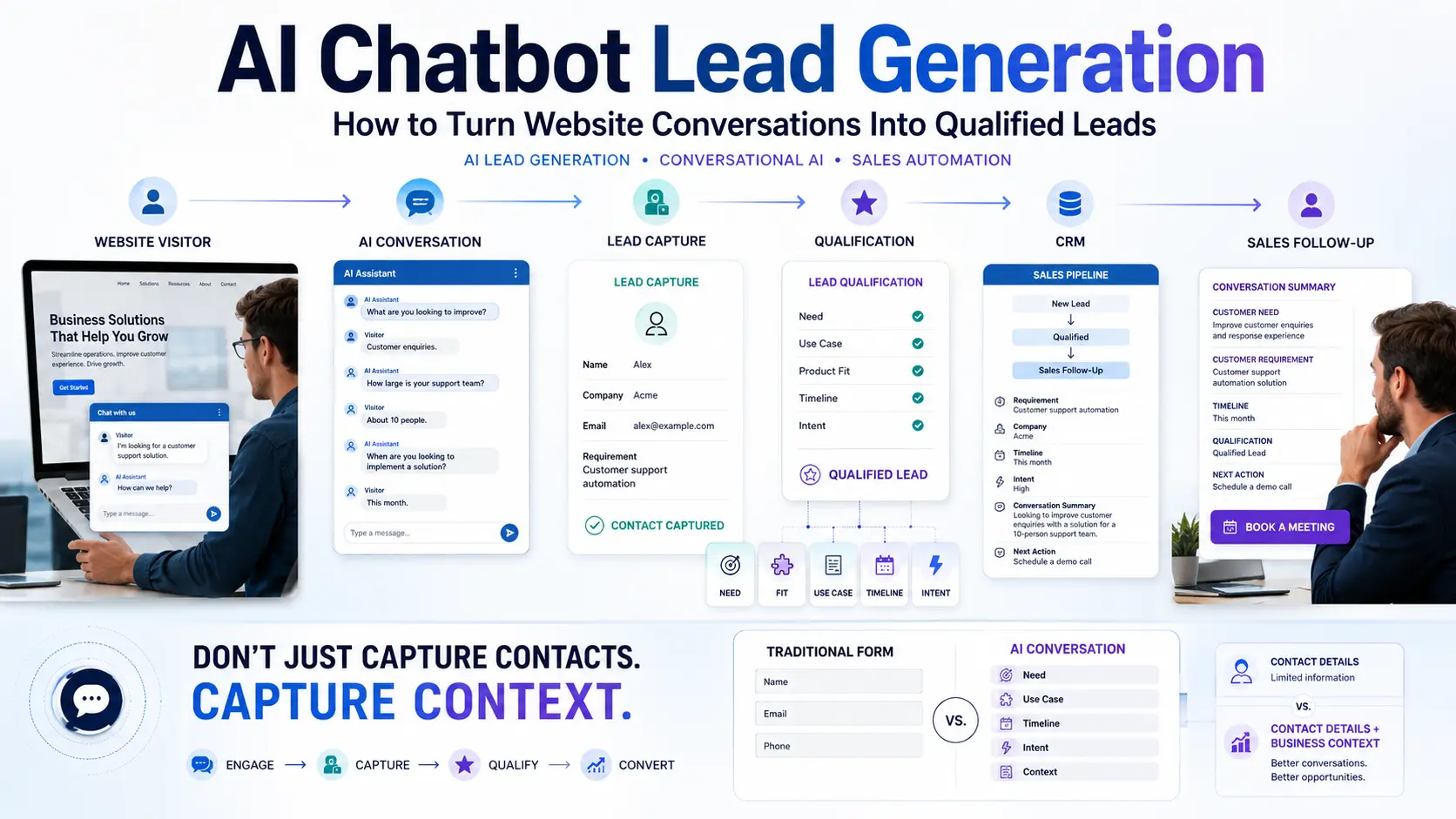
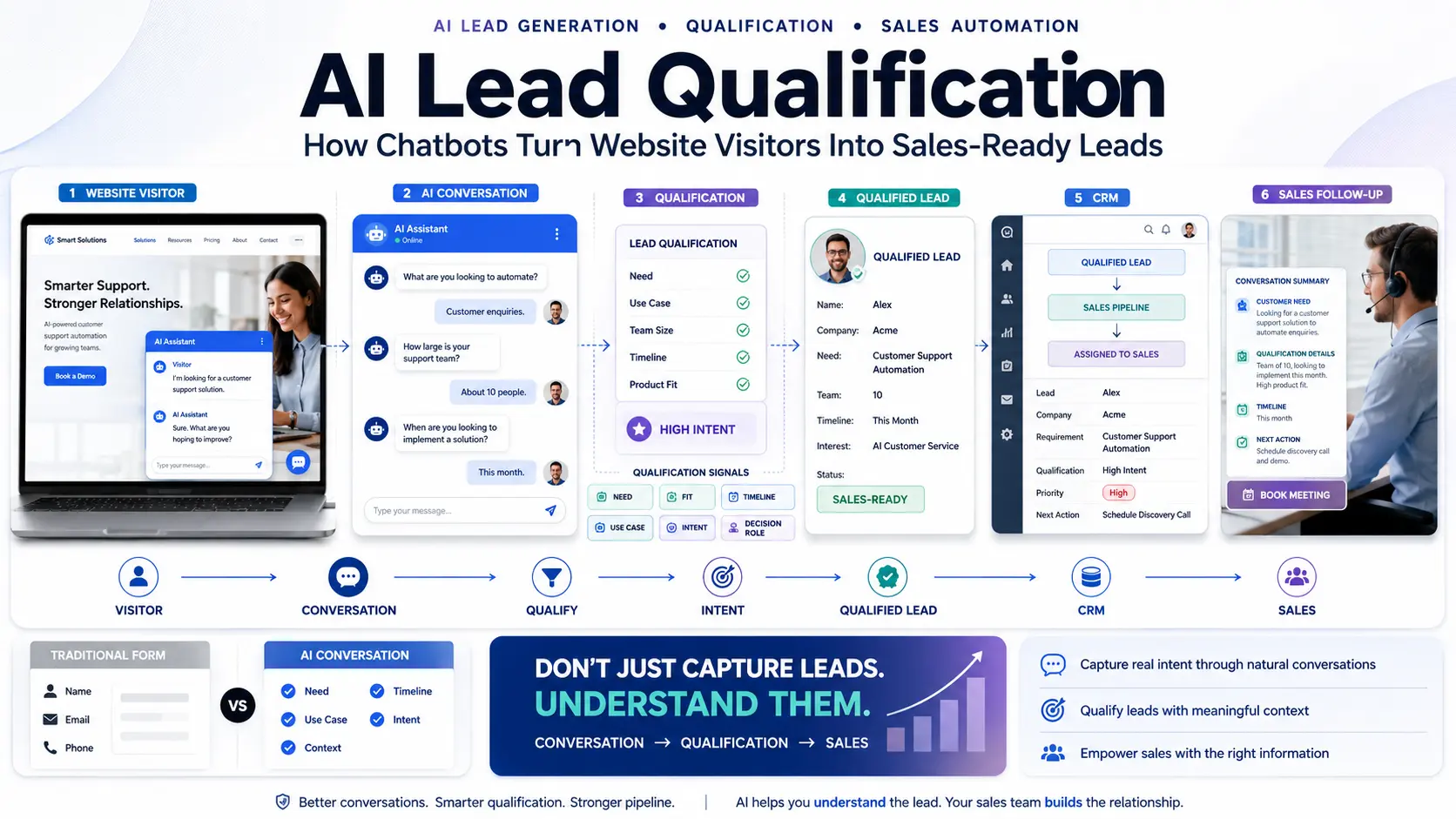
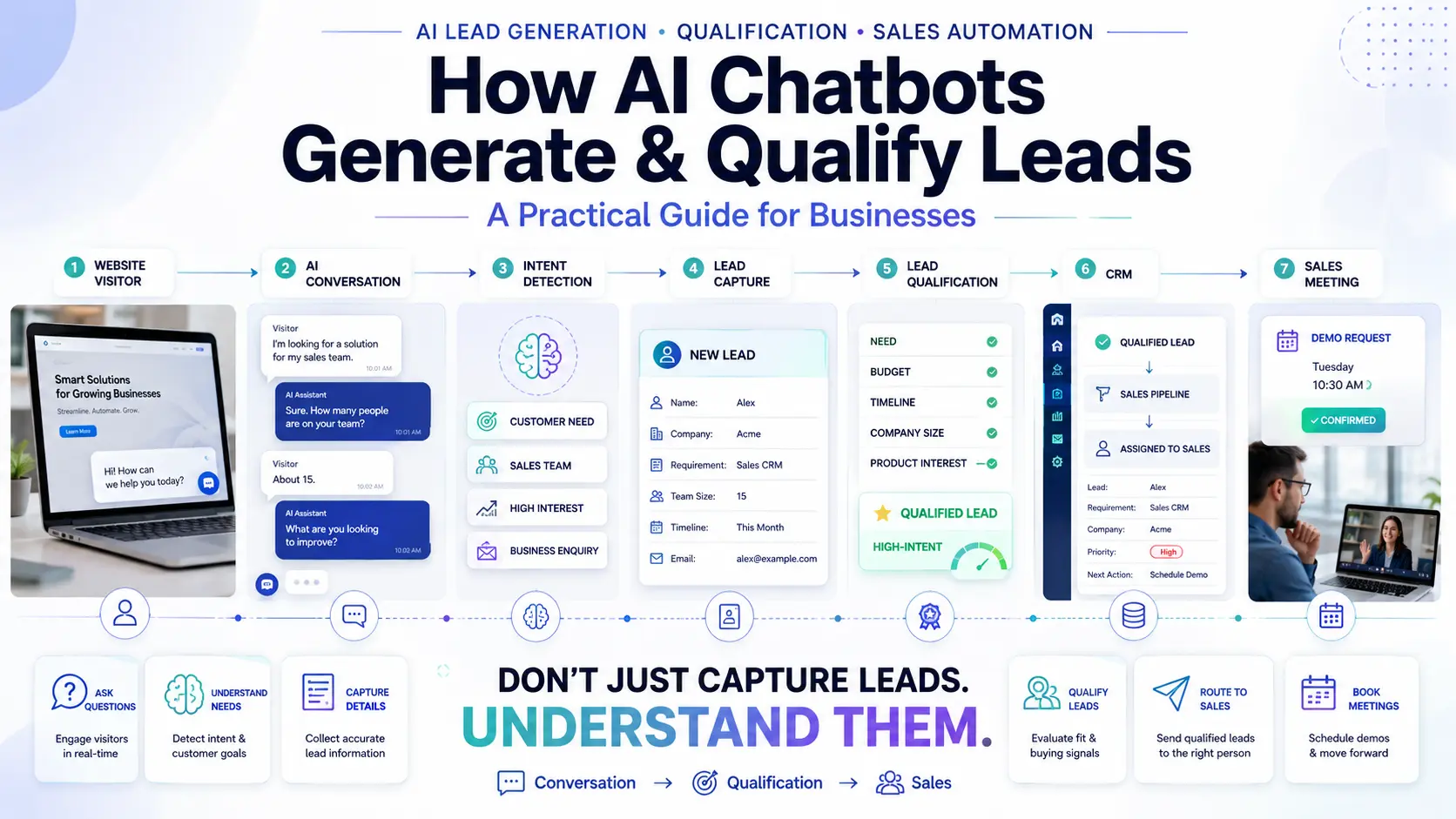
- More Qualified Leads: AI proactively engages visitors, asks qualifying questions, and collects contact details.
- Reduced Workload: By deflecting up to 80% of repetitive questions, your human team can focus on complex, high-value tasks.
- Scalability: An AI system can handle ten concurrent conversations or ten thousand without breaking a sweat, perfect for traffic spikes.
- Higher Conversion Rates: Removing friction from the buying journey leads directly to more closed deals and better revenue.
Real-World Business Scenarios
How does this look in practice? Consider these realistic interactions:
Customer: "Do you offer enterprise pricing?"
AI: "Yes, we offer tailored enterprise plans based on your usage volume. Could I get your work email so our sales team can send you a customized quote?"
Customer: "I'd like a demo of your software."
AI: "I'd be happy to arrange that! You can select a time that works for you directly on our calendar here: [Booking Link]. What specific features are you most interested in seeing?"
Customer: "I'm having a technical issue integrating your API with my existing CRM."
AI: "I understand you need technical assistance with API integration. Let me transfer you to a live technical support agent who can help troubleshoot this right away."
Implementation Best Practices
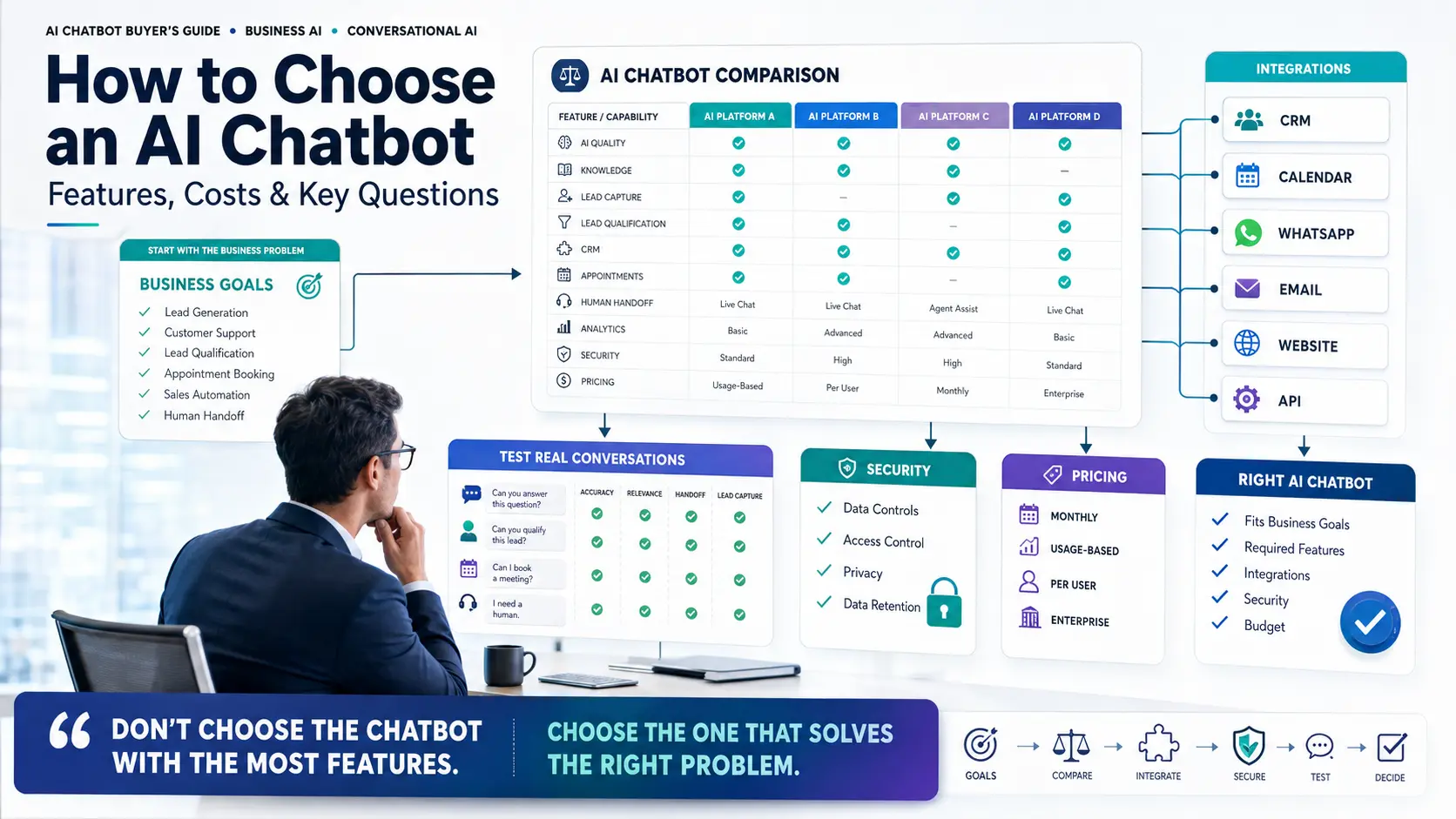
To successfully integrate AI into your customer journey, follow these best practices:
- Ensure High-Quality Training Data: A knowledge base chatbot is only as good as the information it is trained on. Keep your documentation, FAQs, and website content accurate and up to date.
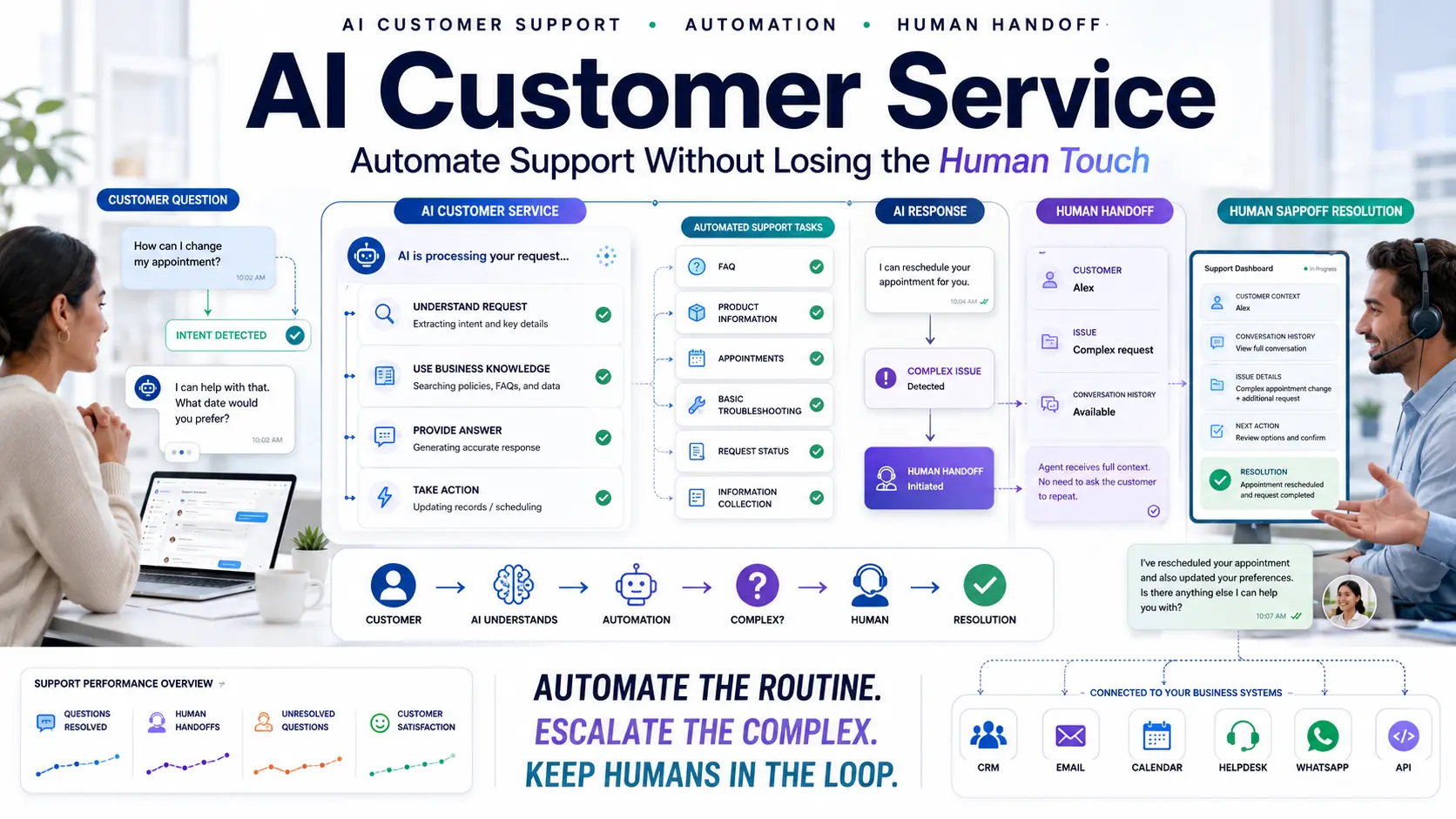
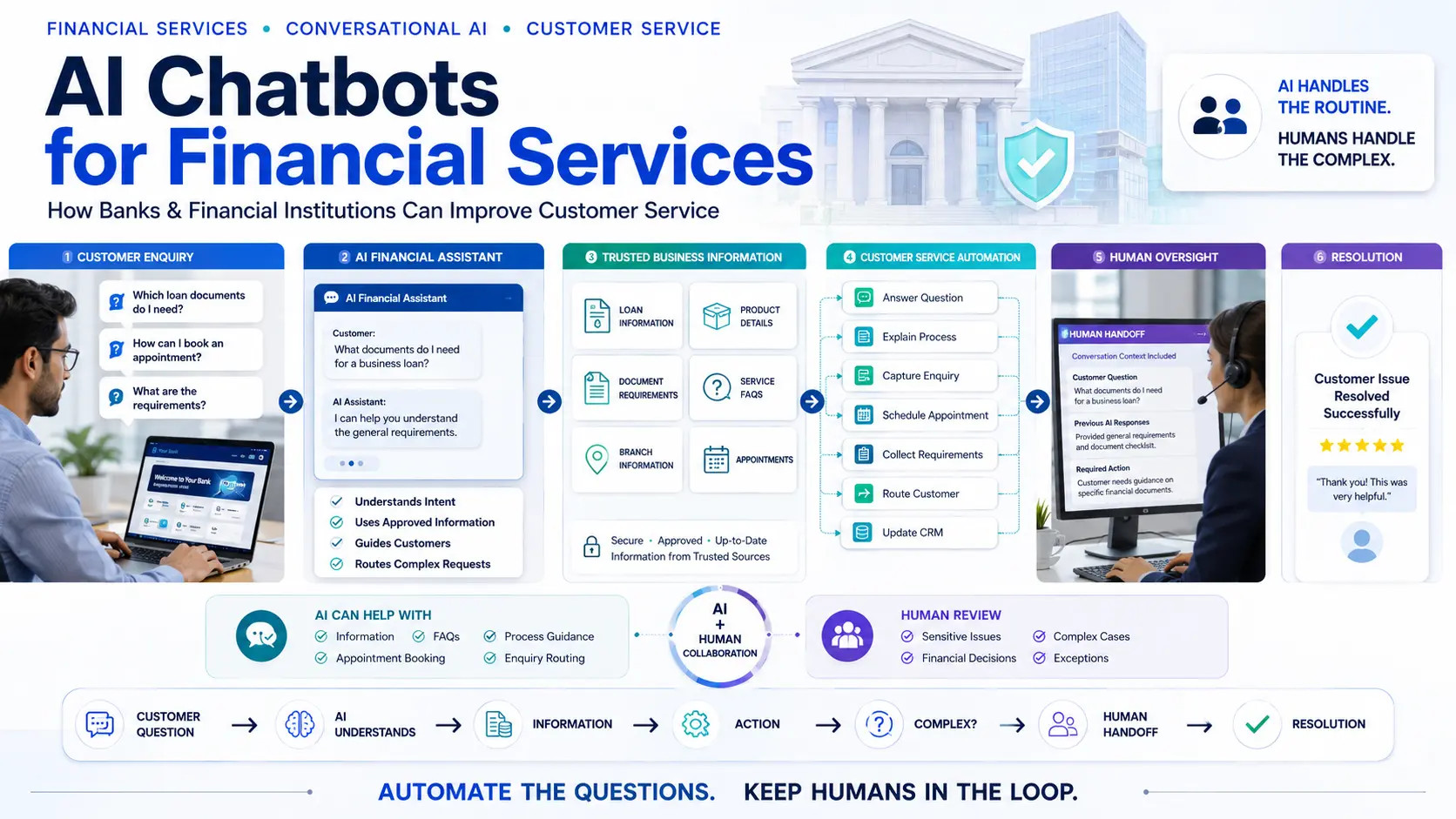
- Design a Seamless Human Handoff: Never trap a customer with a bot. If the AI cannot resolve an issue, it must smoothly transition the conversation to a human agent, providing the full chat history.
- Focus on Continuous Improvement: Review chat transcripts regularly to identify gaps in the AI's knowledge and update your resources accordingly.
- Respect Privacy Considerations: Ensure your solution complies with relevant data protection regulations when collecting user information.
How Quillive Fits In
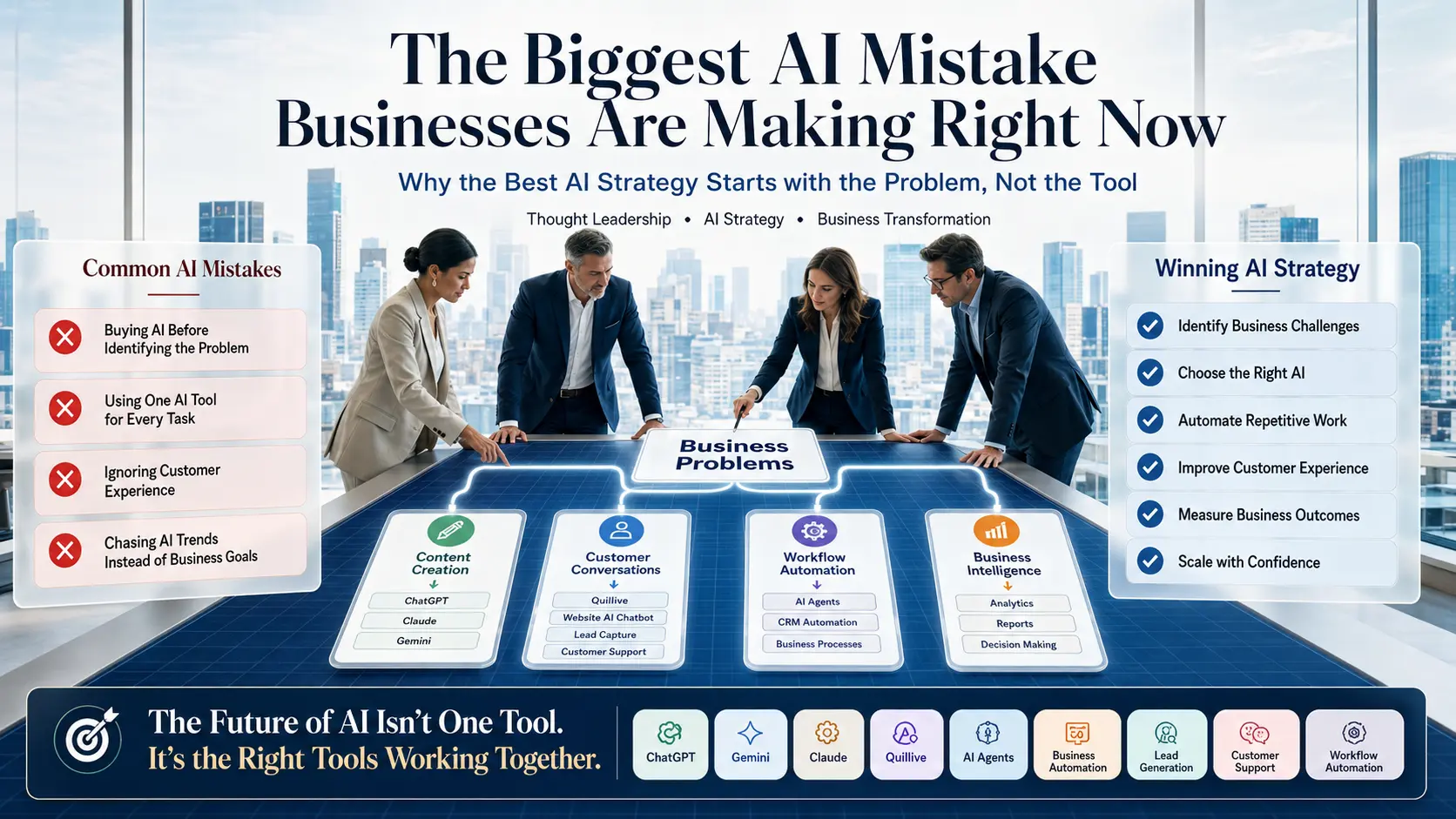
Businesses often use general tools like ChatGPT to improve their own internal productivity, or complex AI Agents to automate deep backend workflows. But when it comes to the frontline customer experience, a specialized solution is required.
This is where Quillive fits into the AI ecosystem. Quillive is a dedicated AI-powered website chatbot and customer engagement platform. It is designed specifically to act as a seamless lead capture solution and a frontline customer support chatbot.
By training exclusively on your business data, Quillive functions as an intelligent knowledge base chatbot, ensuring your website visitors receive instant, accurate answers while your team focuses on growth, rather than fielding repetitive questions.
Frequently Asked Questions
What is the biggest AI mistake businesses make?
The biggest AI mistake is focusing entirely on internal productivity tools while ignoring the customer experience and failing to automate lead generation and customer support.
How can businesses use AI effectively?
Businesses should balance internal AI tools with customer-facing solutions like AI chatbots to provide 24/7 support and capture leads automatically.
Can an AI chatbot generate leads?
Yes, an AI chatbot can act as a lead generation tool by instantly engaging website visitors, qualifying their interest, and collecting contact details 24/7.
Will AI replace human customer support?
No, AI is designed to handle repetitive queries and basic tasks, freeing up human agents to deal with complex, sensitive, and high-value customer interactions.
What is the difference between ChatGPT and a business AI chatbot?
ChatGPT is a general-purpose AI tool often used for productivity, while a business AI chatbot is trained specifically on a company's data to interact directly with their customers.
Conclusion
The most crucial aspect of digital transformation is not just implementing technology for the sake of efficiency; it is about fundamentally improving the customer experience. When businesses fail to adapt to modern consumer expectations for immediate communication, they stunt their own business growth.
By shifting focus from solely internal tools to customer-facing conversational AI, you ensure your business is future-ready. Providing instant answers, automating lead capture, and delivering frictionless support are no longer optional—they are essential for survival.
Elevate Your Customer Experience
Ready to fix the communication gap and deploy an intelligent assistant that works 24/7?